









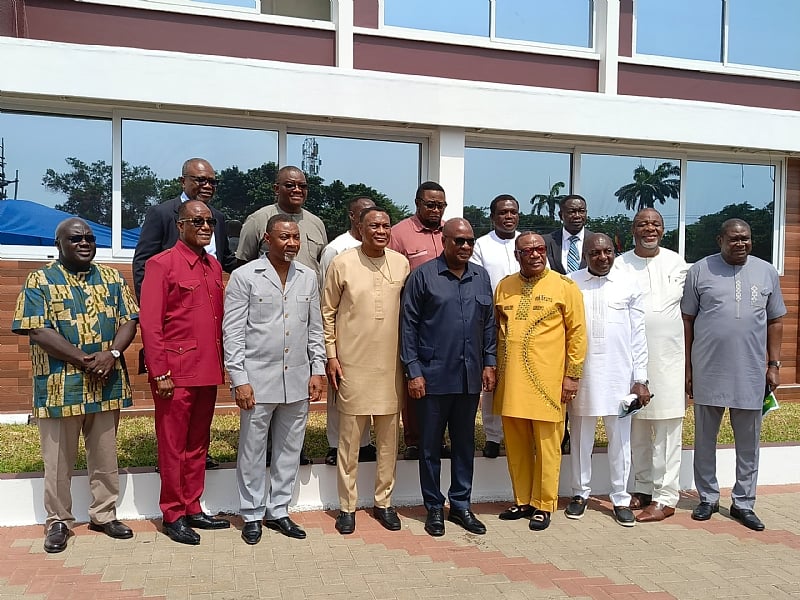
Archbishop Nicholas Duncan-Williams, a prominent figure in Ghana’s religious landscape, presented a comprehensive nine-point proposal for national development to President-elect John Dramani Mahama. This proposal, put forth on behalf of the National Association of Charismatic and Christian Churches (NACCC) and Apostolic Fathers, reflects the Church’s commitment to partnering with the government in addressing critical national issues. The proposal encompasses a wide range of concerns, demonstrating a holistic approach to national progress. Key areas highlighted include collaborative strategies to tackle poverty and unemployment, bolstering healthcare delivery, fostering national peace and social cohesion, and supporting education through mission schools. The proposal also advocates for tax incentives to encourage corporate social responsibility, designated spaces for churches within communities, the institution of a National Day of Prayer, and a decisive 120-day social contract termed “Operation Recover All Loot” (ORL) aimed at combating corruption. Finally, the proposal addresses the pressing issue of illegal mining (galamsey) and its devastating impact on the environment.
The presentation of this proposal underscores the significant role religious institutions play in Ghanaian society, extending beyond spiritual guidance to encompass social and economic development. Archbishop Duncan-Williams, also the Presiding Archbishop and General Overseer of Action Chapel International, emphasized the Church’s longstanding contributions to education, health, social welfare, and the spiritual development of citizens. He expressed confidence in Mr. Mahama’s leadership, offering prayers for guidance and wisdom in navigating the challenges ahead. The Archbishop expressed hope that under Mahama’s presidency, the negative narratives that have plagued previous governments would be replaced by a new era of positive transformation.
Mr. Mahama, acknowledging the Church’s support, expressed gratitude for the counsel and guidance he received during his time in opposition. He recognized the public’s desire for change and a new direction, as reflected in recent surveys, and accepted the responsibility to chart this new course. The President-elect emphasized the need for unity and collaboration in moving Ghana forward, echoing Archbishop Duncan-Williams’ call for collective action. He acknowledged Ghana’s decline from its once-held position as the “Black Star” of Africa, expressing determination to restore the nation’s pride and address the concerns expressed by international observers.
Mr. Mahama identified several critical challenges facing Ghana, including the collapse of businesses, growing disillusionment among young people, and a decline in faith in the nation’s democracy. He stressed the urgent need to address these issues and rebuild trust. Furthermore, he highlighted the importance of tackling security concerns, both internal and external, based on recent security briefings. In line with the Church’s proposal, he recognized the valuable contributions of religious institutions in the education and healthcare sectors, pledging to strengthen partnerships to enhance the effective management of schools and hospitals.
The nine-point proposal presented by Archbishop Duncan-Williams offers a roadmap for national development, addressing crucial areas requiring immediate attention. It underscores the importance of collaboration between the government and religious institutions in tackling complex social, economic, and environmental challenges. The emphasis on poverty reduction, healthcare improvement, educational support, and environmental protection demonstrates a commitment to holistic development. Furthermore, the inclusion of initiatives like “Operation Recover All Loot” and the focus on national peace and social cohesion highlights the need for ethical governance and a unified approach to nation-building.
The exchange between Archbishop Duncan-Williams and President-elect Mahama signifies a shared vision for Ghana’s future, emphasizing the importance of collaboration and unity in addressing national challenges. Mr. Mahama’s acknowledgement of the Church’s contributions and his commitment to strengthening partnerships demonstrate a willingness to leverage the resources and expertise of religious institutions in driving national development. His recognition of the need for a “reset” and his determination to restore Ghana’s pride offer a glimmer of hope for a brighter future. The nine-point proposal provides a framework for action, and its successful implementation will depend on the commitment and collaboration of all stakeholders, including the government, religious institutions, civil society, and the citizens of Ghana. The focus on key areas such as education, healthcare, economic development, and environmental protection reflects a holistic approach to national progress, aiming to create a more prosperous and equitable society for all Ghanaians.









