









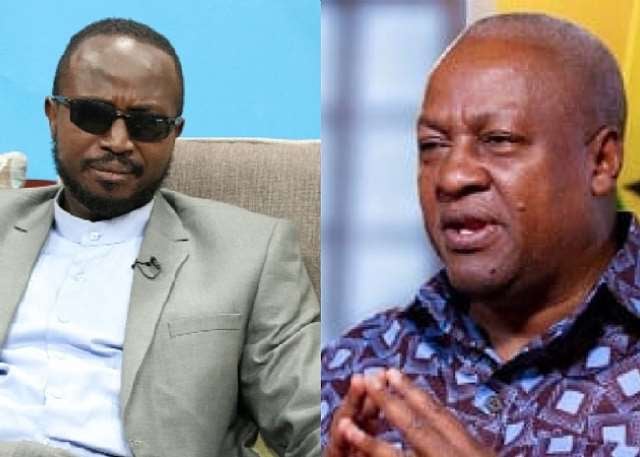
The political landscape of Ghana is undergoing a significant transition following the recent presidential election. Former President John Dramani Mahama, of the National Democratic Congress (NDC), is returning to power, ushering in a period of change and renewed expectations. Central to this transition process is the establishment of a transitional team, a carefully selected group of individuals tasked with facilitating the smooth handover of power from the outgoing administration of President Nana Addo Dankwa Akufo-Addo. The composition of this team has garnered attention and commentary, particularly from Stephen Atubiga, a former NDC member and a known critic of Mahama. Surprisingly, Atubiga has expressed positive sentiments towards the team’s makeup, viewing it as a beacon of hope for the nation.
Atubiga’s unexpected endorsement underscores the significance of the transition team in the eyes of the public and political observers. He explicitly praised the “experienced calibre” of the individuals chosen by Mahama, recognizing the importance of their expertise in navigating the complexities of the transition. This acknowledgement, coming from a previous detractor, lends credence to the notion that Mahama has assembled a team capable of effectively managing the transfer of power. Atubiga’s statement highlights a sense of cautious optimism surrounding the incoming administration and its potential to address the nation’s challenges. His words, “This shows hope for the country,” encapsulate the anticipation of positive change and effective governance.
The transition team, established in accordance with the Presidential (Transition) Act, 2012 (Act 845), is co-chaired by Hon. Julius Debrah, a seasoned political figure. The team boasts a diverse array of expertise, including prominent figures like Johnson Asiedu Nketia, the NDC General Secretary; Dr. Cassiel Ato Forson, a financial expert; Dr. Valerie Sawyer, a public health expert; and Prof. Kwamena Ahwoi, a renowned governance expert. The NDC has emphasized the team’s collective experience in finance, governance, and public administration, positioning them as well-equipped to handle the intricacies of the transition process. This strategic selection of individuals underscores Mahama’s commitment to assembling a team capable of ensuring a seamless and efficient transition.
On the outgoing side, President Akufo-Addo has also appointed a transition team, reflecting the collaborative nature of the process. This team is co-chaired by Chief of Staff Akosua Frema Osei-Opare and includes key figures such as Attorney-General Godfred Yeboah Dame, Defence Minister Dominic Nitiwul, and Finance Minister Dr. Mohammed Amin Adam. Their inclusion ensures continuity and collaboration between the outgoing and incoming administrations. The presence of these high-ranking officials indicates the Akufo-Addo administration’s commitment to a transparent and orderly handover of power, underscoring the importance of national stability during this transitional phase.
Beyond the immediate transition teams, a transitional advisory council has also been established, further solidifying the commitment to a smooth handover. Rt. Hon. Edward Doe Adjaho represents the incoming government on this council, while former Speaker of Parliament, Prof. Aaron Mike Oquaye, represents the outgoing administration. The advisory council provides an additional layer of oversight and guidance, ensuring that the transition aligns with constitutional requirements and established protocols. This bipartisan representation fosters a sense of national unity and shared responsibility for the successful transition of power.
The inauguration of these teams marks a critical step in Ghana’s democratic process. Tasked with ensuring a seamless transfer of power, the teams are mandated to uphold stability and continuity as the nation navigates the change in leadership. Their collaboration signifies a commitment to upholding democratic principles and ensuring the peaceful transfer of power, a cornerstone of a stable and thriving democracy. The transition period serves as a testament to Ghana’s commitment to democratic ideals and the peaceful transfer of power, setting a positive example for the region and beyond. The careful composition of these teams, coupled with the legal framework guiding their operations, underscores the nation’s dedication to a smooth and effective transition, ultimately aimed at serving the best interests of the Ghanaian people.









