





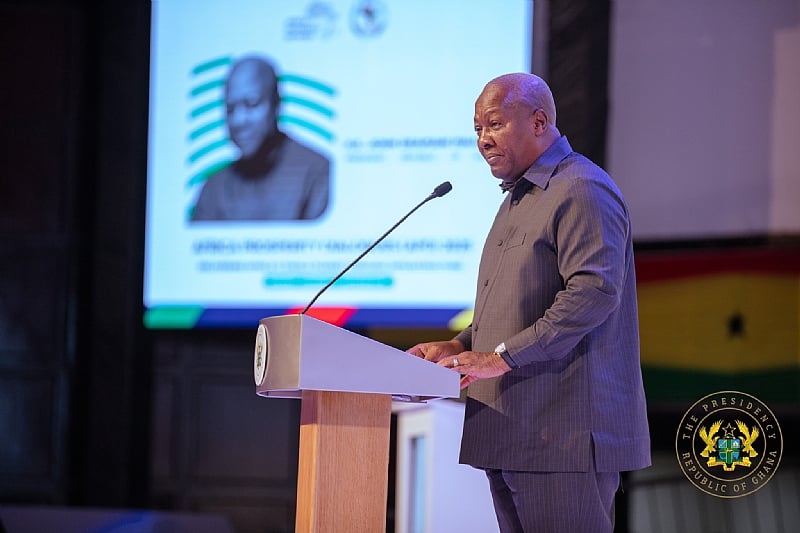
President John Dramani Mahama’s address at the Africa Prosperity Dialogues 2025 served as a potent call to action for African leaders, emphasizing the urgent need for transformative economic policies and strategies. He underscored the growing disillusionment among Africa’s youth, who, despite the continent’s embrace of democratic governance, are increasingly frustrated by the lack of opportunities available to them. This disconnect between political ideals and economic realities, Mahama warned, poses a significant threat to the very foundations of democratic governance. He argued that maintaining the faith and trust of citizens requires a concerted effort to accelerate economic growth, expand investment, and generate employment opportunities, especially for the younger generation. This focus on tangible economic progress is crucial, he stressed, to securing the future of democracy on the continent.
Mahama’s address went beyond simply identifying the problem; it also offered concrete solutions and pathways towards a more prosperous Africa. He highlighted the African Continental Free Trade Area (AfCFTA) as a potential game-changer, capable of creating a $3.4 trillion market and significantly boosting intra-African trade. However, he cautioned that simply liberalizing trade is insufficient. To fully harness the potential of the AfCFTA, he advocated for substantial investments in critical infrastructure, including efficient road and rail networks, modern port facilities, and enhanced digital connectivity. These infrastructural developments are essential, he argued, for facilitating trade, reducing logistical bottlenecks, and integrating African economies more effectively. He further emphasized the importance of strengthening intra-African supply chains and harmonizing trade policies across the continent to create a more seamless and efficient trading environment.
Beyond trade, Mahama identified technology and innovation as crucial drivers of economic transformation. He urged African leaders to strategically embrace the Fourth Industrial Revolution and leverage its transformative power. He highlighted the potential of digital technologies to promote financial inclusion, enhance public service delivery, and create entirely new economic opportunities. By embracing innovation and investing in digital infrastructure, Africa can leapfrog traditional development pathways and unlock significant economic potential. This focus on technological advancement is not merely a matter of keeping pace with global trends; it is a strategic imperative for achieving sustainable and inclusive economic growth.
Mahama’s call for action resonated throughout the Africa Prosperity Dialogues 2025, which brought together a diverse array of stakeholders, including heads of state, policymakers, and business leaders. The dialogues served as a platform for robust discussions on strategies to unlock Africa’s economic potential and secure its rightful place within the global economic landscape. The emphasis was on collaborative action and shared responsibility, recognizing that achieving sustainable prosperity requires a concerted effort from all stakeholders. The dialogues aimed to move beyond rhetoric and translate discussions into concrete action plans, paving the way for a more prosperous and equitable future for Africa.
The urgency conveyed by President Mahama’s address stemmed from the recognition that delayed action will exacerbate existing challenges and further erode citizens’ trust in democratic institutions. He emphasized that the time for incremental progress is over and that bold, decisive action is required to address the continent’s economic challenges. This call for urgency resonated with many participants at the dialogues, who shared a common understanding of the need for accelerated progress. The growing frustration among Africa’s youth, coupled with the increasing complexities of the global economic landscape, necessitates a proactive and decisive approach to economic development.
The Africa Prosperity Dialogues 2025, spurred by President Mahama’s compelling address, served as a critical juncture in the ongoing conversation about Africa’s economic future. The event underscored the need for a paradigm shift, moving away from traditional development models and embracing innovative solutions tailored to the continent’s unique context. The focus was on harnessing the potential of the AfCFTA, investing in critical infrastructure, embracing technological advancements, and fostering greater collaboration between governments, the private sector, and civil society. The overarching goal is to create a more prosperous and equitable Africa that provides opportunities for all its citizens and secures its position as a major player in the global economy. The dialogues provided a platform for forging partnerships, developing concrete action plans, and setting the stage for a new era of sustainable and inclusive economic growth on the continent.








