









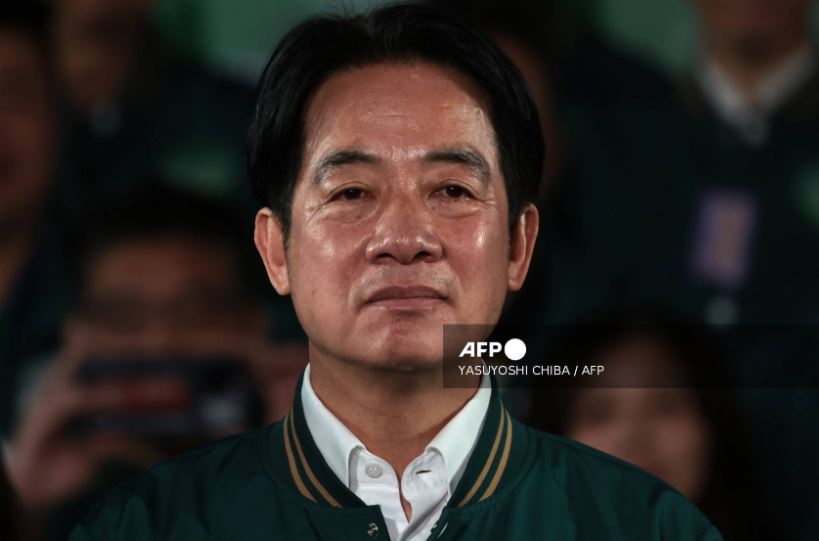
Taiwan’s Vice President Lai Ching-te Expresses Confidence in Strengthening US Ties Amidst Chinese Concerns
Taiwanese Vice President Lai Ching-te, during his recent Pacific tour, expressed optimism about deepening cooperation with the incoming Trump administration. This statement followed a phone call with US House Speaker Mike Johnson, a conversation that drew criticism from China. While the US does not formally recognize Taiwan diplomatically, it remains a crucial supporter and arms supplier. Lai’s comments underscore Taiwan’s intent to bolster its relationship with the US as a bulwark against Chinese pressure. During his election campaign, Trump had raised concerns about Taiwan’s defense spending and its role in the semiconductor industry, creating some uncertainty about the future of US-Taiwan relations. However, Lai’s confidence suggests Taiwan anticipates a continuation of strong bilateral ties under a second Trump presidency.
Lai’s Pacific Visit Reinforces Taiwan’s Diplomatic Ties and Showcases Collaboration
Lai’s Pacific tour, his first international trip since assuming office, served to solidify relationships with Taiwan’s remaining allies in the region. China has been actively seeking to sway these nations towards Beijing, diminishing Taiwan’s international recognition. The visit included stops in Palau, the Marshall Islands, and Tuvalu, all of which maintain diplomatic relations with Taiwan. In Palau, Lai participated in a joint rescue exercise with the Palauan Coast Guard, showcasing the cooperation between the two countries, further highlighted by Taiwan’s donation of patrol vessels. He also attended the inauguration of a new government services building, a project partly funded by Taiwan, emphasizing the practical benefits of their bilateral partnership. These activities served to underscore Taiwan’s commitment to its Pacific allies and its role as a development partner.
China Reacts Sharply to US-Taiwan Interactions and Warns Against ‘Separatist Acts’
China’s strong reaction to Lai’s phone call with US House Speaker Johnson highlights the sensitivity of US-Taiwan relations. Beijing claims Taiwan as part of its territory and vehemently opposes any official interaction between Taiwan and other countries, particularly the US. The call prompted a warning from China about the “danger that separatist acts of Taiwan independence pose to peace and security across the Taiwan Strait”. This rhetoric underscores China’s unwavering stance on Taiwan and its readiness to respond to perceived challenges to its sovereignty. China’s past actions, such as the military drills following Nancy Pelosi’s visit to Taiwan in 2022, indicate its willingness to escalate tensions in response to high-level US-Taiwan engagement.
Lai Reasserts Taiwan’s Sovereignty and Condemns Chinese Coercive Tactics
In response to China’s warnings and the possibility of further military exercises, Lai emphasized Taiwan’s distinct status and condemned China’s use of force. He declared that Taiwan and China are “not subordinate to each other,” asserting Taiwan’s self-governance. He further criticized China’s military posturing, stating that such actions do not earn respect internationally, but rather isolate China. This firm stance reflects Taiwan’s determination to resist Chinese pressure and maintain its autonomy. Lai’s comments also highlight the broader regional implications of China’s assertive behavior, suggesting that such actions are counterproductive and undermine its international standing.
Taiwan Seeks to Strengthen Defenses with US Support Amidst Ongoing Tensions
The ongoing tension between Taiwan and China underscores the importance of US arms sales to Taiwan. On the eve of Lai’s Pacific trip, the US approved the sale of F-16 spare parts, radar systems, and communications equipment to Taiwan, totaling $385 million. This arms sale reinforces the US commitment to supporting Taiwan’s defense capabilities and its ability to deter potential Chinese aggression. Taiwan’s dependence on US military support highlights the asymmetry in military power between Taiwan and China. These arms sales are crucial for maintaining a balance of power in the region and deterring China from resorting to military action.
Lai Emphasizes the Importance of Peace and Cooperation in Addressing Cross-Strait Relations
During a visit to Hawaii, Lai stressed the need for peaceful resolution of the Taiwan-China issue. He warned against the dangers of conflict, stating that there are “no winners” from war. This message underscores Taiwan’s commitment to maintaining peace and stability in the region. While firm in his defense of Taiwan’s sovereignty, Lai’s emphasis on peaceful solutions suggests an openness to dialogue and diplomacy. This approach contrasts with China’s increasingly aggressive rhetoric and military maneuvers, highlighting the differing approaches to resolving the cross-strait issue.









