





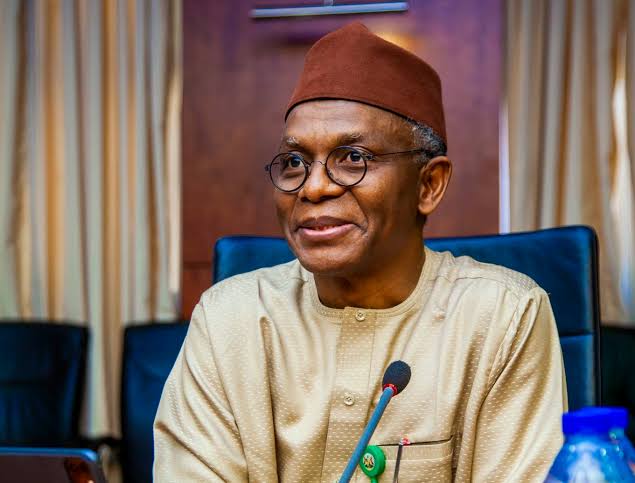
Nasir El-Rufai, the former governor of Kaduna State, has launched a scathing critique of the ruling All Progressives Congress (APC), accusing the party of abandoning its founding principles and failing to deliver on its promises to Nigerians. His criticism touched on various aspects of the party’s governance, including a perceived lack of internal democracy, inactive party structures, and a deviation from the core objectives that drove its formation. He further characterized the current political landscape as a “national emergency,” urging opposition parties to unite against the APC and safeguard democracy. This public denunciation has ignited a wave of reactions from within the APC and across the political spectrum.
El-Rufai’s primary concerns revolve around the perceived dysfunction within the APC. He lamented the absence of active party organs, noting the lack of meetings of critical bodies like the caucus and the National Executive Committee (NEC). This, he argued, has created a void within the party’s internal structure, effectively silencing dissent and centralizing power. He also expressed disappointment over the APC’s failure to address the issues of corruption, economic revitalization, and security enhancement, which were central to its campaign platform. This abandonment of core promises, he asserted, has left Nigerians disillusioned and undermined the party’s credibility.
Furthermore, El-Rufai’s critique extended beyond internal party affairs to encompass the broader political landscape. He alleged that the ruling party was actively engaged in destabilizing opposition parties, hindering their ability to effectively challenge the APC’s dominance. He cited instances of internal strife within the Peoples Democratic Party (PDP) and the Labour Party, suggesting the involvement of “sponsored mercenaries” aimed at weakening these parties from within. This, according to El-Rufai, poses a severe threat to Nigeria’s democracy, as it stifles political competition and creates an uneven playing field.
The APC has responded to El-Rufai’s criticisms with a mixture of rebuke and conciliation. Presidential spokesperson, Daniel Bwala, questioned the sincerity of El-Rufai’s remarks, suggesting his stance might have been different had he been appointed to a position within President Tinubu’s cabinet. This implies a perception of opportunism on El-Rufai’s part, attributing his criticisms to personal ambition rather than genuine concern for the party’s well-being. The APC’s National Publicity Director, Bala Ibrahim, adopted a more conciliatory tone, acknowledging El-Rufai’s right to express his opinion while emphasizing that the party remains open to dialogue and feedback from its members.
Opposition parties have, however, embraced El-Rufai’s criticisms, echoing his sentiments about the APC’s shortcomings. They have endorsed his assessment of the ruling party’s failure to fulfill its campaign promises and have expressed concern over the alleged attempts to undermine their operations. This convergence of views between a prominent APC figure and opposition parties paints a picture of widespread dissatisfaction with the ruling party’s performance and its handling of the political landscape. It also underscores the potential for a united front against the APC in future elections, a scenario that El-Rufai himself has advocated for.
The unfolding political drama surrounding El-Rufai’s critique presents a complex and dynamic situation. It raises questions about the internal cohesion of the APC, its responsiveness to criticism, and the future trajectory of Nigerian politics. The interplay between El-Rufai’s accusations, the APC’s response, and the backing of opposition parties signals a potentially significant shift in the political landscape, with the 2027 elections looming large. Whether this will translate into a more robust and competitive political environment remains to be seen, but El-Rufai’s outspokenness has undoubtedly injected a new level of intrigue and uncertainty into the Nigerian political arena. The ramifications of this public dissent within the ruling party could have long-lasting consequences, impacting not only the APC’s internal dynamics but also the broader democratic processes in the country.








