









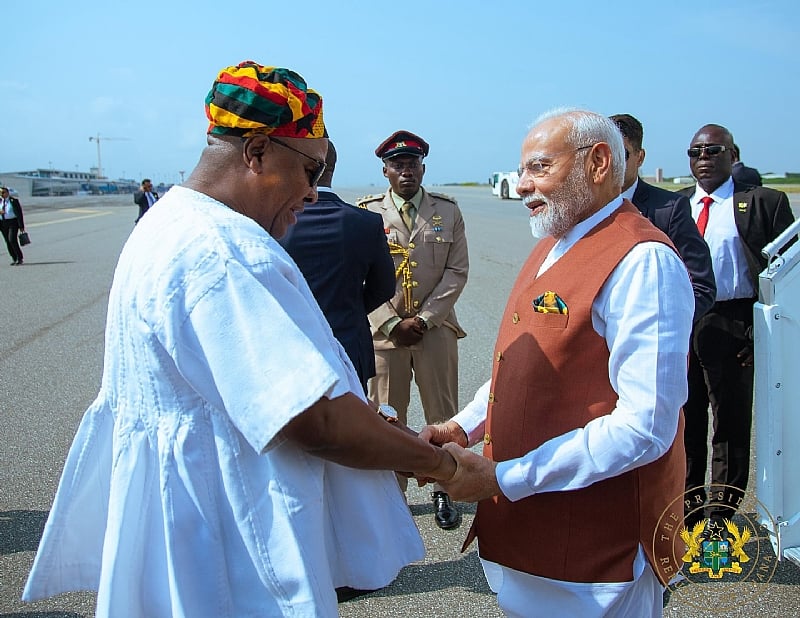
Paragraph 1: A Historic Visit Reinforces Bilateral Ties
Indian Prime Minister Narendra Modi’s official visit to Ghana marked a significant milestone in the relationship between the two nations. This trip, the first by a sitting Indian Prime Minister in three decades, signaled a revitalized commitment to strengthening the long-standing partnership. President John Dramani Mahama warmly welcomed Prime Minister Modi, emphasizing the anticipation of productive bilateral engagements across various sectors. The visit underscored the importance of Ghana to India’s broader Africa strategy and set the stage for renewed cooperation and collaboration.
Paragraph 2: Historical Context of Ghana-India Relations
The diplomatic ties between Ghana and India stretch back to the period immediately following Ghana’s independence. India was among the earliest nations to establish a diplomatic presence in Accra, demonstrating its commitment to fostering a strong relationship with the newly independent African nation. The political solidarity demonstrated by India during Kwame Nkrumah’s leadership further cemented the foundation for enduring bilateral cooperation. Over the decades, India has consistently supported Ghana through various means, including lines of credit for infrastructure development, capacity building initiatives through the Indian Technical and Economic Cooperation (ITEC) program, and scholarships providing educational opportunities for Ghanaian students. This enduring support has solidified the historical bond between the two nations.
Paragraph 3: Expanding Economic and Trade Cooperation
The economic dimension of the Ghana-India relationship has witnessed steady growth, with India emerging as one of Ghana’s leading trading partners. Ghana’s exports to India primarily comprise valuable commodities such as gold, cocoa, and crude oil, while India reciprocates by providing pharmaceuticals, machinery, and electronics. Prime Minister Modi’s visit aimed to further bolster these economic ties by exploring new avenues for trade and investment. The discussions focused on expanding bilateral trade volume and diversifying the range of traded goods and services. The visit also served as a platform for exploring potential investments in areas mutually beneficial to both economies.
Paragraph 4: High-Level Engagements and Symbolic Recognition
Prime Minister Modi’s visit was characterized by high-level engagements designed to deepen the bilateral partnership. A central component of the visit was the meeting between Prime Minister Modi and President Mahama at Jubilee House, the seat of Ghana’s presidency. This meeting provided an opportunity for the leaders to engage in substantive discussions on a range of bilateral and regional issues. Furthermore, Prime Minister Modi addressed Ghana’s Parliament, a rare honor extended to few foreign dignitaries. This symbolic gesture highlighted the importance India places on its relationship with Ghana.
Paragraph 5: Strengthening Cooperation Across Multiple Sectors
The two leaders oversaw the signing of several Memoranda of Understanding (MoUs), solidifying agreements to enhance bilateral development cooperation across various sectors. These MoUs outlined specific areas of collaboration, including trade and investment, energy cooperation, healthcare improvements, digital technology advancements, and educational exchanges. The signing of these agreements demonstrated the commitment of both nations to translate their shared vision for enhanced cooperation into concrete actions. The MoUs provided a framework for future collaborative projects and initiatives, paving the way for tangible benefits for both countries.
Paragraph 6: A Strategic Partnership in a Changing Global Landscape
Prime Minister Modi’s visit to Ghana was strategically timed to coincide with Ghana’s efforts to broaden its international partnerships, particularly within the context of the African Continental Free Trade Area (AfCFTA), headquartered in Accra. By engaging with Ghana, India positioned itself as a crucial partner in supporting Africa’s industrial and digital transformation. This strategic partnership acknowledges the growing importance of Africa on the global stage and aims to foster mutually beneficial growth and development. The visit underlined India’s commitment to deepening its engagement with Africa amidst increasing competition from other global powers, signifying a new era of collaboration and partnership between the two nations. The visit concluded with a joint communiqué outlining a refreshed roadmap for future Ghana-India relations, signifying a strengthened strategic partnership.









