





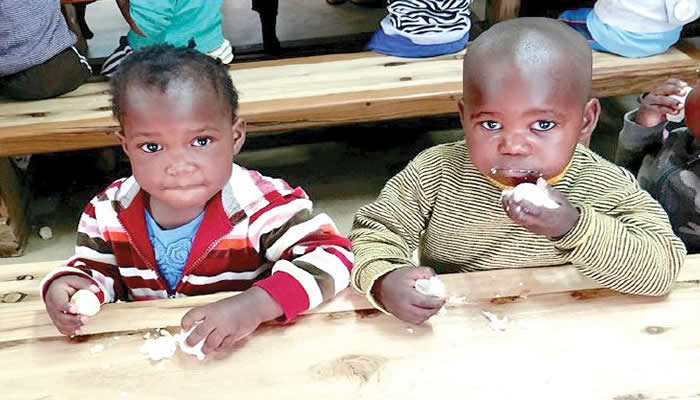
Relief Africa Charity, a non-governmental organization dedicated to improving the welfare of vulnerable populations, has issued a fervent appeal to Nigerians, urging them to prioritize the safety and well-being of children during public gatherings. This call to action comes in the wake of a tragic incident in Ibadan, where a stampede at a public event resulted in injuries and potential loss of life, underscoring the critical need for enhanced safety measures and responsible planning at such events. The organization emphasizes that the protection of children is a collective responsibility and requires the active participation of individuals, communities, and the government.
The founder of Relief Africa Charity, Aderemi Adejokun, speaking virtually at a children’s Christmas party in Lagos, strongly condemned the pervasive selfishness and greed often observed at public events, behaviors that can contribute to chaotic and unsafe environments. She stressed the paramount importance of meticulous planning, structured organization, and the presence of a sufficient number of trained volunteers to ensure the smooth and safe execution of events involving children. Adejokun underscored the eager anticipation children feel for these gatherings and the devastating consequences that can arise when adequate safety measures are lacking. She pointed to the Ibadan incident as a stark reminder of the potential for tragedy when crowd management, security, and volunteer support are not effectively implemented.
Adejokun’s message extended beyond a mere call for improved event management. She challenged Nigerians to embrace personal responsibility as agents of change. She urged individuals to take proactive steps to protect children, rather than simply placing blame on the government. Her philosophy centers on the belief that collective action, driven by individual responsibility and common sense, can create a safer and more nurturing environment for children. This grassroots approach, she emphasized, empowers individuals to make a direct and immediate impact, complementing larger-scale governmental efforts.
The organization’s commitment to child welfare extends beyond safety concerns at public events. Education plays a central role in Relief Africa Charity’s mission, as evidenced by their weekly book club, a program designed to foster a love of reading among children. By providing access to literature and creating a supportive learning environment, the organization aims to empower children with knowledge and skills essential for their future success. This holistic approach underscores the belief that comprehensive child welfare encompasses both physical safety and intellectual development.
Felix Ogunmola, the Nigeria Coordinator for Relief Africa Charity, reiterated the organization’s unwavering commitment to improving the lives of the less privileged and contributing to the development of a more equitable society. He echoed Adejokun’s sentiments regarding personal responsibility while also emphasizing the government’s role in ensuring the welfare of its citizens. Ogunmola pointed to the Ibadan incident as a preventable tragedy, highlighting the critical need for enhanced security measures at large gatherings to protect all attendees. He stressed the importance of learning from this incident and taking concrete steps to prevent similar occurrences in the future.
The combined message from Adejokun and Ogunmola underscores a multi-faceted approach to child welfare. Individual responsibility, community engagement, and governmental oversight are all essential components of a comprehensive strategy to protect children and ensure their safety and well-being. Relief Africa Charity’s call to action serves as a vital reminder that safeguarding children is not solely the duty of any single entity but rather a shared responsibility requiring collaborative effort and a commitment to creating a safer and more nurturing environment for all. The organization’s work exemplifies the power of collective action, driven by a shared vision of a better future for Nigeria’s children. Their emphasis on education, combined with their advocacy for improved safety measures at public events, underscores a holistic approach to child welfare, recognizing that both physical security and intellectual development are crucial for children to thrive.








