









Paragraph 1: The Debate on Ministerial Size and Efficiency
The potential size of President John Dramani Mahama’s incoming government has sparked debate in Ghana. His manifesto pledge to limit the number of ministers to 60, including regional ministers, has been met with skepticism, given the historical tendency towards large cabinets. Critics question the practicality of such a structure, particularly in light of past experiences with bloated administrations often associated with inefficiency and excessive expenditure. This skepticism underscores a broader national conversation about the optimal size and structure of government for effective governance.
Paragraph 2: The Argument for a Leaner Government
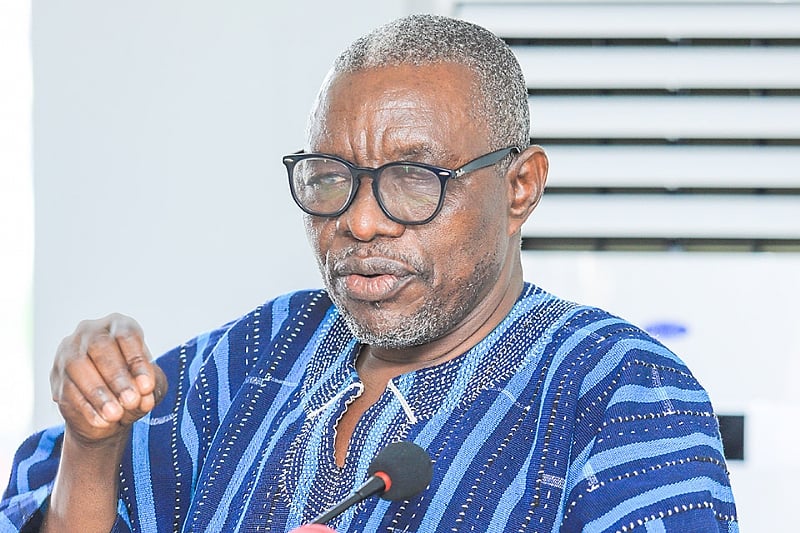
Professor Avea Nsoh of the University of Education, Winneba, offers a counter-perspective, arguing that not only is Mahama’s proposed 60-minister cabinet achievable, but an even leaner government, comprising as few as 30 ministers including deputies, would be more effective in managing Ghana’s affairs. Prof. Nsoh bases his argument on the premise that smaller governments are inherently more efficient, citing examples of developed nations like the United States, the United Kingdom, and Germany. These countries, despite their larger populations and complex economies, maintain comparatively smaller cabinets. He argues that large governments are often symptomatic of underdevelopment and lack of accountability, contrasting this with the efficiency often observed in leaner administrations. He points to the current Akufo-Addo administration, which significantly expanded the cabinet after criticizing the size of the previous Mahama administration, as a prime example of this inefficiency.
Paragraph 3: Critique of the Existing Government Structure and Proposed Reforms
Prof. Nsoh criticizes the Akufo-Addo administration for creating what he considers unnecessary ministries, appointing redundant deputies, and including numerous special duties ministers at the presidency. This bloated structure, he argues, not only contributes to inefficiency but also leads to a wasteful expenditure of public funds. He proposes a more streamlined ministerial structure, suggesting a maximum of 16 regional ministers and 14 sector ministers, achieved by merging and realigning existing ministries to eliminate overlap and enhance efficiency. His recommendations include consolidating related portfolios like Defense, Interior, and National Security; Education, Tourism, Culture & Creative Arts, and Chieftaincy; and Health with Sports and Science. He also advocates for merging Information and Communication, as well as Energy, Environment, Science, Lands, and Natural Resources.
Paragraph 4: Regional Representation and Eliminating Redundancies
Prof. Nsoh acknowledges the importance of regional ministers in Ghana’s decentralized governance structure but argues that deputy regional ministers are unnecessary, especially with the creation of new, smaller regions. He further advocates for eliminating redundant positions like special duties ministers and proposes constitutional reforms to cap the number of ministries and ministers, ensuring a permanently leaner government structure. This streamlining, he argues, would focus resources and improve accountability, allowing for better oversight and management of government functions.
Paragraph 5: The Need for Public Service Reform and Capacity Building
The success of a leaner government, according to Prof. Nsoh, hinges on reforming and strengthening the public service. He emphasizes the need for retraining and capacity building within the Public Services Commission, the Civil Service, and for Chief Directors to effectively support ministers in a streamlined structure. He suggests replacing ineffective officials with qualified professionals readily available to take on these responsibilities. This restructuring and upskilling of the public service would ensure that a smaller ministerial body is adequately supported to effectively execute its mandate.
Paragraph 6: Mahama’s Opportunity and the Potential for Lasting Impact
Prof. Nsoh expresses confidence in President-elect Mahama’s ability to fulfill his promise of a leaner government. While acknowledging the potential challenge of managing appointments within a large party network, he points to Mahama’s past record of keeping his word. With this being Mahama’s final term, Prof. Nsoh believes he has a strong incentive to leave a lasting legacy of efficient and accountable governance. He sees this as an opportunity for Mahama to set a new standard for governance in Ghana, demonstrating that a lean government can indeed deliver exceptional results, contributing to a more effective and responsive public sector. The implementation of Prof. Nsoh’s proposals could represent a significant shift towards a more efficient and accountable governance model in Ghana.









