









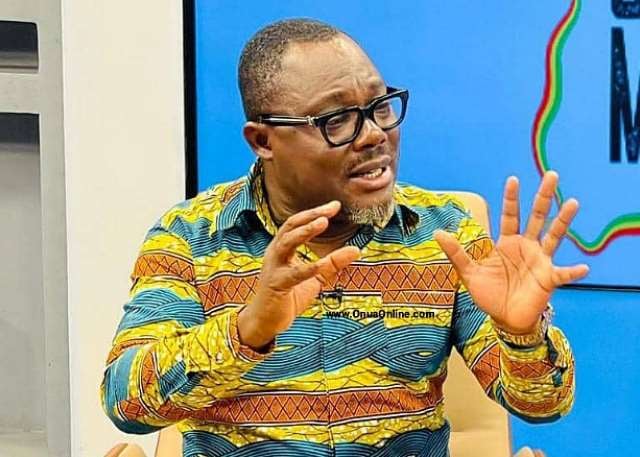
Professor Ransford Gyampo, a Senior Political Science Lecturer at the University of Ghana, has raised significant concerns regarding the implications of public silence in the face of political misdeeds and governance failures in Ghana. His warning, articulated in a social media post dated November 30, highlights how such indifference can pose a serious threat to the country’s democracy and overall peace. By implying that passive observation equates to tacit approval of the malpractices of political elites, Gyampo underscores a pressing need for public engagement and accountability among citizens. He asserts that the true danger to democracy lies not within those who perpetrate corruption, but rather in individuals who choose to remain silent rather than actively oppose these actions.
Gyampo’s remarks reveal a critical understanding of the intricacies of political systems, wherein silence can effectively facilitate the continuation of harmful governance. He argues that remaining uninvolved in challenging the corrupt practices of political leaders is essentially a form of complicity. This apathy fosters an environment where the interests of a select few overshadow the welfare of the broader population. He characterizes the refusal to engage in the socio-political discourse as a silent acquiescence to the malevolent maneuverings of those in power, which poses a direct threat to the democratic fabric of the nation. In his perspective, such indifference ultimately undermines the collective aspiration for accountable governance.
Emphasizing the need for proactive engagement, Professor Gyampo insists that true peace and social stability cannot flourish amid silence concerning injustice and institutional decay. He urges citizens to confront these challenges head-on, positing that genuine peace must be built on a foundation of accountability and transparency. Rather than being passive recipients of governance, Gyampo calls for civic bravery where individuals muster the courage to speak out against corruption and advocate for the common good. This proactive approach is vital in safeguarding the democratic achievements Ghana has made thus far.
In his discourse, Gyampo also highlights a concerning trend: the tendency for capable individuals to withdraw from the political sphere. This reluctance from competent individuals to take on leadership roles exacerbates the nation’s governance issues, leaving a vacuum that often gets filled by less qualified or morally questionable figures. He implores those with the potential to lead to rise to the occasion, emphasizing that the responsibility to protect democracy should not solely rest on a few voices. Instead, a collective effort is necessary, where individuals from various sectors come together to demand accountability and challenge the status quo.
His call to action resonates with the sentiments of many citizens who yearn for a more functional and accountable government. Gyampo’s appeal is not only a critique of the current political landscape but also a clarion call to the populace to be vigilant and vocal. Silence in the face of injustice, he argues, not only harms the democratic process but also compromises the societal values of fairness and equity. By inspiring individuals to become more active participants in the political discourse, Gyampo implicitly advocates for a revitalization of civic engagement that values every citizen’s voice in shaping the nation’s future.
Ultimately, Professor Gyampo’s message is a powerful reminder of the intrinsic link between democracy, peace, and active civic participation. He asserts that the true guardians of democracy are its citizens, who must possess the courage to speak out and act against abuses of power. As Ghana navigates its democratic journey, the stakes of indifference grow ever higher, making it imperative for individuals to embrace their roles as active participants. The maintenance of peace, stability, and accountability hinges on the willingness of the populace to confront injustice and demand adherence to democratic principles. In doing so, they not only protect their democracy but also ensure a more equitable society for future generations.









