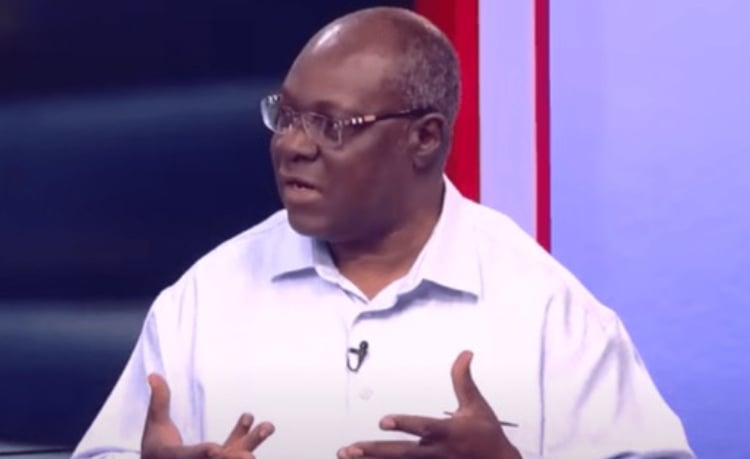
The New Patriotic Party (NPP) finds itself at a critical juncture following its defeat in the 2024 presidential election, a loss attributed by prominent party member Dr. Arthur Kennedy to a deviation from the party’s core principles. Dr. Kennedy, previously suspended from the NPP, argues that the party’s downfall stems from a confluence of factors, most notably corruption, incompetence, arrogance, and a disregard for the national interest. These issues, he contends, resonated deeply with the Ghanaian electorate, ultimately leading to their rejection of the NPP at the polls. Dr. Kennedy’s assessment paints a stark picture of a party that has lost its way, prioritizing self-interest over the welfare of the nation. He further criticizes the selection of Dr. Mahamudu Bawumia as the presidential candidate, arguing that this choice, made against a backdrop of economic hardship and governance challenges, exacerbated the party’s existing vulnerabilities and contributed significantly to its electoral defeat.
Dr. Kennedy’s critique delves into the perceived decline in the quality of the NPP’s leadership. He draws a sharp contrast between the current leadership and the party’s founding fathers, figures like J.B. Danquah and Professor Adu Boahen, who embodied the principles of selflessness and national service. The implication is that the current crop of leaders has fallen short of these ideals, prioritizing personal gain and political expediency over the collective good of the party and the nation. This perceived disconnect between the party’s historical values and the actions of its current leaders, according to Dr. Kennedy, contributed to the erosion of public trust and ultimately led to the party’s electoral setback. He urges a return to the foundational principles that once defined the NPP, advocating for a rebuilding process centered on integrity, service, and a genuine commitment to the well-being of Ghanaians.
The selection of Dr. Bawumia as the NPP’s presidential candidate is singled out by Dr. Kennedy as a particularly detrimental decision. He argues that Dr. Bawumia’s candidacy, occurring amidst a period of economic instability and governance concerns, failed to resonate with the electorate. This failure, according to Dr. Kennedy, stemmed from a perception that the NPP was out of touch with the realities facing ordinary Ghanaians. By choosing Dr. Bawumia, the party seemingly doubled down on policies that had contributed to the prevailing economic hardship, further alienating voters seeking change and a more responsive government. Dr. Kennedy posits that this strategic misstep significantly contributed to the NPP’s loss, highlighting the importance of candidate selection in reflecting the prevailing political climate and addressing the concerns of the electorate.
Dr. Kennedy’s call for rebuilding the NPP emphasizes the need for a thorough introspection and a return to the party’s core values. He advocates for a renewed focus on serving the Ghanaian people, urging the party to prioritize national interests over individual ambitions. This rebuilding process, he suggests, requires a fundamental shift in the party’s mindset, moving away from self-serving practices and embracing the principles of integrity, selflessness, and genuine service to the nation. Dr. Kennedy’s message is a call for a return to the party’s roots, a re-establishment of the values that once earned the NPP the trust and support of the Ghanaian people.
The defeat of the NPP, culminating in the victory of John Dramani Mahama of the National Democratic Congress (NDC), underscores the significance of Dr. Kennedy’s critique. Mahama’s securing of 56.55% of the valid votes, compared to Dr. Bawumia’s 41.61%, reflects a clear mandate for change and a rejection of the NPP’s recent trajectory. This substantial margin of victory further emphasizes the depth of public dissatisfaction with the NPP’s performance and reinforces the need for the party to address the concerns raised by Dr. Kennedy. The election results serve as a stark reminder of the importance of aligning party policies with the needs and aspirations of the electorate.
In conclusion, Dr. Kennedy’s analysis of the NPP’s defeat offers a critical perspective on the challenges facing the party. He identifies corruption, incompetence, arrogance, and a disregard for national interests as key factors contributing to the loss, arguing that these issues have eroded public trust and alienated the electorate. He further criticizes the choice of Dr. Bawumia as the presidential candidate, suggesting that this decision exacerbated existing concerns and failed to resonate with voters. Dr. Kennedy’s call for a rebuilding of the NPP, centered on a return to its founding principles of selflessness, integrity, and service to Ghanaians, serves as a roadmap for the party’s future. This rebuilding, he argues, is essential for regaining public trust and restoring the NPP’s position as a viable political force in Ghana. The resounding victory of John Dramani Mahama and the NDC underscores the urgency of this task and the need for the NPP to heed Dr. Kennedy’s call for introspection and reform.