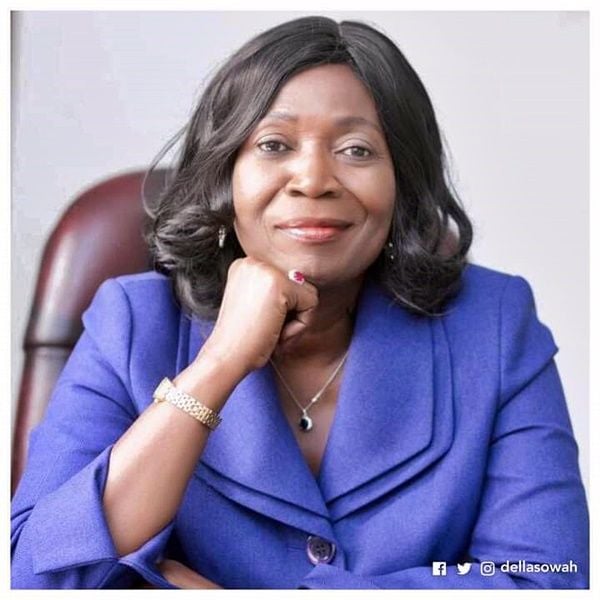
Della Sowah, the Member of Parliament (MP) for Kpando Constituency, has expressed her discontent with the New Patriotic Party (NPP) regarding their principled approach to governance and politics in Ghana. Her comments came in the wake of a recent ruling by the Speaker of Parliament, Alban Bagbin, who declared four parliamentary seats vacant. This development follows a motion initiated by former Minority Leader Haruna Iddrisu, which argued that MPs intending to run as independent candidates in the upcoming December elections should resign from their parliamentary positions, as mandated by constitutional regulations. The decision has sparked a wave of reactions, particularly from the NPP, whose representatives have questioned the Speaker’s authority in this matter.
Among the members of the NPP, there has been considerable pushback against the ruling, with figures such as Afenyo Markin, the party’s leader in Parliament, claiming the Speaker overstepped his powers. They contend that there has been a misinterpretation of the precedents previously established by former Speaker Professor Mike Oquaye. In contrast, Della Sowah argues that the opposition party’s response reflects a profound inconsistency and hypocrisy. She emphasizes that the constitutional provision outlined in Article 97(1)(g) is unequivocal: members of Parliament who switch parties or opt to run as independents must vacate their seats, leaving no room for nuanced interpretation.
Sowah calls for the NPP to adhere to principled politics, arguing that Ghanaians are exhausted by political opportunism. She believes that a genuine commitment to democratic values and constitutional adherence is essential for the credibility of political parties. The notion that some NPP members feel entitled to interpret constitutional requirements as they see fit, particularly when it suits their interests, represents a troubling trend in Ghanaian politics. Della Sowah suggests that this behavior not only undermines the integrity of the parliamentary system but also confuses the electorate, who rely on their representatives to act in accordance with the law.
Furthermore, the Kpando MP stresses the need for political parties to engage with voters transparently and consistently. She believes that the current political landscape, characterized by shifting loyalties and public posturing, erodes public trust in political institutions. By failing to align their actions with the constitutional framework, the NPP risks alienating a populace that is increasingly disillusioned with partisan politics. Sowah insists that the fundamental principles guiding parliamentary membership should be strictly observed to maintain a cohesive and functional democracy in Ghana.
The political turmoil surrounding the ruling serves as a timely reminder of the necessity for clarity in political communication and actions. Sowah invites all political entities, especially the NPP, to prioritize the long-term implications of their decisions rather than pursue short-term gains. The situation is a critical juncture that could redefine how political parties engage with each other and the constituents they serve. As the December elections approach, a commitment to transparency, fairness, and the rule of law will be crucial for safeguarding the democratic process.
In conclusion, Della Sowah’s call for principled politics underscores an urgent need for reflection within the NPP amidst the vacating of parliamentary seats that illustrate fundamental constitutional principles. Her stance reflects a broader desire among Ghanaians for representatives who are steadfast in their values and accountable to the electorate. The political climate in Ghana will be shaped by these discussions and the actions taken in response to the current challenges, ultimately determining the integrity and sustainability of the nation’s democratic framework.