









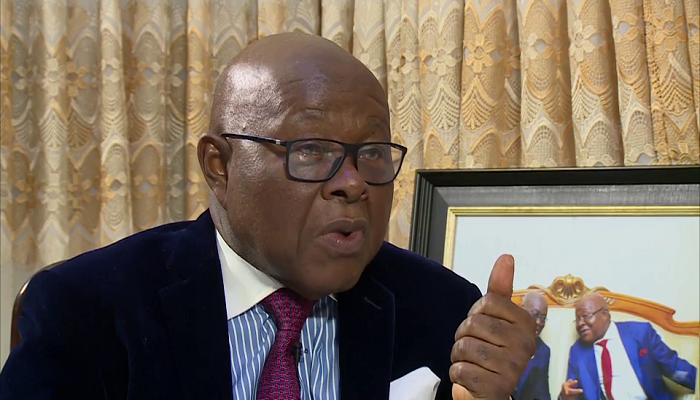
Former Speaker of Parliament, Professor Aaron Mike Oquaye, has publicly criticized the petition submitted by Haruna Iddrisu, the MP for Tamale South, which calls for the declaration of four parliamentary seats as vacant in light of the upcoming 2024 general elections. Oquaye contends that the proper legal procedure for removing Members of Parliament (MPs) is not initiated by another MP but should come from the respective political parties to which the MPs belong. The petition filed by Iddrisu specifically targets three MPs from the New Patriotic Party (NPP) and one from the National Democratic Congress (NDC), all of whom have announced their intentions to run as independent candidates in the forthcoming elections. This move is particularly notable for Andrew Amoako Asiamah, the Fomena MP, who, despite winning his seat as an independent candidate in the previous elections, plans to seek re-election under the NPP banner.
Iddrisu’s petition argues that by opting to run independently, these MPs have effectively vacated their seats in accordance with Article 97 of the 1992 Constitution of Ghana. During a recent parliamentary debate on October 15, several members referenced Oquaye’s past ruling regarding the Fomena MP’s situation, urging the current Speaker, Alban Bagbin, to adopt a similar stance in this new context. However, Oquaye has taken a firm stance against this comparison, suggesting that the cases are not analogous. He emphasized that Iddrisu’s petition lacks legitimacy, stating that the law does not grant him the standing or authority to initiate removal proceedings against the NPP MPs on behalf of the party.
In his remarks, Oquaye highlighted that the responsibility to initiate such actions lies solely with the political parties involved. He pointed out that in the instance of the Fomena MP, it was the NPP itself that officially withdrew its support, thereby triggering the legal processes leading to the determination of the MP’s status. Oquaye firmly stated that Iddrisu has no authority to act on behalf of the NPP or any other party to demand the removal of MPs, reinforcing the legal protocol that requires party involvement in such matters. This underscores his view that a member from another party does not possess the requisite authority to instigate removal proceedings against MPs from a rival party.
Moreover, Oquaye expressed his confidence in the current Speaker of Parliament, Alban Bagbin, believing that he would approach the situation judiciously. He labeled Bagbin as an experienced and knowledgeable figure in parliamentary matters, suggesting that he would act in accordance with the proper procedures. Oquaye’s confidence in Bagbin’s judgment reflects a deeper understanding of parliamentary processes and the importance of adhering to established legal and procedural norms when it comes to membership issues within Parliament.
Oquaye’s comments also allude to the broader implications of such petitions on inter-party relations and the integrity of parliamentary proceedings. Both the NPP and the NDC have a vested interest in maintaining order and clarity concerning their members, especially as the country heads toward a contentious electoral season. By emphasizing the roles that party structures play in matters of parliamentary membership, Oquaye is advocating for a process that respects the internal governance of political parties and preserves parliamentary decorum.
In summary, Prof. Mike Oquaye’s critique of Iddrisu’s petition underscores the importance of legal standing and party authority in matters concerning the removal of MPs from Parliament. His analysis draws attention to the necessary compliance with the Ghanaian Constitution and highlights the responsibilities of political parties in such situations. The discourse around this issue serves as a reminder of the ongoing complexities within Ghanaian politics, particularly as the nation gears up for the upcoming general elections, emphasizing the crucial role of experienced leadership in navigating these legal challenges.









