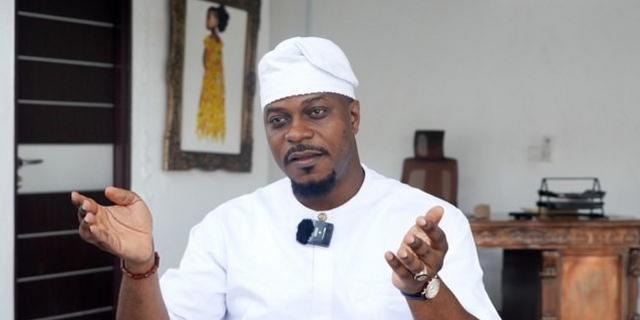
Gbadebo Rhodes-Vivour, the Labour Party’s governorship candidate in the recent Lagos State election, has signaled his intention to contend for the governorship again, emphasizing a commitment to learning from past experiences and strengthening his political movement. In a recent interview, Rhodes-Vivour stressed the importance of maintaining an active and visible opposition presence, a departure from the traditional post-election silence often observed in Lagos politics. This commitment to sustained engagement aims to hold the ruling party accountable and provide a consistent voice for the concerns of Lagosians. He believes this continuous engagement is crucial for building a robust and responsive political landscape.
Rhodes-Vivour’s renewed political ambition is fueled by his critique of the incumbent Governor Babajide Sanwo-Olu’s administration, which he accuses of extravagant spending amidst widespread economic hardship faced by the residents of Lagos. He highlighted specific instances of alleged financial mismanagement, including the purported use of taxpayer funds for personal legal expenses, the allocation of substantial sums for vaguely defined projects, and the claimed expenditure of billions of Naira on consultants and equipment for bus networks. These allegations, according to Rhodes-Vivour, underscore the need for greater transparency and accountability in the state’s financial dealings, a key area he intends to focus on in his future political endeavors.
The Labour Party candidate underscored his commitment to serving the people of Lagos through various community engagement initiatives. He highlighted the implementation of health outreach programs and micro-health insurance schemes, designed to provide accessible and affordable healthcare to vulnerable populations. These programs offer free treatment up to a certain limit, addressing the pressing healthcare needs of a significant segment of the population. By actively participating in community development projects, Rhodes-Vivour aims to establish a stronger connection with the electorate and demonstrate his commitment to improving their lives beyond electoral cycles.
Rhodes-Vivour’s decision to remain actively involved in Lagos politics reflects a strategic shift from the conventional approach of retreating after an election. He believes that consistent engagement with the public is crucial for maintaining momentum, building a stronger political base, and holding the government accountable for its actions. This sustained presence, he argues, fosters a more dynamic political environment where opposition voices are not relegated to the sidelines after elections. This continued engagement will be instrumental in shaping the political discourse leading up to future elections and ensuring that the concerns of the electorate remain at the forefront of the political agenda.
The core of Rhodes-Vivour’s political message revolves around the themes of accountability, transparency, and efficient utilization of public resources. He argues that the current administration’s spending practices reflect a disconnect from the realities of the economic hardships faced by many Lagosians. By demanding greater transparency in government spending, he aims to ensure that public funds are used effectively to address the pressing needs of the population, rather than being diverted for questionable purposes. This emphasis on fiscal responsibility seeks to resonate with voters who are increasingly concerned about the prudent management of public finances.
Looking ahead, Rhodes-Vivour’s political strategy appears to be centered on building a sustained grassroots movement that engages directly with the people of Lagos. Through community outreach programs, particularly in areas such as healthcare, he seeks to demonstrate a tangible commitment to improving the lives of ordinary citizens. This approach goes beyond traditional political rhetoric and aims to establish a direct connection with the electorate based on concrete actions and demonstrable results. By consistently engaging with the community, he aims to build a stronger political base and position himself as a viable alternative for future elections. This long-term strategy reflects a commitment to building a sustainable political movement that transcends electoral cycles and focuses on the continuous improvement of the lives of Lagosians.