





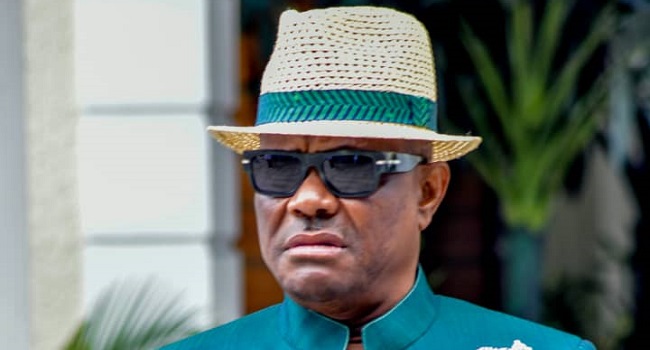
The political landscape of Rivers State, Nigeria, has been roiled by a public spat between two prominent figures: Nyesom Wike, the current Minister of the Federal Capital Territory and former Governor of Rivers State, and Peter Odili, an elder statesman and also a former Governor of the state. Wike, at a public function, made disparaging remarks about Odili, claiming to have rescued him from political obscurity and mockingly referring to him as a “General Overseer” due to the appointments of Odili’s wife and daughter to key positions within the current state government. This public display of disrespect triggered a strong condemnation from a group of concerned elders in Rivers State, setting the stage for a deeper examination of the underlying political tensions.
The Concerned Elders of Rivers State, a group comprising influential figures such as former Governor Sir Celestine Omehia and former Deputy Governor Tele Ikuru, issued a strongly worded statement denouncing Wike’s behavior. They characterized his comments as unbecoming, disrespectful, and a violation of the long-held traditions of respect and deference towards elders within the state. The elders emphasized the vital role that elders play as custodians of heritage, wisdom, and societal values, arguing that any insult directed towards them constitutes an affront to the entire community. They further accused Wike of a pattern of disrespect towards respected figures and institutions, including traditional rulers and clergymen.
At the heart of this conflict, according to the elders, is an alleged impeachment plot against the current Governor of Rivers State, Siminalayi Fubara. They contend that Odili, acting in a statesmanlike manner, had advised Wike against pursuing the impeachment. Wike’s rejection of this advice and his continued alleged efforts to destabilize the government led Odili to side with Governor Fubara in the interest of the state’s stability. This act of defiance, according to the elders, is the root cause of Wike’s outburst against Odili. They likened Wike’s behavior to that of a child who ignores the wisdom of elders and suffers the consequences.
The elders also defended Odili’s legacy and contributions to the state, particularly highlighting the establishment of the Pamo University of Medical Sciences (PUMS). They emphasized that PUMS, a privately funded institution, has significantly benefited Rivers State through collaboration with the government. They argued that Odili deserved commendation for his vision rather than vilification. Further addressing Wike’s criticism of the appointments of Odili’s family members, the elders questioned the double standard, pointing out that Wike’s wife served as a Justice of the Court of Appeal while he held ministerial office. They argued that if Wike’s family members could hold public office, there was no justification for criticizing Odili’s family members, provided they were qualified.
The elders’ statement concluded with a demand for an unequivocal apology from Wike. They insisted that Wike apologize not only to Dr. Peter Odili, his wife, and his children for the disrespect and abuse directed at them but also to the people of Rivers State for the embarrassment caused by his actions. This demand for an apology underscores the seriousness with which the elders view this public dispute and their commitment to upholding the principles of respect and decorum in public discourse.
This incident illuminates the complexities of political relationships and the importance of respecting established norms, particularly regarding the treatment of elder statesmen. The elders’ intervention highlights the potential for such disputes to disrupt the political landscape and underscores the need for dialogue and reconciliation to maintain stability and unity within the state. The demand for an apology serves as a call for accountability and a reaffirmation of the values that underpin the social and political fabric of Rivers State. The long-term consequences of this public disagreement remain to be seen, but it has undoubtedly exposed underlying tensions and raised questions about the future of political discourse in the region.








