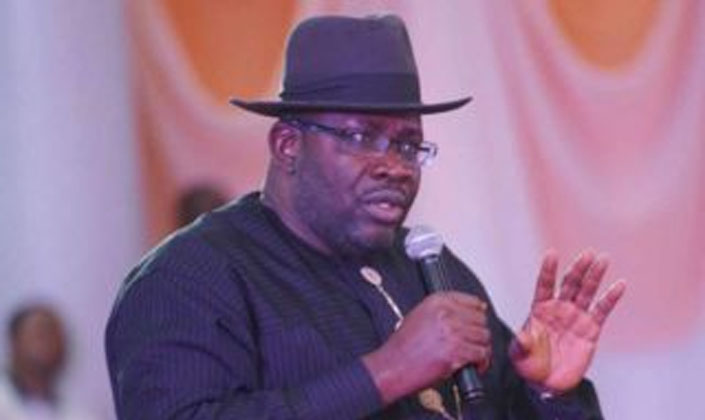
The political landscape of Rivers State, Nigeria, has been marred by controversy following a critique of President Bola Tinubu’s Democracy Day address by Senator Seriake Dickson, representing Bayelsa West. Dickson’s remarks, which condemned Tinubu’s perceived silence on the ongoing political crisis in Rivers State, ignited a sharp rebuke from the Rivers State National Assembly caucus. This exchange has highlighted the delicate balance of power within the Nigerian political system, the role of individual actors in shaping public discourse, and the ongoing struggle to solidify democratic principles within the nation.
Dickson’s critique, delivered on Thursday following Tinubu’s address to a joint session of the National Assembly, centered on the president’s omission of the Rivers State crisis. Dickson argued that Tinubu’s silence represented a betrayal of democratic ideals, specifically the principle of fostering hope and stability. He went further to accuse the Tinubu administration of supporting unconstitutional governance in Rivers State, framing this alleged support as a stark contradiction to the spirit of June 12, a date commemorating Nigeria’s arduous struggle for democracy. This framing served to elevate the issue beyond a mere political dispute, positioning it as a fundamental challenge to the nation’s democratic foundations.
The Rivers State National Assembly caucus responded swiftly and forcefully to Dickson’s accusations. In a press conference held at the National Assembly on Friday, the caucus, led by Kingsley Chinda, characterized Dickson’s comments as inciting and unbecoming of a lawmaker, particularly one with a background in law enforcement. This rebuke, co-signed by a number of senators and House of Representatives members from Rivers State, aimed to discredit Dickson’s critique by questioning his motives and challenging his suitability to comment on matters of governance and democracy. The caucus called on security agencies to monitor Dickson and urged the Senate Committee on Ethics to investigate his conduct, signaling their intent to pursue formal repercussions for his statements.
Central to the caucus’s rebuttal was the assertion that Rivers State was not under military rule, as implied by Dickson. They emphasized that the current administrator, retired Vice Admiral Ibok-Ette Ibas, is considered a civilian by law, despite his military background. The caucus argued that Dickson, a former police officer himself, should understand this distinction and accused him of intellectual dishonesty in portraying the administration as military rule. They maintained that the emergency rule in Rivers State was a constitutional response to political instability, referencing a Supreme Court ruling that indicated a lack of effective governance in the state. This legalistic defense sought to legitimize the current administrative structure and portray Tinubu’s intervention as a necessary measure to prevent chaos and restore order.
The Rivers caucus further accused Dickson of promoting ethnic bias and misleading the suspended Governor Siminalayi Fubara during his visits, allegedly contributing to the governor’s suspension. This accusation introduced a new dimension to the conflict, suggesting a personal and potentially divisive element underlying the political dispute. The caucus framed Dickson’s actions as not only detrimental to the stability of Rivers State but also as a betrayal of the democratic principles he claimed to uphold. They concluded by declaring Dickson unfit to champion the cause of democracy, effectively attempting to marginalize his voice within the ongoing political discourse.
The clash between Senator Dickson and the Rivers State National Assembly caucus exemplifies the complexities of Nigerian politics. Dickson’s critique, rooted in concerns about democratic backsliding and the perceived erosion of constitutional governance, was met with a robust defense of the current administration in Rivers State. This defense, grounded in legal arguments and accusations of political maneuvering, highlighted the deep divisions and competing narratives within the state’s political landscape. The ongoing dispute underscores the challenges of establishing and maintaining stable democratic institutions in Nigeria and the crucial role of public discourse in shaping the nation’s political future. The involvement of prominent political figures, such as a former governor and a serving senator, amplifies the significance of this conflict and its potential impact on the broader political landscape. The call for investigations and security monitoring further underscores the high stakes involved and the potential for this dispute to escalate beyond a war of words.