









The Regional Maritime University (RMU) stands ready to collaborate with Ghana’s incoming government on apprenticeship programmes designed to equip young people with valuable skills and bolster the nation’s workforce. Dr. Jethro W. Brooks, Acting Vice Chancellor of RMU, affirmed the institution’s commitment to this partnership, highlighting the university’s existing Marine Engine Mechanic programme as a prime example of a readily available training opportunity. This particular programme offers a unique advantage – it doesn’t require a West African Examinations Council (WAEC) certificate, only basic literacy skills. This accessibility broadens the scope of potential trainees, opening doors for a wider segment of the youth population to gain valuable skills and contribute to the maritime sector.
The Marine Engine Mechanic programme is designed for efficiency, enabling graduates to commence seafaring work within a year of starting the programme. This rapid transition from training to employment underscores the programme’s practical focus and its alignment with industry needs. Dr. Brooks revealed that a robust demand exists for these skilled professionals, with major shipping lines actively recruiting hundreds of graduates annually and still seeking more. This high demand signals the programme’s effectiveness in producing competent marine engine mechanics and the maritime industry’s recognition of their value. The RMU’s proactive approach to partnering with the government demonstrates its commitment to national development and youth empowerment through targeted skills training.
Beyond the Marine Engine Mechanic programme, RMU’s dedication to education extends to a broader recognition of its transformative power. Dr. Brooks emphasized education as a critical investment for societal advancement, acknowledging the strides made in Ghana and other RMU member states to prioritize technical and vocational education. He highlighted the positive returns on this investment, not only for individual nations but for the entire African continent. This perspective positions education as a catalyst for continental growth and development, recognizing its potential to unlock human capital and drive progress across the region. The RMU’s vision extends beyond national boundaries, embracing a pan-African approach to education and skills development.
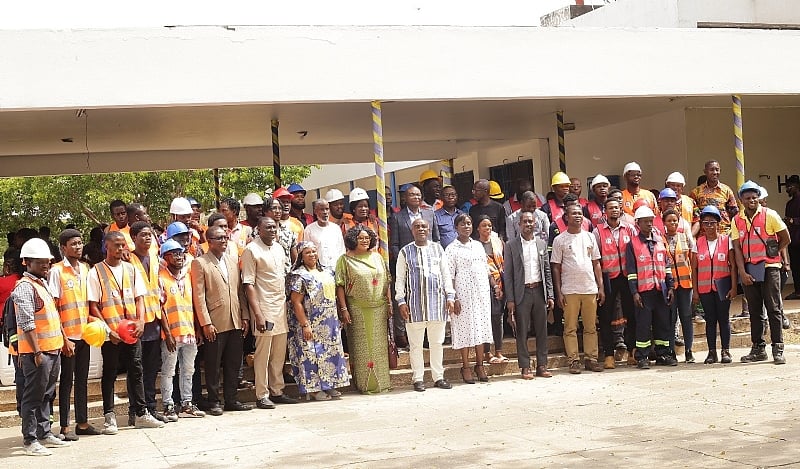
The sixth graduation ceremony for Mobile Crane and Forklift trainees, aptly themed “Ripples of Educational Investment in Ghana Across Africa,” celebrated the successful completion of their training program. This event, attended by dignitaries, university representatives, families, and the graduates themselves, signified not just an individual achievement but the broader impact of educational investment on the nation and continent. The theme underscores the ripple effect of education, expanding from individual accomplishment to wider societal and economic benefits. These graduates represent the tangible outcomes of a focused investment in technical skills, embodying the potential for growth and development that education can unlock.
Addressing the graduates, Mr. Ben Ayiku, Member of Parliament for the Ledzokuku Constituency, emphasized the high demand for their newly acquired skills across various industries. He highlighted their crucial role in sectors like construction, logistics, and transportation, recognizing them as the backbone of Ghana’s economic engine. This acknowledgement reinforces the value of technical and vocational training in contributing directly to national economic growth and development. Mr. Ayiku’s words served not only as praise but also as a call to action, inspiring the graduates to recognize their potential and the significant contribution they are poised to make.
Beyond celebrating their current achievement, Mr. Ayiku urged the graduates to embrace lifelong learning. He stressed the importance of staying abreast of new technologies, safety procedures, and best practices in their field, recognizing the dynamic nature of their chosen industries. This emphasis on continuous professional development underscores the need for adaptability and ongoing skill enhancement to thrive in an ever-evolving world. Mr. Ayiku encouraged them to be not just participants in their industries but also leaders and inspirations, pushing boundaries and setting new standards of excellence. This message conveyed the importance of not only acquiring skills but also cultivating a mindset of continuous growth and innovation.
This Mobile Crane and Forklift training programme, jointly run by the National Association for Heavy-Duty Equipment Operators Ghana (NAHOEG) in collaboration with RMU, exemplifies a successful partnership between industry and academia. This collaboration ensures the training is aligned with industry needs, producing graduates equipped with the specific skills employers are seeking. The success of this programme serves as a model for future collaborations, demonstrating the power of partnerships to address skills gaps and contribute to national economic development. The RMU’s commitment to collaborating with organizations like NAHOEG underscores its pragmatic approach to education and its dedication to producing graduates ready to contribute meaningfully to the workforce.









