









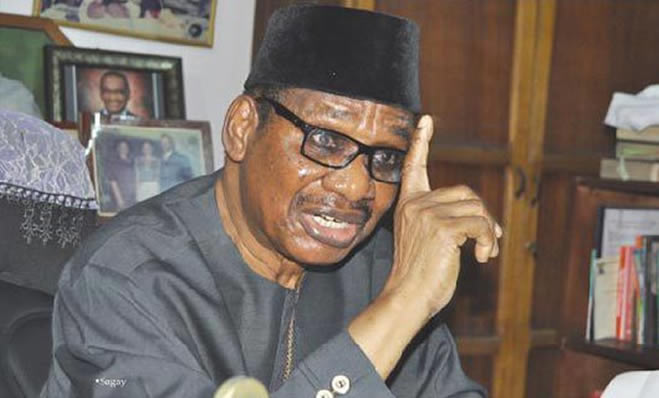
Itse Sagay, a prominent legal scholar and Senior Advocate of Nigeria, has voiced strong concerns regarding the Nigerian government’s reliance on economic policies prescribed by international financial institutions like the World Bank and the International Monetary Fund (IMF). He argues that these policies, often implemented under the guise of economic reform, have historically proven detrimental to developing nations, exacerbating hardship and deepening economic woes rather than alleviating them. Sagay’s critique centers on the belief that these institutions offer a standardized, one-size-fits-all approach to economic development, failing to consider the unique socio-economic realities of individual countries. This approach, he contends, often leads to policies that are counterproductive and ultimately detrimental to the very populations they are intended to benefit.
Sagay specifically criticizes the recent removal of fuel subsidies in Nigeria, a decision he attributes to the influence of the Bretton Woods institutions. He argues that the timing of this removal was highly inappropriate, coming before Nigeria had achieved self-sufficiency in domestic petrol production. The consequences, he points out, have been dire, contributing to a sharp devaluation of the naira, a dramatic surge in transportation costs, and a significant increase in food prices, all of which have severely impacted the living standards of ordinary Nigerians. He cites the exorbitant increase in transportation fares, such as the cost of travel between Lagos and Delta State, which has reportedly skyrocketed from N5,000 to N65,000, as a stark example of the debilitating effects of this policy. Sagay maintains that had the government waited until Nigeria was capable of meeting its domestic fuel needs before removing the subsidy, the negative impact on the populace would have been significantly mitigated.
The core of Sagay’s argument lies in his assertion that the IMF and World Bank’s prescriptions for developing economies are often overly harsh and fail to account for the specific contexts of these nations. He points to a pattern of failure in developing countries that have adopted these policies, leading to worsened economic conditions and increased hardship for their citizens. He contends that these institutions often prioritize macroeconomic indicators and fiscal discipline over the well-being of the population, resulting in policies that exacerbate existing inequalities and hinder sustainable development. Sagay emphasizes the need for a more nuanced and context-specific approach to economic policy-making, one that prioritizes the needs and realities of the people over abstract economic theories.
Sagay’s concerns extend beyond the removal of fuel subsidies. He believes that the IMF and World Bank’s influence often leads to policies that undermine the economic sovereignty of developing nations, forcing them into a cycle of dependency and debt. He highlights the importance of self-reliance and the need for governments to develop economic policies that are tailored to their specific circumstances, rather than blindly adopting prescriptions from external institutions. He argues that true economic progress requires a bottom-up approach that prioritizes local needs and empowers communities to participate in their own development. This, he believes, is a far more sustainable path to prosperity than the top-down, often imposed, policies advocated by international financial institutions.
While critical of the government’s adoption of IMF and World Bank-inspired policies, Sagay expresses support for certain reforms, particularly in the area of taxation. He advocates for reforms that incentivize productivity at the state level and address the existing inequities in revenue distribution. He points to the disparity between Lagos State, which bears the burden of providing infrastructure for a large population, and the revenue it receives, arguing for a system that ties earnings more closely to productivity. Such a reform, he believes, would not only be fairer but also encourage greater self-reliance among states. This demonstrates Sagay’s belief in the importance of internal reform and balanced development within the country, as opposed to relying on external dictates.
In conclusion, Sagay urges the Nigerian government to reconsider its current economic trajectory, particularly its reliance on the prescriptions of international financial institutions. He advocates for a more context-specific approach to economic policy that prioritizes the well-being of the Nigerian people and fosters sustainable development. He emphasizes the need for self-sufficiency, internal reform, and a fairer distribution of resources, arguing that these are the keys to genuine economic progress. His critique is not against economic reform per se, but against the uncritical adoption of policies that have historically proven detrimental to developing nations. He calls for a more nuanced and people-centered approach to economic development, one that empowers local communities and prioritizes their needs over abstract economic indicators.









