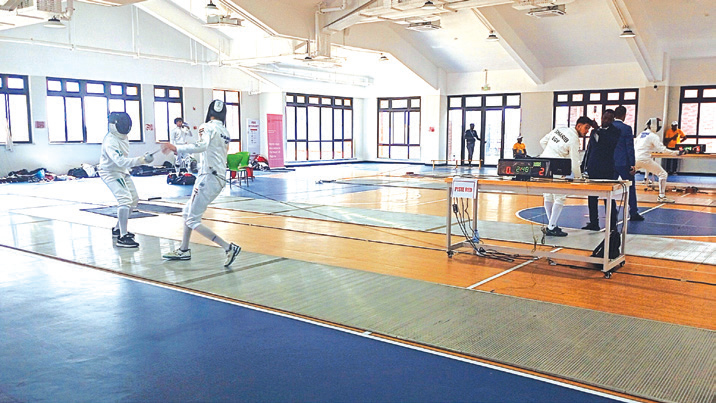
The 2024 Men’s Junior Epee Fencing World Cup, hosted by Nigeria, witnessed the dominance of Egyptian and Saudi Arabian fencers who secured the top positions in both the individual and team events. This prestigious tournament, held at Charterhouse Lagos over two days in December, marked a significant milestone for Nigeria as the first Sub-Saharan African nation to organize a Fencing World Cup. Thirty-nine fencers from eight countries competed fiercely for medals and crucial world ranking points, showcasing their skills and athleticism on the global stage. While the African nations shone brightly, the tournament also provided a valuable opportunity for emerging fencing nations to gain experience and exposure against top-level competition.
Egypt’s Shamel Youssef emerged victorious in the individual competition, claiming the gold medal after a hard-fought final against Saudi Arabia’s Abed Hassan. The bronze medals were shared by two other Egyptian fencers, Elsayed Mahmoud and Osama Eslam, further cementing Egypt’s dominance in the event. This impressive performance underscored the strength and depth of Egyptian fencing, highlighting their consistent development of talented athletes. While Nigeria’s fencers didn’t reach the podium in the individual event, their participation offered valuable experience against world-class opponents, contributing to their ongoing development and providing a platform for future success.
The team event saw Egypt continue their winning streak, defeating Greece in the final to secure the gold medal. Saudi Arabia rounded out the podium with a bronze medal finish. Nigeria, despite being drawn into a challenging preliminary group that included eventual champions Egypt, managed a respectable seventh-place finish in the team competition. This result reflects the growing competitiveness of Nigerian fencing and highlights the potential for further improvement with continued investment and development. The tournament’s outcomes solidified Egypt and Saudi Arabia’s positions as regional fencing powerhouses, while also providing valuable insights into the progress of other participating nations.
Nigeria’s hosting of the World Cup represented a significant step forward for the sport in the country and the broader region. Despite facing financial challenges, the Nigeria Fencing Federation, led by President Adeyinka Samuel, successfully organized and executed the event, showcasing the nation’s capability to stage international competitions. Samuel expressed gratitude for the opportunity to host the tournament and acknowledged the financial hurdles involved. He emphasized the federation’s commitment to hosting more competitions and expanding fencing across Nigeria through partnerships with Italian and British fencing organizations. These partnerships aim to enhance coaching expertise, provide access to advanced training methodologies, and expose Nigerian fencers to a wider range of competitive opportunities.
The 2024 Men’s Junior Epee Fencing World Cup provided a valuable platform for Nigerian fencers to compete against some of the world’s best. While the top individual rankings were dominated by Egyptian and Saudi Arabian athletes, the Nigerians showed glimpses of potential and gained invaluable experience. Ige Olumuyiwa achieved the highest ranking among the Nigerian fencers, reaching the round of 32 before being eliminated by Greece’s Theodoropoulos Panagiotis. Fashola Oluwashemilore, who faced the eventual champion Shamel Youssef, and former African cadet and national junior champion Wisdom Okanlawon also gained valuable experience, demonstrating the growing talent pool within Nigerian fencing.
The successful hosting of the World Cup marked a significant step forward for Nigerian fencing, creating a pathway for future growth and development. The experience gained from organizing such a prestigious event, coupled with the exposure of Nigerian fencers to top-level competition, will undoubtedly contribute to the continued rise of the sport within the country. The partnerships with Italian and British fencing organizations are expected to further enhance the development of Nigerian fencers, providing access to advanced training techniques and fostering international collaborations. This commitment to growth and development underscores the ambition of the Nigeria Fencing Federation to establish the country as a competitive force in the global fencing landscape.