





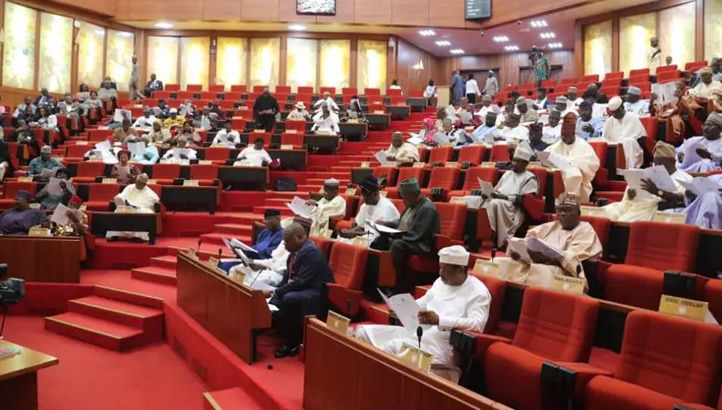
The imperative for educational expansion in Nigeria has garnered significant attention from both the Senate and the National Universities Commission (NUC), particularly regarding the establishment of more universities to meet escalating demands for tertiary education. In light of these concerns, a public hearing was convened by the Senate Committee on Tertiary Institutions and TETFund in Abuja, where pertinent stakeholders convened to discuss the proposal for the Federal University, Okigwe, in Imo State. The hearing underscored a united front among officials and advocates who champion the need for additional educational institutions in order to bridge the widening gap in university admissions and access across the country.
Senator Muntari Dandutse, who chairs the Senate Committee on Tertiary Institutions and TETFund, emphasized the critical nature of this initiative. During the hearing, he articulated that the pressing demand for university placements cannot be overstated, as millions of young Nigerians vie for academic opportunities each year. Senator Patrick Ndubueze, who is the bill’s sponsor, echoed similar sentiments and reinforced the necessity for expanding the educational infrastructure to better serve the needs of a growing population. This consensus was further backed by Mr. Chris Maiyaki, the Executive Secretary of the NUC, who highlighted the stark contrast between Nigeria’s higher education provisions and those of other comparable nations.
Maiyaki elucidated that Nigeria, with a population of approximately 200 million people, currently has 275 universities—both public and private—available for over 2 million prospective students who seek admission annually. This situation results in an alarming admission rate, where only 500,000 to 700,000 students are accepted each year, leaving about 1.3 million potential students without access to university education. The NUC’s findings illustrate a disturbing reality: while Nigeria faces a significant educational crisis, other nations, with similar population metrics, boast far more extensive university systems; for instance, Indonesia has around 2,000 universities, attracting a larger fraction of their youth into higher education than Nigeria does.
In response to this pressing need, Maiyaki reassured stakeholders that the NUC is working diligently on regulatory frameworks and capacity-building initiatives designed to facilitate the establishment of more universities. He stressed that increasing the number of institutions will not only alleviate the pressure on existing facilities but also enhance the overall quality of higher education in Nigeria. This proactive approach aims to ensure that the educational infrastructure can adequately support the country’s burgeoning youth demographic, ultimately fostering a more educated workforce and driving national development.
The potential establishment of the Federal University, Okigwe, was spotlighted during the hearing, and its implications were discussed in detail. Senator Dandutse articulated that the proposed institution would significantly improve access to university education, especially for residents of Imo State. He stressed that such an institution would not only cater to local educational demands but also play a vital role in contributing to the overarching goal of national educational development. The acknowledgment of geographical disparities in access to education pointed towards a more equitable approach to educational distribution across the nation.
Moreover, Ndubueze underscored the transformative potential that the Federal University, Okigwe, could bring to its immediate community. He lamented the long-standing absence of federal recognition in Okigwe, arguing that the establishment of a university there would signal a commitment to development and inclusion for the region. Historically, Okigwe has remained a laggard in terms of federal presence, and the establishment of the university could serve as a catalyst for economic and social growth, ultimately positioning the town for future advancements akin to those seen in other regions around Nigeria. This dialogue at the public hearing reflects a broader recognition among policymakers and stakeholders that addressing educational gaps is paramount for Nigeria’s overall progress.








