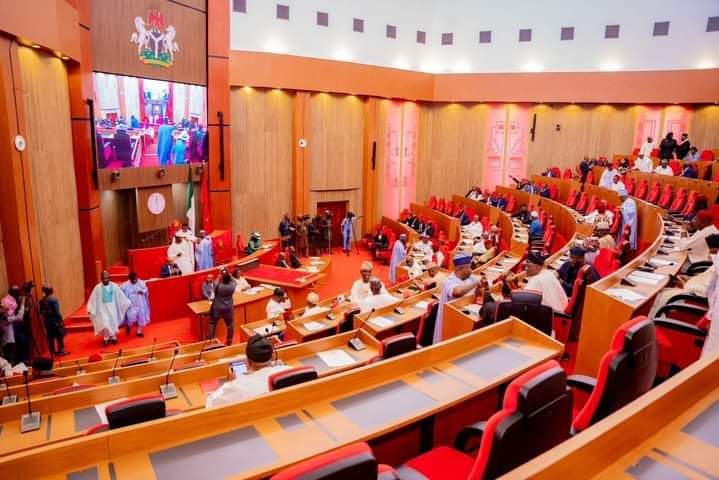
The Nigerian Senate Finance Committee has issued a strong warning to government agencies, emphasizing the importance of financial accountability and transparency. The committee declared that any agency failing to appear before it to justify its 2024 fiscal year expenditures will face a potential zero allocation in the 2025 budget. This decisive action stems from the committee’s ongoing investigation into internally generated revenue, fiscal accountability, and the overall financial management system of Nigeria, during which irregularities and inconsistencies in agencies’ financial records were discovered. The committee’s chairman, Senator Sani Musa, underscored the seriousness of this directive, stating that a thorough accounting of 2024 appropriations is crucial for determining future budget allocations.
The committee’s investigation began with an interface with the Accountant-General of the Federation, Oluwatoyin Madein, who presented a summary of the federal government’s internally generated revenue up to September 2024. This report indicated a total of ₦2.7 trillion in independent revenue, ₦2.3 trillion from operating surpluses of Government-Owned Enterprises, and ₦344 billion from Ministries, Departments, and Agencies (MDAs). However, the committee expressed dissatisfaction with the report, noting that it focused solely on the Accountant-General’s office and lacked a comprehensive overview of the federal government’s broader financial activities. This omission prompted the committee to summon other key agencies, including the Revenue Mobilisation Allocation and Fiscal Commission, the Nigerian Extractive Industries Transparency Initiative (NEITI), and the Nigerian National Petroleum Company Limited (NNPCL), to provide a more complete picture of the nation’s finances. The committee stressed the need for a joint session with all stakeholders to ensure consistency and clarity in their reports, highlighting its commitment to a thorough and transparent investigation.
Beyond the concerns surrounding revenue reporting, the Senate Finance Committee also addressed critical issues related to budget implementation and disbursement. Committee members voiced their frustration over persistent delays in the release and utilization of capital budgets, attributing these delays to inefficiencies within the centralized payment system managed by the Office of the Accountant-General. The current system, which requires over 700 MDAs to process payments through a single office, has been criticized for creating bottlenecks, delaying project completions, and eroding public trust, particularly in communities awaiting essential infrastructure projects. The committee’s concerns extended to allegations of under-the-table payments demanded from contractors to expedite their payments, a practice that, if confirmed, raises serious ethical and accountability concerns.
Adding to the committee’s concerns was the revelation of significantly low stamp duty revenues collected between 2020 and 2024. The Accountant-General reported a total of ₦30.3 million in stamp duty revenue, a stark contrast to the ₦301 million in internally generated revenue. Lawmakers attributed this low figure to poor budget performance, arguing that stamp duty revenues are directly linked to payments made, which are often delayed by the inefficient centralized payment system. While the Accountant-General defended the centralized system as a measure to curb inefficiencies and prevent the annual rollover of unutilized funds, the committee remained unconvinced. To address these issues, the committee gave the Accountant-General a deadline to provide all requested reports by Wednesday of the same week, scheduling a follow-up meeting for later that day.
The Senate Finance Committee’s actions reflect a growing emphasis on strengthening Nigeria’s financial oversight and accountability mechanisms. By demanding greater transparency and a more comprehensive understanding of government revenue and expenditure, the committee aims to promote a more robust and efficient fiscal policy framework. The committee’s insistence on a joint session with key agencies underscores its commitment to a thorough and impartial investigation, ensuring that all stakeholders are held accountable for their financial management practices. The investigation’s focus on capital budget implementation delays and alleged corrupt practices further highlights the committee’s dedication to addressing systemic issues hindering effective governance and service delivery.
In essence, the Senate Finance Committee’s investigation and subsequent directives represent a significant step towards enhancing fiscal responsibility and transparency within the Nigerian government. By holding agencies accountable for their financial performance and demanding greater clarity in their reporting, the committee aims to foster a more efficient and trustworthy public financial management system. The ongoing investigation and the committee’s commitment to summoning all relevant stakeholders demonstrate a strong resolve to address the systemic challenges hindering Nigeria’s economic progress and ensure that public funds are utilized effectively for the benefit of all citizens. The outcome of this investigation and the subsequent actions taken will be crucial in determining the future direction of Nigeria’s financial management and its ability to deliver on its development goals.