









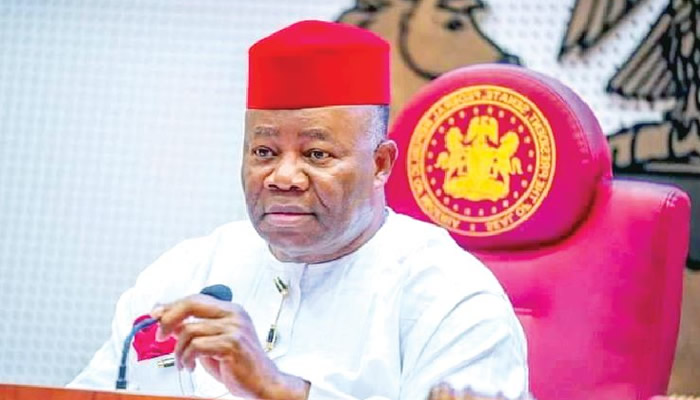
The Nigerian Senate is gearing up for a comprehensive review and approval process of the 2025 national budget, a critical document that outlines the country’s financial roadmap for the upcoming year. The Senate Appropriations Committee has scheduled the presentation of its report on the budget for Friday, January 31, 2025, marking the culmination of weeks of intense scrutiny and deliberations. This timeline underscores the Senate’s commitment to a thorough examination of the budget’s provisions and their potential impact on the nation’s economy and citizens.
The budget process formally commenced with President Bola Tinubu’s presentation of the “Budget of Restoration” to a joint session of the National Assembly on December 18, 2024. The President’s budget speech highlighted key national priorities, including peace, prosperity, and economic growth. He outlined a revenue projection of N34.82 trillion to fund an aggregate expenditure of N47.9 trillion, resulting in a deficit of N13.0 trillion. The budget allocates substantial funds to critical sectors such as defense and security (N4.91 trillion), infrastructure (N4.06 trillion), education (N3.5 trillion), and health (N2.48 trillion). A significant portion of the budget, N15.81 trillion, is earmarked for debt servicing, reflecting the country’s ongoing fiscal challenges.
Following the President’s presentation, the Senate held a second reading of the N49.7 trillion budget on December 19, 2024. Senators engaged in extensive deliberations on the general principles of the bill, expressing their support for the President’s vision for the country. Subsequently, the budget was referred to the Senate Committee on Appropriations, chaired by Senator Solomon Adeola, for detailed analysis and review. The committee’s mandate is to meticulously scrutinize the budget proposals, ensure alignment with national priorities, and propose any necessary adjustments before presenting its report to the full Senate.
The Senate’s detailed timetable for the budget defense and scrutiny process reveals a structured approach to evaluating the proposed allocations. A crucial meeting is scheduled for January 7, 2025, between the Senate Committees on Appropriations and Finance and key economic officials, including the Minister of Finance and Coordinating Minister of the Economy, Wale Edun; the Minister of Budget and Economic Planning, Atiku Bagudu; and the Director-General of the Budget Office of the Federation. This meeting will provide an opportunity for high-level discussions and clarifications regarding the budget’s underlying assumptions, revenue projections, and expenditure plans.
Subsequently, joint budget defense sessions involving the Appropriations Sub-committees of both the Senate and the House of Representatives and various Ministries, Departments, and Agencies (MDAs) will commence on January 8, 2025, and continue until January 15, 2025. During these sessions, MDAs will present detailed overviews of their 2024 spending and justify their revenue projections for 2025. This interactive process allows lawmakers to directly question government officials, gain deeper insights into the budget proposals, and ensure accountability in the allocation of public funds. The rigorous questioning by lawmakers serves as a critical check on government spending and ensures that allocated resources are effectively utilized to achieve national objectives.
The culmination of these deliberations and scrutiny will be the presentation of the Appropriations Committee’s report on January 31, 2025. This report will synthesize the committee’s findings, recommendations, and any proposed amendments to the budget. The full Senate will then debate the report and vote on the final version of the 2025 budget. The approved budget will then be forwarded to the President for assent, marking the final step in the budget process and authorizing the government to implement the outlined spending plans. The entire process signifies the importance of transparency and accountability in government operations, ensuring that public resources are allocated effectively and contribute to the nation’s development goals.









