









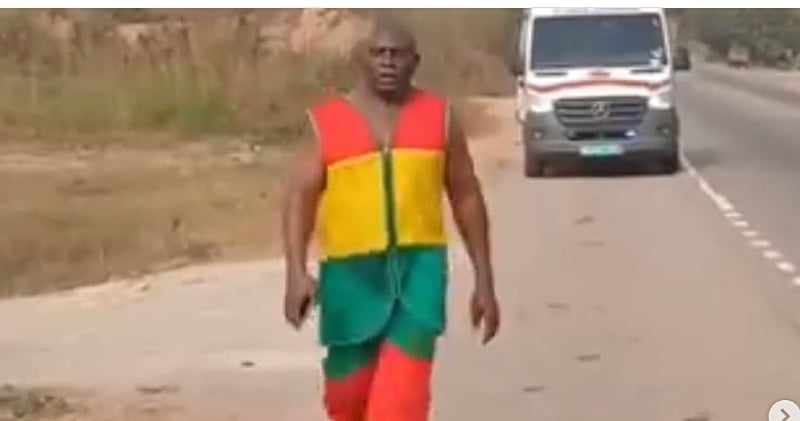
Alhaji Yakubu Ayaana, a 65-year-old philanthropist, has embarked on a remarkable physical feat, traversing over 250 kilometers on foot from Kumasi in the Ashanti region to Accra in the Greater Accra region. This arduous journey, undertaken with an accompanying ambulance for medical support, is a personal tribute to President-elect John Dramani Mahama, celebrating his victory in the 2024 presidential elections. Alhaji Yakubu, a businessman and philanthropist based in Tamale, meticulously planned his expedition, initially traveling to Kumasi by vehicle before commencing his pedestrian odyssey. He aims to reach Accra by January 7, 2025, coinciding with the presidential swearing-in ceremony, where he intends to personally congratulate the newly elected leader. This ambitious endeavor exemplifies his profound admiration and support for President-elect Mahama.
The genesis of this extraordinary journey can be traced back to December 21, 2024, when Mahama’s electoral victory was declared. Overwhelmed by enthusiasm, Alhaji Yakubu publicly announced his intention to undertake the walk to Accra. This decision followed closely on the heels of another symbolic gesture, a 19-kilometer health walk he organized in Tamale, from the Yakubu Tali International Airport to Jubilee Park. This local walk served a dual purpose: commemorating the peaceful execution of Ghana’s 2024 elections and expressing gratitude to the Ghanaian populace for their significant support of the National Democratic Congress (NDC), Mahama’s political party. This previous walk laid the groundwork for the more ambitious Kumasi-to-Accra journey, showcasing Alhaji Yakubu’s commitment to symbolic physical expression of his political beliefs.
Alhaji Yakubu’s current undertaking is not an isolated incident but rather a continuation of a pattern of symbolic journeys expressing his political sentiments. Historical accounts suggest that in 1997, he embarked on a similar walk to honor former President Jerry John Rawlings during his second-term inauguration. This past act of political support, walking to celebrate Rawlings’ victory, underscores a recurring theme in Alhaji Yakubu’s actions – using physical journeys as powerful statements of political allegiance. These walks transcend mere physical acts, becoming potent symbols of his deep convictions and commitment to the leaders and political party he supports. His history of such endeavors provides context for his current journey, highlighting his enduring dedication to expressing political support through physical demonstration.
Furthermore, Alhaji Yakubu’s commitment to national unity and well-being is evident in his organization of a 16-kilometer peace and health walk in Tamale on Independence Day in 1999. This event emphasized the importance of national cohesion and promoted healthy lifestyles within his community. This historical event reveals another facet of Alhaji Yakubu’s character – his commitment to promoting peace and healthy living within his community. By organizing such events, he demonstrates not only his political engagement but also his broader concern for the well-being of his fellow citizens. This commitment to national harmony and health further enriches the understanding of his motivations for the current walk, adding another layer of meaning to his physical journey.
The Kumasi-to-Accra walk encapsulates several layers of meaning: a personal celebration of Mahama’s victory, a testament to Alhaji Yakubu’s enduring political support, and a demonstration of his physical and mental fortitude. This arduous journey symbolizes his unwavering belief in the president-elect’s leadership and the hope he represents for Ghana’s future. His physical exertion becomes a metaphor for his dedication to his political ideals. This long and challenging walk underscores his profound respect for the democratic process and his commitment to actively participate in celebrating the transfer of power. It’s more than a walk; it’s a symbolic pilgrimage driven by deep-seated political conviction.
Alhaji Yakubu’s decision to walk, rather than opt for more conventional modes of transport, underscores the profound significance he attaches to this gesture. The physical hardship he endures serves as a tangible expression of his dedication and reinforces the message of his unwavering support for President-elect Mahama. In a society often characterized by fleeting expressions of political support, Alhaji Yakubu’s commitment shines even brighter. His actions resonate as a powerful symbol of political engagement, showcasing a profound belief in democratic processes and the importance of actively celebrating leadership transitions. His journey serves as an inspiring example of how personal conviction can be translated into meaningful action, reminding us of the power of individual expression within the larger political landscape.









