





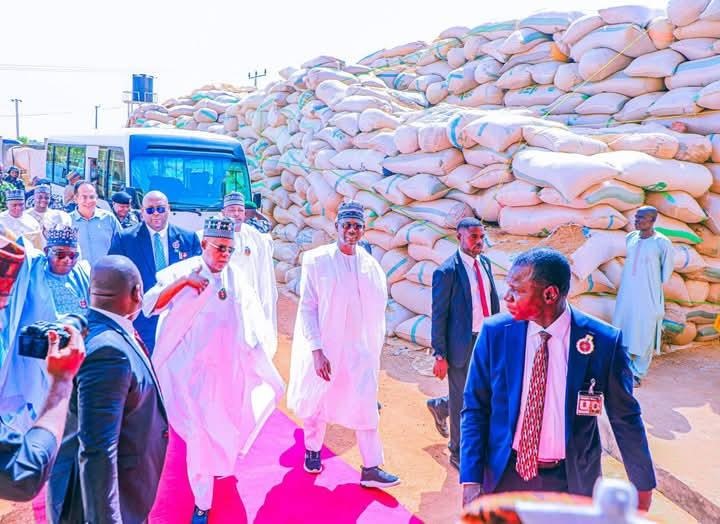
Vice President Kashim Shettima’s recent visit to Nasarawa State underscored the critical link between peace and development, emphasizing the federal government’s commitment to stimulating economic growth through agriculture and targeted interventions. His visit, which included the distribution of tractors and farm implements, as well as relief materials for flood victims, highlighted the administration’s focus on empowering local communities and fostering sustainable development. Shettima’s message resonated with the core principle that meaningful progress, particularly in agriculture, is intrinsically tied to a stable and peaceful environment, a condition he commended Nasarawa State for upholding under Governor Abdullahi Sule’s leadership.
The Vice President’s emphasis on Nasarawa’s agricultural potential reflects a broader national strategy to leverage the country’s resources for food security and economic advancement. By distributing tractors and other agricultural equipment to the 13 local government areas, the federal government aims to boost agricultural productivity and modernize farming practices. Shettima stressed that mechanization is essential for maximizing yields and realizing the full potential of modern agriculture, thereby contributing to a stronger national economy and improved food security for the populace. This initiative aligns with the Renewed Hope Agenda’s focus on empowering local communities and boosting agricultural output.
Shettima’s acknowledgement of Nasarawa’s diverse ethnic and religious composition, coexisting peacefully, highlighted the importance of unity and stability as prerequisites for development. He praised Governor Sule’s leadership in fostering this harmony, recognizing the vital role of local leadership in creating an environment conducive to progress. By emphasizing this connection between peace and development, the Vice President reinforced the idea that social cohesion is as important as economic policy in achieving national prosperity. This recognition underscores the government’s commitment to holistic development, addressing both the economic and social fabric of the nation.
Governor Sule’s reciprocal gratitude and report on the state’s efforts to manage the impact of recent floods further emphasized the collaborative approach between the federal and state governments. His disclosure of the received N3 billion in federal aid, allocated for infrastructure repair and relief materials distribution, showcases the government’s proactive response to natural disasters. The strategic use of these funds for both immediate relief and long-term flood prevention, including the construction of roads and bridges, demonstrates a thoughtful approach to disaster management that addresses both immediate needs and future resilience.
The governor’s alignment with the Renewed Hope Agenda, particularly in securing vast tracts of land for rice cultivation, demonstrates a commitment to food security that complements the federal government’s agricultural initiatives. The partnership with OLAM, a prominent agricultural company, to process the majority of the rice yield ensures market access and encourages commercial viability within the agricultural sector. Furthermore, the allocation of a portion of the rice yield to local governments promotes community involvement in agriculture, fostering a sense of ownership and driving further engagement in the sector. This collaborative approach, involving both private sector partnerships and local government participation, reinforces the commitment to building a robust and sustainable agricultural ecosystem.
The Vice President’s engagement extended beyond the immediate issues of agriculture and disaster relief, encompassing a broader vision for development. His laying of the foundation for the Nasarawa One-Stop Investment Centre signals a focus on attracting investment and stimulating economic growth within the state. This initiative aims to create a more conducive environment for businesses, streamlining processes and promoting economic activity. Combined with his presence at the graduation ceremony of over 1,000 youths trained in various vocational skills, this action demonstrates a commitment to human capital development. By investing in skills development and creating opportunities for investment, the government aims to create a more vibrant and sustainable economy, driven by a skilled and empowered workforce. This comprehensive approach to development, encompassing both immediate needs and long-term strategic investments, reflects the Renewed Hope Agenda’s overarching goal of transforming Nigeria into a more prosperous and resilient nation.








