





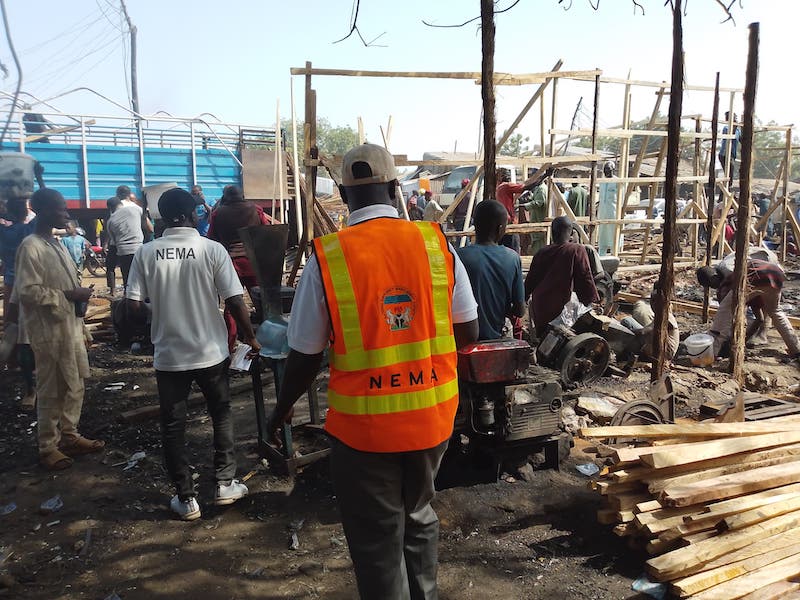
The bustling Kara Grains Market in Sokoto, a vital hub for agricultural commerce, was tragically consumed by a devastating fire on a Saturday morning, leaving a trail of destruction and financial ruin in its wake. The inferno, which rapidly engulfed a significant portion of the market, reduced over 50 grinding shops to ashes and scorched nearby residential buildings, inflicting substantial losses estimated to exceed N50 million (approximately $67,000 USD). The vibrant marketplace, once teeming with activity, was transformed into a scene of charred debris and smoldering remnants, a stark testament to the fire’s destructive power. The incident left numerous traders and residents grappling with the sudden and overwhelming loss of their livelihoods and possessions.
The fire’s insatiable appetite consumed vast quantities of stored food items, including staples like rice, millet, and beans, exacerbating the already significant economic impact of the disaster. These essential commodities, meant to sustain families and fuel local businesses, were reduced to ashes, compounding the hardship faced by the affected community. Beyond the immediate loss of goods, the fire also disrupted the intricate network of trade and commerce that the market facilitated, further impacting the local economy. The destruction of grinding shops, crucial for processing grains into flour and other essential food products, dealt a severe blow to the market’s ability to function as a vital food processing center.
Among the many victims of the fire, individual stories of loss and resilience emerged. Glory Matthew Abba, a shop owner, saw his livelihood crumble before his eyes as the fire consumed his grinding engine, a valuable asset worth N1.8 million (approximately $2,400 USD). This devastating loss represented not only a financial setback but also the potential disruption of his ability to provide for himself and his family. Another victim, Aliyu Achida, suffered a double blow, losing both his home and his precious stores of food crops, including rice, millet, and beans, accumulating to a staggering loss of approximately N3 million (approximately $4,000 USD). This tragic loss illustrates the devastating impact of the fire on the personal lives and well-being of individuals within the community.
In the aftermath of the disaster, the Sokoto State Emergency Management Agency (SEMA) and the National Emergency Management Agency (NEMA) swiftly mobilized to assess the extent of the damage and provide support to the affected community. A joint assessment team was dispatched to the ravaged market, meticulously surveying the charred remains of shops and homes. Officials engaged with the victims, offering reassurances of their commitment to providing assistance during this challenging period. The assessment aimed to gauge the immediate needs of the community, including shelter, food, and other essential supplies, and to lay the groundwork for a comprehensive recovery plan.
As the investigation into the cause of the fire continues, authorities stressed the importance of fire safety awareness and preparedness within the community. SEMA’s Director of Relief, Mustapha Umar, emphasized the need for vigilance, urging residents to promptly report any potential fire hazards to prevent future tragedies. This call for heightened awareness underscored the critical role of community participation in mitigating fire risks and safeguarding lives and property. The incident served as a stark reminder of the devastating consequences of fire outbreaks and the importance of proactive measures to prevent such disasters.
The Kara Grains Market fire stands as a stark reminder of the vulnerability of communities to unforeseen disasters and the importance of collective efforts in mitigating risks and supporting those affected. The incident highlighted the critical need for robust fire safety measures, including regular inspections, adequate fire-fighting equipment, and community education programs. The recovery process in the wake of this tragedy will require a concerted effort from government agencies, local organizations, and community members to rebuild livelihoods, restore infrastructure, and ensure the long-term resilience of the affected community. The spirit of resilience and the willingness to support one another demonstrated by the community in the face of adversity will be crucial to navigating the challenging path towards recovery.








