





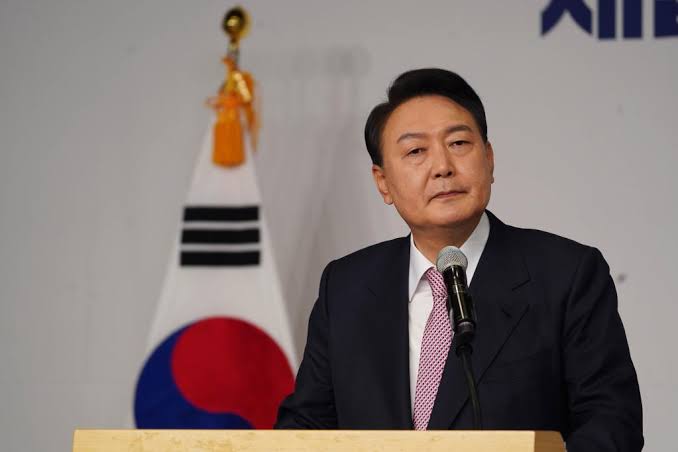
The South Korean political landscape was embroiled in a high-stakes power struggle as lawmakers voted to impeach President Yoon Suk-yeol amidst a backdrop of widespread public protests. The impeachment motion, passed with 204 votes in favor and 85 against, stemmed from allegations of insurrection and marked a pivotal moment in the nation’s democratic trajectory. The vote followed a failed attempt by Yoon to impose martial law, an action that ignited fierce public debate and fueled calls for his removal from office. Hundreds of thousands of citizens took to the streets of Seoul, engaging in rival demonstrations that reflected the deeply polarized political climate. Supporters of the president, waving national flags and singing patriotic songs, defended his actions while opponents, bundled against the freezing temperatures, rallied for his impeachment, chanting slogans and holding signs calling for his resignation. The sheer scale of the protests underscored the gravity of the situation and the deep divisions within South Korean society.
The impeachment vote marked a significant turning point in Yoon’s presidency, suspending him from office and placing the nation’s leadership in the hands of Prime Minister Han Duck-soo on an interim basis. The fate of the presidency now rested with the Constitutional Court, which had 180 days to deliberate on the impeachment vote and determine Yoon’s future. The court’s decision held immense weight, as it had the power to either uphold the impeachment and permanently remove Yoon from office or overturn the vote and reinstate him as president. The process involved convincing members of Yoon’s own conservative People Power Party (PPP) to side with the opposition, a testament to the widespread discontent with his leadership and the severity of the allegations against him. The impeachment attempt highlighted the vulnerability of even democratically elected leaders to removal from office if their actions are deemed to violate constitutional principles or undermine the rule of law.
The opposing rallies in Seoul captured the stark divisions within South Korean society. While tens of thousands gathered near Gwanghwamun Square in support of Yoon, a much larger crowd of over 200,000 people assembled outside the parliament, demanding his impeachment. The pro-Yoon demonstrators defended his decision to declare martial law, arguing that it was a necessary measure to maintain order and stability. On the other hand, the anti-Yoon protesters saw his actions as an assault on democracy and a dangerous overreach of presidential power. They accused him of undermining constitutional principles and jeopardizing the country’s democratic institutions. The contrasting scenes of flag-waving supporters and impassioned protesters underscored the deep political polarization that gripped the nation.
Amidst the political turmoil, everyday acts of kindness and solidarity emerged within the crowds. Volunteers distributed hand warmers, coffee, and food to those braving the sub-zero temperatures to participate in the impeachment rally. A K-pop star, Yuri of the band Girl’s Generation, whose music had become an anthem for the protest movement, pre-paid for meals for her fans attending the demonstration, showing her support for the cause. Demonstrators also displayed acts of community support, with one renting a bus to provide a space for parents to care for their babies during the rally and another foregoing a planned hike to join the protest. These small gestures demonstrated the human side of the political drama, highlighting individual acts of compassion amidst the larger struggle for democratic principles.
The impeachment proceedings against Yoon evoked parallels to the 2004 impeachment of then-President Roh Moo-hyun, who was removed by parliament for alleged election law violations and incompetence but later reinstated by the Constitutional Court. This precedent provided a glimmer of hope for Yoon’s supporters, while also serving as a reminder that the court held the ultimate authority in determining his fate. The court’s composition of six judges meant that a unanimous decision was required, adding another layer of complexity to the already tense situation. Even if the impeachment failed, legal experts argued that Yoon could still face legal ramifications for his attempt to impose martial law, as it constituted an act of insurrection, a serious offense under South Korean law.
Yoon’s plummeting approval rating, down to a dismal 11%, and the overwhelming public support for his impeachment, at 75%, reflected the widespread dissatisfaction with his leadership. Despite the gravity of the situation, Yoon remained defiant and unapologetic, doubling down on unsubstantiated claims that the opposition was colluding with communist adversaries. His refusal to concede any wrongdoing further fueled the calls for his removal, painting him as a leader unwilling to acknowledge his mistakes or heed the voice of the people. The impeachment saga marked a critical juncture in South Korean politics, raising fundamental questions about the balance of power, the role of public protest, and the future direction of the nation’s democracy.








