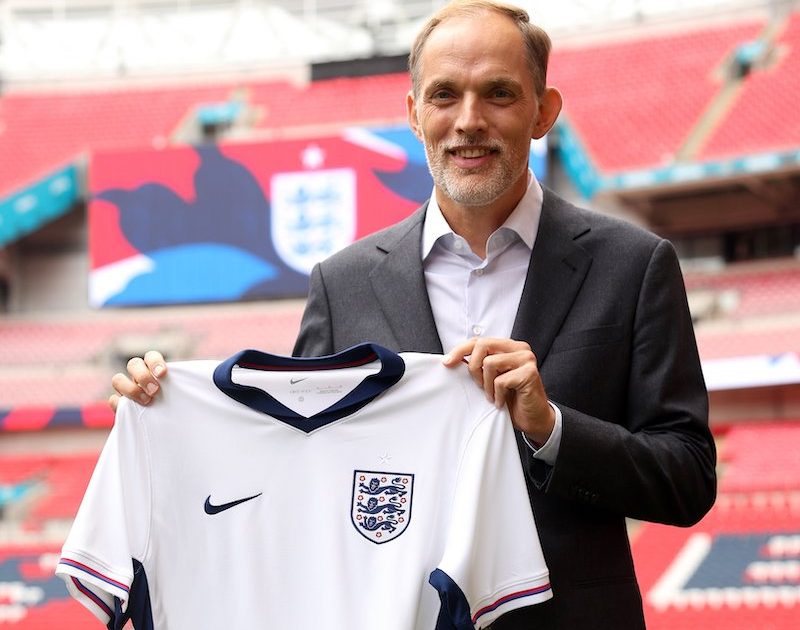
On Thursday, Southampton boss Russell Martin expressed his belief that many English coaches are capable of managing the national team following the Football Association’s (FA) appointment of Thomas Tuchel as the new England manager. Tuchel, who previously managed high-profile clubs like Chelsea and Bayern Munich, is set to take over from Gareth Southgate on January 1. This makes him the third foreign manager to oversee the national squad, a trend that has raised eyebrows among some football pundits and former players regarding the opportunities afforded to homegrown coaches. Despite the FA’s assertion that they interviewed English candidates, they concluded that the organization is not currently positioned to prioritize local talent.
Gary Neville, a former Manchester United captain, weighed in on the appointment, acknowledging Tuchel’s status as the “best available manager in the world.” However, he expressed concern over the narrative that Tuchel’s hiring reflects negatively on English coaching standards, suggesting that it signals a stagnation in the development of homegrown managers. Similarly, Wayne Rooney, now managing Plymouth, conveyed his surprise that the FA opted for a foreign candidate when there appears to be a robust platform for English coaches with vast potential. He wished Tuchel success but questioned the rationale behind not selecting a domestic coach.
Russell Martin emphasized that a wealth of capable English coaches exists, yet many face challenges in securing managerial roles in the Premier League. He argued that opportunities tend to be limited for homegrown talent, with a prevalent belief that English managers are not “good enough” for the highest levels of competition. Ahead of his team’s upcoming Premier League match, Martin noted that the perceived lack of available opportunities contributes to a cycle that underrecognizes the capabilities of English coaches, and he hoped for a shift in perspective that embraces the potential of local talent.
Leicester City manager Steve Cooper added further weight to the discussion, highlighting a strong belief in the British coaching pathway. He remarked that while the UK’s coaching standards are improving, there remains a need for English coaches to capitalize on any opportunities that do arise. His experiences, particularly leading the England team to victory at the Under-17 World Cup in 2017, led him to conclude that consistent performance is crucial for elevating the profiles of British coaches on the international stage. Cooper’s sentiment echoes a growing frustration in various quarters about the status quo regarding English management.
Everton’s Sean Dyche also commented on the appointment, acknowledging that while many would have preferred an English manager, Tuchel’s hiring reflects contemporary trends in football management. He noted the changing landscape and the differing expectations from football authorities, which complicates the pathway for homegrown coaches aiming for top positions. Dyche pointed out that the initial goal of advancing English coaching has faced hurdles, and the reality now is that the process for selecting a national team manager has altered significantly.
In summary, while the appointment of Thomas Tuchel has ignited discussions on the potential of English coaches, it also raises critical questions about the systemic barriers they face. Despite the capabilities and qualifications of domestic managers, the narrative surrounding their eligibility for high-profile roles continues to be complicated by external hires. The Red Flags emerging from this situation indicate a broader need for reconsideration of how English coaching talent is nourished and recognized, with figures like Martin, Neville, Rooney, Cooper, and Dyche calling for a more equitable landscape that offers opportunities for homegrown talent to shine. As the footballing world shifts, it remains to be seen whether the cycle of underappreciation for English managers can be broken.