





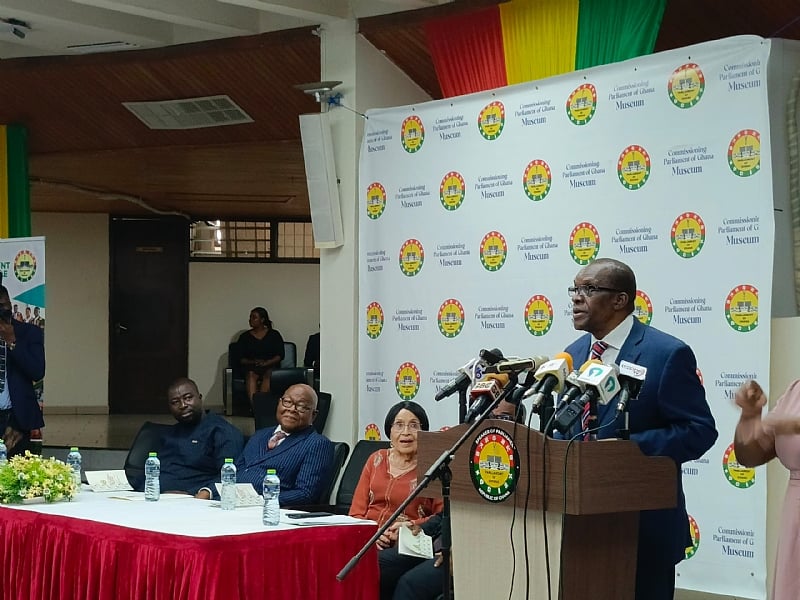
The Parliament of Ghana inaugurated a new museum within its Accra premises, a project spearheaded by Speaker Alban Sumana Kingsford Bagbin. This initiative, conceived during the 30th anniversary of Ghana’s uninterrupted parliamentary democracy, reflects Speaker Bagbin’s vision to safeguard the nation’s democratic heritage and educate current and future generations about its evolution, particularly the role of the legislature. Located on the second floor of the Chamber Block, the museum serves as a vital platform for disseminating historical information about Ghana’s parliamentary democracy to the public. The inauguration was graced by the presence of two former Speakers, Madam Joyce Adeline Bamford-Addo and Professor Aaron Mike Oquaye, underscoring the significance of the event.
Speaker Bagbin emphasized the museum’s importance as a testament to the foundations of Ghanaian democracy and the enduring spirit of the nation’s traditions and identity. He quoted American author Robert Heinlein, stating, “A generation which ignores history has no past and no future,” highlighting the crucial role history plays in shaping a nation’s trajectory. Further emphasizing the connection between heritage and nation-building, he invoked the words of Nelson Mandela, who said, “Our rich and varied cultural heritage has a profound power to help build our nation.” Speaker Bagbin stressed that despite its turbulent past, Ghana’s history is rich and deserves preservation and promotion for the benefit of future generations. He urged the youth to understand their nation’s historical journey to learn from past mistakes and contribute to a brighter future.
Ghana’s political history is intricately linked to its pre-colonial societal organization, followed by the arrival of European explorers and traders who named the land the Gold Coast, and the subsequent centuries of the transatlantic slave trade and colonial rule. The resilience of Ghana’s ancestors and their unwavering pursuit of self-rule led to a series of agitations and resistance movements that ultimately culminated in independence in 1957 and the attainment of republican status in 1960. However, the journey did not end there. The nation faced a series of coups that overturned the first, second, and third republics before the eventual return to constitutional rule in 1993.
The enduring nature of the 1992 Constitution, according to Speaker Bagbin, is attributed to its foundation in the collective will of the Ghanaian people. The museum houses a valuable collection of historical documents, documentaries, photographs, and artifacts that narrate the story of parliamentary democracy in Ghana. This collection serves to ensure that future generations understand and appreciate the sacrifices and struggles of their forefathers in the pursuit of democratic governance. The museum aims to inspire a sense of national pride and responsibility among Ghanaians, encouraging them to actively participate in shaping the future of their democracy.
Richard Kwame Acheampong, Chairman of the Parliamentary Museum Committee, extended an invitation to the public to contribute any relevant relics they might possess to further enrich the museum’s collection, fostering a sense of shared ownership and collective responsibility for preserving Ghana’s heritage. This collaborative approach aims to create a more comprehensive and inclusive representation of Ghana’s parliamentary history. The museum is envisioned as a dynamic space that continually evolves and expands its collection, reflecting the ongoing story of Ghana’s democracy.
Kingsley Ofosu Ntiamoah, Executive Director of the Ghana Museum and Monument Board, described the Parliament of Ghana Museum as a repository of artifacts that celebrate national identity and chronicle the nation’s struggles and triumphs on its path toward democracy and effective governance. The museum serves as a powerful symbol of Ghana’s commitment to democratic values and provides a valuable educational resource for citizens and visitors alike. It stands as a testament to the enduring spirit of the Ghanaian people and their unwavering pursuit of a just and democratic society. The museum’s collection serves as a constant reminder of the importance of preserving history and learning from the past to build a better future for all Ghanaians.








