









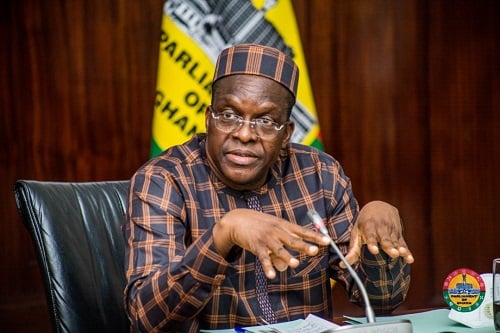
On October 17, 2024, Speaker of Parliament Alban Bagbin is set to make a significant ruling regarding a petition brought forth by the Minority party, which seeks to remove four sitting Members of Parliament (MPs) from their positions. The MPs in question—Cynthia Morrison (MP for Agona West), Kojo Asante (MP for Suhum), Andrew Asiamah (MP for Fomena), and Kwakye Ackah (MP for Amenfi Central)—are facing scrutiny due to their decision to run as independent candidates in the upcoming December elections. The Minority’s petition hinges on the interpretation of the MPs’ actions and their implications within the context of their party affiliations, specifically regarding the potential violation of party rules or parliamentary protocol by filing to contest elections outside of their political party.
Peter Kwakye Ackah, one of the affected MPs, has publicly expressed his lack of concern over the impending ruling from Speaker Bagbin. He clarified that his actions should not be construed as a formal departure from the ruling New Patriotic Party (NPP) but rather as a declaration of intent to pursue candidacy as an independent in the next parliament. Ackah emphasized that his declaration merely indicates a desire not to affiliate with the NPP going forward, rather than a resignation from party membership. This distinction is critical to his argument, as he seeks to establish that the decision to run independently reflects a separate intention from abandoning party loyalty entirely.
Ackah’s perspective sheds light on the broader implications of MPs transitioning to independent roles. According to him, the decision to pursue an independent candidacy should not automatically void their parliamentary positions or be seen as a departure from party allegiance. He voiced his belief that individuals considering independent runs simply signify their intent for future elections rather than an immediate severing of ties with their party. This nuanced interpretation underscores the complexity of political affiliation and individual agency within a party system, especially as MPs navigate their ambitions in the face of a changing political landscape.
However, the potential outcomes of Speaker Bagbin’s ruling carry significant weight for the future of the implicated MPs and their political careers. If the Speaker rules in favor of the Minority’s petition, declaring the MPs’ seats vacant, it could lead to immediate political ramifications. The MPs might find themselves in a precarious situation, having to reconsider their political strategies and community support as they prepare for the upcoming elections. Ackah acknowledges that actions taken in political contexts often invite reactions, suggesting that he has weighed the risks and benefits of his decision to announce an independent candidacy, despite the potential for losing his parliamentary seat.
The implications of Bagbin’s ruling extend beyond the individual MPs involved; they resonate with the broader landscape of Ghanaian politics as the country approaches elections. The case illustrates the tensions that can arise within party structures, particularly when members express dissent through their candidacy choices. Political parties may face challenges in managing their membership and preserving party unity in the face of individual ambitions. Moreover, the situation raises questions about party loyalty, electoral strategy, and the evolving nature of political identity in contemporary Ghana, where independent candidates increasingly make their mark on the electoral scene.
In conclusion, the forthcoming ruling by Speaker Bagbin represents a pivotal moment not only for the four MPs facing removal but also for the NPP and the political dynamics in Ghana as a whole. As MP Ackah’s comments illustrate, the intersection of ambition, party affiliation, and electoral strategy brings to light the intricate balance MPs must maintain in pursuing their political goals while navigating the expectations and regulations imposed by their parties. The eventual ruling will undoubtedly shape the course of the elections in December, potentially redefining the roles of party loyalty and independent representation in Ghana’s political future.









