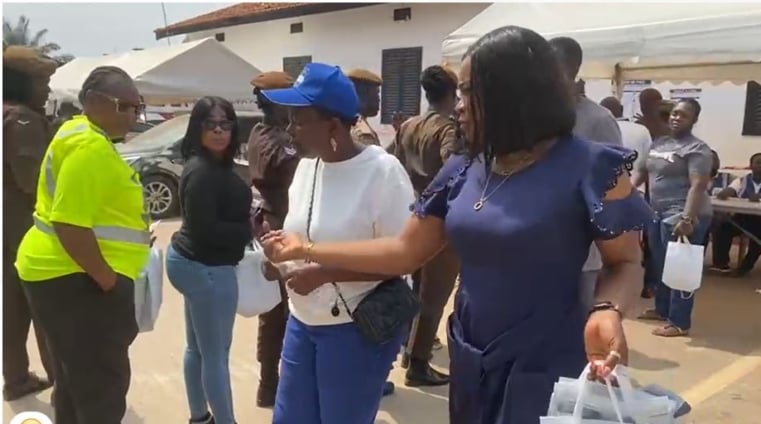
Lydia Seyram Alhassan, the Member of Parliament for Ayawaso West Wuogon, has found herself at the center of a political controversy following the release of a video depicting her distributing food to voters during the Special Voting exercise held on December 2, 2024. The incident took place at the Legon Police Station polling center and ignited widespread discussion regarding the ethical implications of her actions, particularly concerning voter influence during an election. Critics argue that her decision to distribute food as voters stood in line could be interpreted as an attempt to sway voter sentiment in her favor.
In a bid to defend her actions, Lydia Alhassan appeared on Citi FM’s Breakfast Show with Bernard Avle the day after the event and clarified her intentions. She emphasized that the motivation behind her actions stemmed from compassion rather than any malicious or strategic voter manipulation. The situation reportedly started when a voter asked for water, leading her women’s organizer to provide assistance. Recognizing that many others in the queue seemed tired or hungry, Alhassan took it upon herself to extend further help by distributing food. She maintained that her actions were aimed solely at alleviating the discomfort of those waiting to vote, dismissing any implications that her behavior was inappropriate or unethical.
Political opponents, especially John Dumelo, questioned the appropriateness of her actions, suggesting they could be construed as an effort to influence the electorate. In her response, Lydia Alhassan firmly rejected such allegations and pointed out that she was present at the polling station as part of her duty to ensure the voting process was carried out smoothly. She articulated that the food items were initially intended for her agents and the media personnel covering the election, reinforcing the notion that her primary concern was to adequately support those responsible for facilitating a fair voting experience. Alhassan’s commitment to the electoral process was central to her rationalization of the event.
Lydia Alhassan further commented on the series of events that unfolded after she had left the polling station. She indicated she departed the location prior to any hinted disturbances related to food-sharing incidents and refuted claims alleging her involvement in subsequent reactions from her opponent, John Dumelo. Her statement reflects a desire to distance herself from any negative fallout stemming from that day’s events, implying that she did not wish for her benevolent intentions to be misconstrued or exploited in a politically charged atmosphere.
The controversy surrounding her actions has raised broader questions regarding the ethical boundaries of campaigning and voter engagement in Ghanaian politics. Alhassan’s case underscores the delicate line politicians often walk between legitimate support for constituents and actions that could be interpreted as undue influence. The scrutiny she faces highlights the ongoing challenges in establishing clear guidelines governing political behavior during electoral periods, emphasizing the need for transparency and accountability among public figures.
As the political discourse continues, Lydia Alhassan’s narrative serves as a case study in the complexities of voter relations and campaign ethics. While she insists her actions were merely an act of kindness, the differing interpretations of her behavior reflect the polarized nature of political sentiment in Ghana. The incident exemplifies the significance of perception in politics, where even well-meaning gestures can be perceived through various lenses, influencing public opinion and electoral outcomes in unforeseen ways.