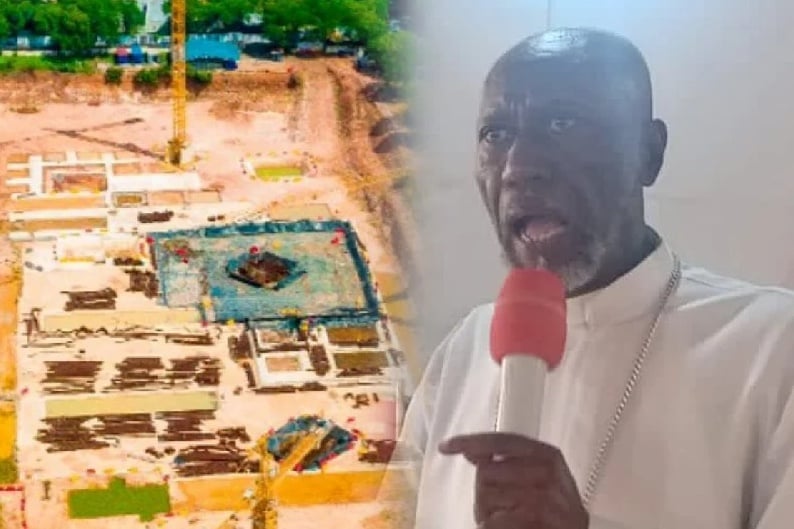
The controversial clergyman, St. Sark, has launched a scathing attack on the leadership and board of trustees of the National Cathedral project, calling for their immediate arrest and prosecution. He accused them of gross mismanagement and misappropriation of state funds, asserting that the vast sums allocated to the cathedral’s construction could have been utilized for projects that would have benefited the entire Ghanaian populace. St. Sark vehemently declared that anyone found culpable of mismanaging public funds should face imprisonment, explicitly stating, “All must be jailed.” He went further to label the project a “Church of Satan,” casting aspersions on the true intentions behind its construction and intensifying his demands for accountability and legal action. This public denunciation has ignited a fierce debate surrounding the cathedral’s future and the handling of its finances.
St. Sark’s accusations target a board composed of prominent religious figures in Ghana, including Apostle Prof. Opoku Onyinah, Archbishop Charles Palmer-Buckle, Most Rev. Bishop Justice Ofei Akrofi, Most Rev. T. K. Awotwi Pratt, Rt. Rev. Prof. Emmanuel Martey, Rev. Dr. Joyce Aryee, Rev. Victor Kusi Boateng, and Rev. Dr. Frimpong Manso. These individuals represent various Christian denominations and hold significant influence within the religious landscape of the country. St. Sark’s pronouncements, therefore, not only challenge the management of the cathedral project but also implicate respected religious leaders, raising questions about their stewardship and potentially creating a rift within the Ghanaian Christian community. Furthermore, the clergyman’s strong rhetoric and provocative labeling of the cathedral further polarize public opinion and escalate the controversy.
Adding another layer of complexity to the situation, St. Sark extended his accusations to former board members who had previously resigned, including Archbishop Nicholas Duncan-Williams, Rev. Eastwood Anaba, and Bishop Dag Heward-Mills. Despite their disassociation from the current board, St. Sark insists they should also be held accountable for their involvement in the project’s initial stages. This assertion broadens the scope of potential legal action and further intensifies the scrutiny on the project’s history and the actions of all those involved, regardless of their current affiliation with the board. It also highlights the complex and potentially protracted nature of any investigations that might arise from St. Sark’s accusations.
St. Sark’s primary contention revolves around the alleged misuse of state funds allocated to the National Cathedral project. He argues that these substantial resources could have been more effectively utilized for other initiatives that would have directly benefited the Ghanaian people, suggesting alternative projects in areas such as education, healthcare, or infrastructure development. This argument resonates with a segment of the public concerned about the government’s prioritization of the cathedral amidst pressing socio-economic challenges facing the nation. It raises questions about resource allocation, government spending, and the perceived disconnect between the priorities of the ruling elite and the needs of the general population.
The controversial “Church of Satan” label applied by St. Sark adds a dramatically inflammatory dimension to the controversy. This loaded terminology casts doubt on the project’s stated purpose as a national place of worship and suggests an ulterior, potentially sinister motive. While the specific basis for this allegation remains unclear, it serves to further discredit the project in the eyes of some and deepen the suspicion surrounding its true intentions. This provocative language is likely to exacerbate tensions and fuel further debate, potentially hindering any efforts towards reconciliation or constructive dialogue regarding the cathedral’s future.
The fallout from St. Sark’s accusations has the potential to significantly impact the future of the National Cathedral project. His call for arrests and prosecution, combined with the highly charged rhetoric employed, creates an atmosphere of distrust and suspicion. This could further erode public support for the project, particularly if investigations are launched and evidence of mismanagement is uncovered. Moreover, the controversy could strain relationships within the religious community and exacerbate existing divisions within Ghanaian society. The unfolding events will undoubtedly shape the narrative surrounding the National Cathedral, potentially jeopardizing its completion and leaving a lasting legacy of controversy and division.