Paragraph 1: Setting the Stage for Peaceful Elections in Ghana’s Ahafo Region
In the heart of Ghana’s Ahafo Region, a critical consultative dialogue unfolded, focusing on ensuring peaceful and credible elections in the upcoming 2024 electoral process. Convened in Hwediem, Asutifi South District, the dialogue brought together a diverse array of stakeholders, including religious and political leaders, representatives from the Electoral Commission (EC) and the National Commission for Civic Education (NCCE), traditional authorities, civil society organizations, and international development partners. The meeting underscored the collective responsibility of all participants in safeguarding the peace and stability of the nation, particularly in constituencies known for electoral vulnerabilities.
Paragraph 2: Calls for Unity, Respect, and Patriotism
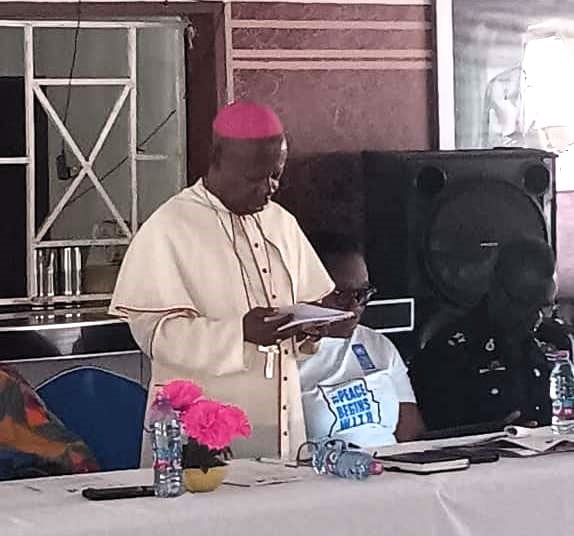
The dialogue commenced with a powerful call for unity and collaboration by Most Rev. Peter Kwaku Atuahene, Chairman of the Ahafo Regional Peace Council and Catholic Bishop of Goaso. He urged leaders to set an example by promoting peace and respecting diverse political choices. Emphasizing the shared national identity that transcends political affiliations, Bishop Atuahene invoked the wisdom of scripture, urging humility and patriotism. He warned that future generations would judge the current one harshly if they failed to uphold the peace of Ghana. The Bishop also acknowledged the valuable support provided by international partners, including the British High Commission, the UNDP, and the Commonwealth Secretariat, in advancing peace initiatives.
Paragraph 3: Electoral Commission and NCCE’s Commitment to Fair and Inclusive Elections
Representatives from the Electoral Commission and the National Commission for Civic Education addressed the gathering, reinforcing their institutions’ dedication to free, fair, and transparent elections. The EC outlined measures being implemented to strengthen electoral processes, including the deployment of trained personnel and robust systems to ensure credibility. The EC appealed for cooperation from political parties and voters, urging them to avoid misconduct and contribute to a peaceful electoral environment. The NCCE stressed the importance of civic responsibility, encouraging active participation in the elections while respecting the rights and choices of others. They emphasized the role of dialogue in resolving disputes and cautioned against inflammatory rhetoric.
Paragraph 4: Pastoral Guidance and the Role of Dialogue
Most Rev. Prof. Kwaku Asante, the Immediate Past Chairman of the National Peace Council, played a pivotal role in facilitating the dialogue. He emphasized that elections should be viewed as opportunities for democratic choice, not conflict. Professor Asante reminded participants that political parties serve as vehicles for improving citizens’ lives, not instruments of division. He urged voters and political actors to act with integrity and vigilance, avoiding activities that could undermine national unity. He also called on key stakeholders, including the media, security agencies, and election observers, to maintain professionalism and contribute to a smooth electoral process.
Paragraph 5: International Support and Local Ownership of Peace Initiatives
Madam Jennifer Asuako, Programmes Analyst for the United Nations Development Programme (UNDP), commended the collaborative spirit among stakeholders in the Ahafo Region. She reaffirmed the UNDP’s commitment to supporting peacebuilding efforts, particularly in constituencies with a history of electoral tensions, highlighting the positive example set by the region. Ms. Asuako encouraged responsible voting and urged all to contribute to free, fair, and transparent elections. The culmination of the dialogue was marked by a significant gesture: political parties signing a constituency-level peace pact, pledging peaceful conduct before, during, and after the elections. This act, witnessed by representatives from various sectors, symbolized a shared commitment to peaceful democratic processes.
Paragraph 6: The Collective Responsibility for Peace and Democratic Values
The signing of the peace pact served as a testament to the collective resolve to ensure peaceful, democratic, and credible elections in Ghana. Both Bishop Atuahene and Professor Asante reiterated the importance of prioritizing national interests over partisan objectives. They stressed that the peace of Ghana is a shared responsibility and that elections should be about reflecting the will of the people, not the pursuit of power at the expense of peace. The dialogue, with its broad participation and focus on key principles, reinforced Ghana’s commitment to democratic values and its aspiration to remain a beacon of democracy in Africa. The participation of marginalized communities, including women’s groups and persons with disabilities, underscored inclusivity as a vital component of this shared vision.