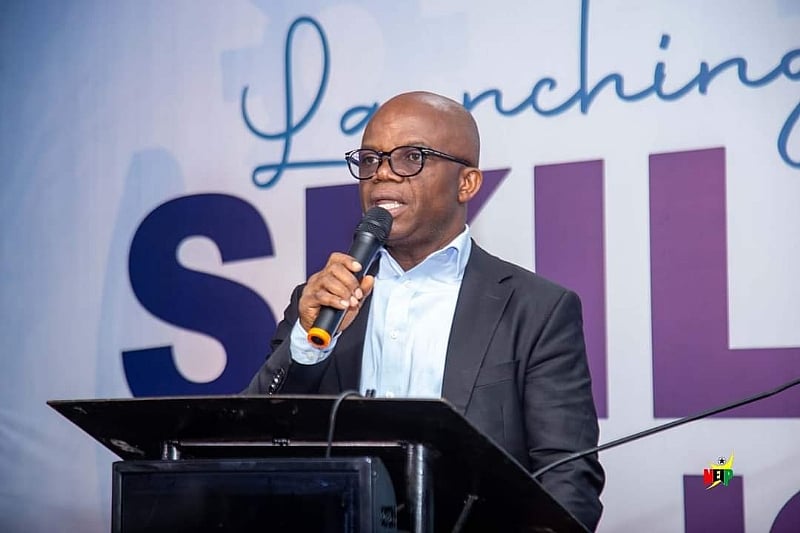
The Skills for Jobs Project in Ghana, led by Dr. Mahamudu Bawumia and the National Entrepreneurship and Innovation Programme (NEIP), aims to equip young people with vital entrepreneurial skills to promote self-reliance and economic independence. Launched amidst a call for empowerment, the initiative serves as a platform for the youth to create their own businesses, thereby fostering sustainability in the country’s economic fabric. During the launch event, Hon. Stephen Amoah, the Deputy Minister for Finance, emphasized the importance of this opportunity, urging the youth to embrace it fully in order to take control of their futures and become self-sufficient. He underscored the current critical moment in Ghana, where preparing the youth with sustainable skills is essential to achieve long-term growth and stability.
Amoah’s remarks highlighted the non-partisan nature of the Skills for Jobs Project, indicating that it aims to provide advantages to future generations, irrespective of political alignment. He acknowledged that while previous governments have attempted similar youth programs, there is an optimistic outlook for this initiative in terms of its potential effectiveness and sustainability. His comments served as a reminder of past initiatives that varied in success and underscored a common goal among political parties to create functional programs that empower the youth. The commitment from the ruling party to address youth unemployment and entrepreneurship demonstrates a shared vision for the future viability of Ghana.
In his address, Hon. Amoah noted a global shift towards entrepreneurship as a vital driver of employment. Emphasizing this trend, he reported that the government has already created opportunities for over 2 million young people to develop their skills for self-employment. The Skills for Jobs Project is an extension of this vision, intending to allow the youth to not only find jobs but create their own. By focusing on entrepreneurship, the Ghanaian government is forging an ecosystem conducive to business creation, challenging the traditional notion that employment is solely limited to white-collar jobs. Amoah’s insights reiterated that the lasting economic emancipation of Ghana’s youth must be a priority regardless of the political climate.
Kofi Ofosu Nkansah, the CEO of NEIP, elaborated on the details of the Skills for Jobs Project, framing it as a crucial component of shifting economic strategies in Ghana. The project builds on the groundwork laid by prior initiatives, specifically the vocational training provided under the Kayayei Empowerment Programme, which successfully trained 5,000 women in various skills. The ambitious new project aims to train 100,000 youth across the nation in a diverse array of actionable skills, such as soap and detergent making, yogurt production, and mobile phone repairs, thus broadening opportunities for personal business ventures. This comprehensive approach illustrates NEIP’s commitment to addressing youth unemployment through tailored skill training that meets local market needs.
The project also emphasizes inclusivity by incorporating stakeholder contributions from local Members of Parliament (MPs) and Metropolitan, Municipal, and District Chief Executives (MMDCAs), who will assist in selecting trainees from various districts. This grassroots involvement ensures that the program is responsive to regional demand and allows participants to identify their preferred skills, enhancing their chances of succeeding in creating viable enterprises. Nkansah praised Dr. Bawumia for his relentless advocacy for youth empowerment, asserting that the knowledge and competencies gained from this training will not only enable the youth to become job creators but will also serve to enhance the overall economic growth of the nation.
In closing, Nkansah encouraged potential beneficiaries of the Skills for Jobs Project to seize this significant opportunity to mold their futures actively. He reiterated that the skills acquired through this program will be instrumental in shaping their pathways toward economic self-sufficiency and independence. This initiative represents a forward-thinking approach to tackling youth unemployment in Ghana by equipping young individuals with the necessary tools to become productive members of society. With Dr. Bawumia’s consistent efforts and the collaborative framework established, the Skills for Jobs Project holds the promise to cultivate a generation of entrepreneurs who can contribute meaningfully to the economic landscape of Ghana.