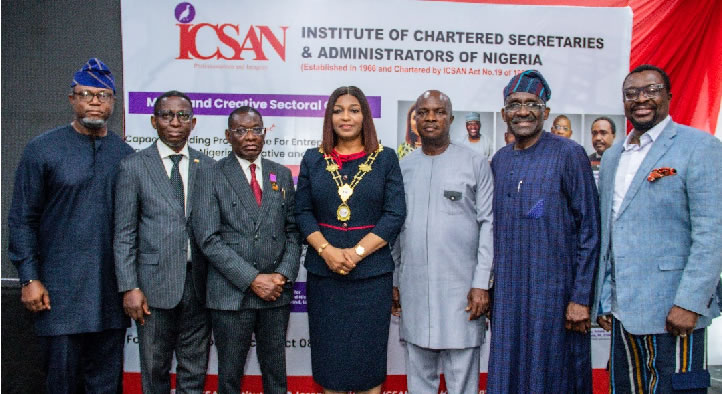
Paragraph 1: Unleashing the Economic Powerhouse: Nigeria’s Creative and Media Sectors
Nigeria’s creative and media industries stand poised as potential dynamos of economic growth, capable of propelling the nation towards long-term prosperity. The Institute of Chartered Secretaries and Administrators of Nigeria (ICSAN) has underscored the need for strategic and sustained investment in these sectors, emphasizing that their proper structuring is crucial to unlocking their full potential. This call to action recognizes the significant economic and cultural contributions these industries can make if provided with the necessary support and infrastructure. The convergence of talent, innovation, and cultural richness within these sectors presents a unique opportunity for Nigeria to diversify its economy and establish itself as a global creative hub.
Paragraph 2: Building Sustainable Growth: The Pillars of Corporate Governance
ICSAN has highlighted the critical role of robust corporate governance frameworks in ensuring the sustainability and success of Nigeria’s creative and media enterprises. Emphasizing accountability, transparency, and effective risk management, ICSAN President Funmi Ekundayo has stressed that these principles form the backbone of resilient organizations. The absence of these elements, she argues, contributes to the downfall of many businesses. She advocates for strengthening internal structures, implementing clear control systems, and fostering a culture of transparency. This focus on corporate governance is seen as crucial for attracting investment, building trust, and fostering long-term growth within the creative and media landscape.
Paragraph 3: From Potential to Powerhouse: Investing in the Creative Ecosystem
The transformation of Nigeria’s creative potential into a sustainable economic engine requires a collaborative effort between the public and private sectors, as emphasized by Channels Media Group Chairman John Momoh. He calls for strategic investments that incentivize innovation, protect intellectual property, and provide financial access for startups and creatives. Moving beyond short-term gains requires a systemic approach that nurtures the creative ecosystem, fosters collaboration, and provides the necessary resources for individuals and businesses to thrive. This includes creating an environment where creativity can flourish, intellectual property is protected, and access to capital is readily available.
Paragraph 4: Empowering the Next Generation: Education and Talent Development
Waheed Olagunju, Chairman of the Creative and Media Sectoral Group, underscores the importance of investing in human capital. He advocates for prioritizing education and talent development, equipping young Nigerians with the skills needed to excel in the rapidly evolving creative and media landscape. Strategic investments must be coupled with training and empowerment in areas such as media, design, animation, fashion, and related fields. Developing a skilled workforce is essential for ensuring the long-term competitiveness and sustainability of these industries. This includes fostering digital literacy, providing access to legal expertise, and creating educational opportunities that equip the next generation of creators with the necessary skills and knowledge.
Paragraph 5: Infrastructure for Innovation: Building a Resilient Creative Ecosystem
Building a thriving creative economy requires not only investing in talent but also developing the necessary infrastructure, including digital, legal, and educational frameworks. Olagunju emphasizes that without these supporting structures, Nigeria’s creative ecosystem cannot reach its full potential. This includes providing access to high-speed internet, establishing clear legal frameworks for intellectual property protection, and creating educational institutions that cater to the specific needs of the creative industries. Investing in this infrastructure will create a more conducive environment for innovation, collaboration, and sustainable growth.
Paragraph 6: Embracing the Future: Integrating Artificial Intelligence into Corporate Governance
Looking toward the future, ICSAN is committed to integrating artificial intelligence (AI) into corporate governance frameworks. This forward-thinking approach recognizes the transformative potential of AI in enhancing transparency, efficiency, and accountability within organizations. In preparation for the 2025 Company Secretaries and Registrars Forum, ICSAN aims to explore the opportunities and challenges associated with AI integration. By embracing technological advancements, ICSAN aims to strengthen corporate governance practices and equip businesses with the tools they need to succeed in a rapidly evolving digital landscape. This commitment to leveraging AI demonstrates ICSAN’s dedication to promoting best practices and ensuring the long-term health and sustainability of Nigeria’s corporate sector.