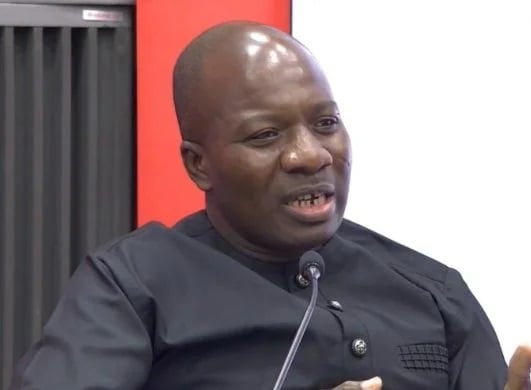
Mahama Ayariga, a Member of Parliament for Bawku Central, has publicly expressed his disapproval of the Supreme Court’s recent decision to intervene in Speaker Alban Bagbin’s declaration of four parliamentary seats as vacant. In an interview on TV3’s Key Points, Ayariga, who is part of the Minority Caucus, articulated his discontent not only with the ruling but also with the actions of the Supreme Court itself. He shared feelings of being “scandalised” and “sad,” referencing his previous role in vetting judges, which led him to expect a higher understanding of the Constitution from the judiciary. This disappointment is rooted in his belief that the behavior exhibited during the court’s proceedings deviated from constitutional adherence and judicial integrity.
Ayariga has accused the four MPs in question of willfully disregarding their constitutional responsibilities, resulting in their absence during Bagbin’s declaration. He interpreted their lack of attendance as an acknowledgment of their transgressions rather than a sign of ignorance. His assertion is based on the premise that the MPs were well aware of the constitutional violations at hand and chose not to provide a defense during the critical moment of the Speaker’s announcement. He emphasized that no complaints were registered by these MPs regarding their absence or the lack of a hearing, suggesting that their silence implies recognition of their failure to comply with the constitutional requirements.
Moreover, Ayariga criticized the Supreme Court for what he perceives as a breach of Article 115 of the 1992 Constitution. He raised questions about the legal justification for the court’s ruling, which effectively stayed Speaker Bagbin’s decision regarding the vacant seats. By calling attention to the constitutional framework, Ayariga aims to highlight the complexities of legal authority and the balance between legislative actions and judicial interventions. His comments contribute to a broader discussion about the roles and responsibilities of different branches of government in Ghana, especially in light of this contentious ruling.
The political fallout from this ruling continues to generate heated discussions across various media platforms, raising concerns about the implications of judicial overreach into parliamentary affairs. Ayariga’s remarks are not an isolated voice within the political landscape; they underscore a growing sentiment among some lawmakers regarding the limitations of judicial interference in legislative processes. Discussions about the sanctity of parliamentary decisions versus judicial oversight have surfaced, reflecting a deeper tension within the Ghanian political framework as different factions mobilize in response to the Supreme Court’s ruling.
In the academic sphere, reactions from political commentators further illuminate the potential ramifications of the Supreme Court’s intervention. Professor Ransford Gyampo, a political science lecturer at the University of Ghana, has suggested that the situation may escalate into a confrontation between the Supreme Court and the Speaker of Parliament. This prediction signals the likelihood of ongoing political maneuvering as key figures within the legislature and the judiciary grapple with the overarching impact of the ruling on governance and democratic processes in Ghana.
Ayariga’s stance and the predictions of professors like Gyampo indicate that the situation is far from resolved. As political divisions deepen in response to the Supreme Court’s ruling, the discourse surrounding parliament’s independence and the judiciary’s role will likely continue to evolve. In particular, the interactions between the legislature and judiciary in Ghana are poised to face rigorous scrutiny, which could shape public perception and influence future legislative and judicial encounters in the nation’s political arena. The implications of this legal and political confrontation are significant, as they underscore the critical need for clarity in the boundaries of authority among Ghana’s constitutional bodies.