









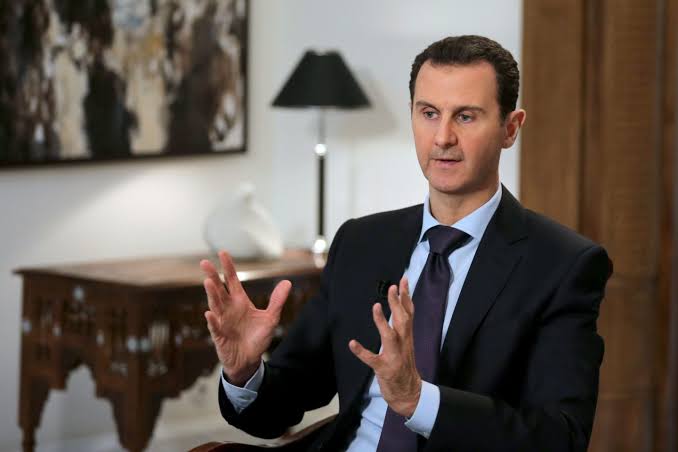
The short news snippet from December 8, 2024, announces a significant, albeit unverified, claim by Syrian rebel forces: the flight of President Bashar al-Assad from the country and the liberation of Damascus. This declaration, disseminated via Telegram, marks a potential turning point in the protracted Syrian conflict, a conflict characterized by over a decade of violence, displacement, and political turmoil. The rebels’ message frames Assad’s departure as the end of a “dark period” and the dawn of a “new era” for Syria, urging expatriate citizens to return to their supposedly liberated homeland. However, the brevity of the report and the lack of corroborating evidence from independent sources underscore the need for cautious interpretation. The information’s origin, solely attributed to rebel factions, raises questions about its objectivity and potential for propaganda. Further investigation and independent verification are crucial to ascertain the veracity of this claim and its implications for the future of Syria.
The claim of Assad’s flight, if confirmed, would represent a monumental shift in the Syrian power dynamic. His departure would create a power vacuum, potentially intensifying the already complex interplay of various actors in the Syrian conflict, including rebel groups, government forces, Kurdish militias, and international players. The ensuing struggle for control could exacerbate the existing instability and further complicate efforts to achieve a peaceful resolution. The rebels’ call for citizens to return to a “free Syria” assumes a swift and seamless transition to a stable post-Assad era, a scenario that appears highly improbable given the fragmented nature of the Syrian opposition and the potential for continued conflict. The announcement omits crucial details regarding the circumstances of Assad’s alleged departure, his current whereabouts, and the rebel groups’ plans for governing a post-Assad Syria. These omissions further highlight the need for a critical approach to this information pending independent verification.
The news report is juxtaposed with an advertisement for IQ Options, a trading platform promoting financial opportunities. This abrupt shift in tone and subject matter creates a stark contrast between the gravity of the political situation in Syria and the pursuit of individual financial gain. The placement of the advertisement immediately following the news report raises questions about the editorial choices and priorities of the platform disseminating the information. The advertisement’s emphasis on “unlocking financial futures” and “seizing opportunities” appears jarringly detached from the human cost and political complexities of the Syrian conflict discussed in the preceding news item. This juxtaposition underscores the often-dissonant nature of online information consumption, where weighty news stories can be interspersed with seemingly unrelated commercial content. The advertisement’s focus on individual financial success contrasts sharply with the collective struggle for freedom and stability depicted in the news report, highlighting the disparate realities experienced by different populations globally.
The advertisement’s call to action, urging readers to “tap here to start trading now,” further reinforces the sense of immediacy and opportunity it seeks to convey. This direct appeal to individual aspirations for financial gain stands in stark contrast to the uncertain and complex realities on the ground in Syria. The advertisement’s promise of quick and easy financial success through trading may resonate with some readers, but it also raises ethical questions about the appropriateness of promoting such ventures in the context of a humanitarian crisis. The juxtaposition of the advertisement with the news report could be interpreted as exploiting the reader’s emotional response to the Syrian conflict to promote a commercial product. This raises broader concerns about the potential for information platforms to prioritize advertising revenue over responsible content curation and ethical considerations.
The advertisement’s inclusion of a “Trading Expert” testimonial further reinforces its marketing message. The testimonial emphasizes the platform’s supposed popularity and effectiveness, urging readers to join the “millions trading smarter with IQ Options.” This appeal to social proof and the promise of access to “powerful trading tools and strategies” aims to enhance the advertisement’s persuasiveness. However, the testimonial’s generic nature and lack of specific details about the purported trading successes may undermine its credibility. The use of emotive language and symbols, such as explosions and money bags, further contributes to the advertisement’s sensationalized tone, potentially obscuring the risks associated with online trading. The advertisement’s focus on individual financial gain, presented immediately after a report on a major geopolitical event, underscores the often-blurred boundaries between information, entertainment, and commercial promotion in the digital age.
The advertisement’s concluding statement, “Don’t wait—opportunities don’t last forever,” creates a sense of urgency, encouraging readers to act quickly to capitalize on the supposed financial opportunities offered by IQ Options. This time-sensitive appeal, coupled with the promise of immediate access to trading tools, aims to bypass critical thinking and encourage impulsive decision-making. The advertisement’s emphasis on seizing opportunities stands in stark contrast to the long and arduous struggle for freedom and stability depicted in the news report on Syria. The juxtaposition of these two disparate pieces of content highlights the complex and often contradictory messages that bombard online audiences. The advertisement’s focus on individual financial gain may resonate with some readers, but it also raises ethical concerns about the propriety of promoting such ventures in the context of a humanitarian crisis. The placement of the advertisement immediately after the news report could be interpreted as an attempt to capitalize on the reader’s emotional response to the Syrian conflict for commercial purposes. This raises broader questions about the responsibilities of information platforms in curating content and balancing commercial interests with ethical considerations.









