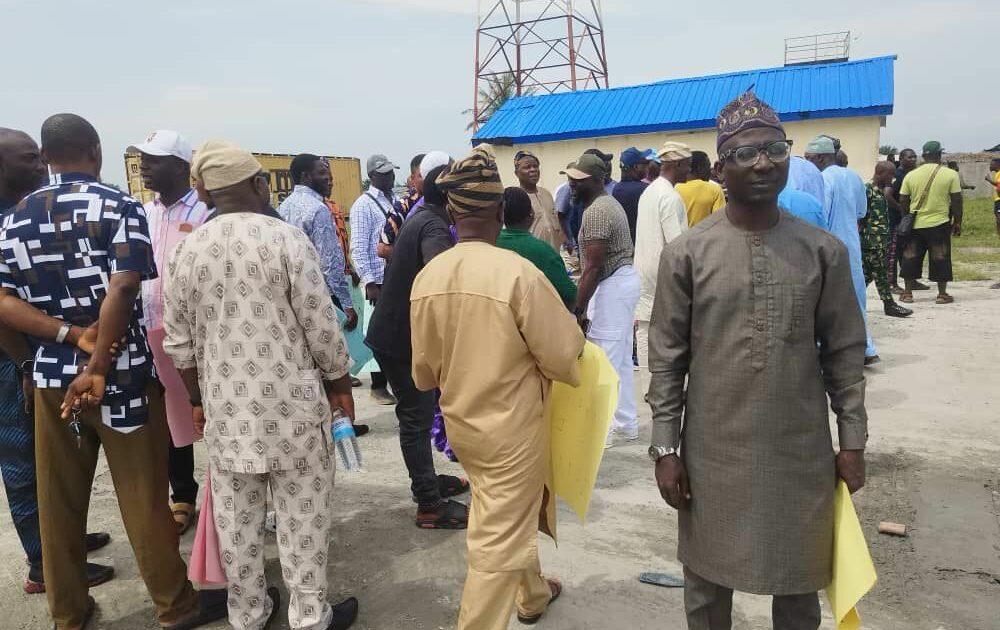
The usually bustling transport arteries of Lagos, Nigeria, experienced a significant disruption as petroleum tanker drivers initiated a protest against a newly imposed parking fee. This fee, set at N12,500 (approximately $16 USD) per truck, is levied through the state government’s Electronic Call-up Systems Company, designed to regulate traffic flow and reduce congestion. The protest quickly gained momentum, attracting support from other trucking sectors, including those transporting goods from the Dangote refinery and the newly operational Lekki Deep Seaport. This collective action brought cargo movement to a standstill, leaving imported goods stranded at the port and forcing importers to concede to the delays. The heart of the dispute lies in the perceived exorbitant cost of the parking fee, with truckers arguing that it imposes an unsustainable financial burden on their operations.
The protest followed a prior warning from truck drivers and fuel marketers who threatened to halt the loading of petroleum products if the government proceeded with the implementation of the N12,500 fee. Their grievance stems from the belief that this cost is disproportionately high, particularly for operations along the Lekki-Epe corridor, a major transport route. The Lagos State Government, however, remained steadfast in its decision, accusing the trucking unions of exploiting drivers by collecting unofficial fees, reportedly as high as N41,000, without providing any corresponding services. This clash of perspectives between the government and the transport sector escalated the tension, leading to the widespread protest and subsequent disruption of cargo movement.
The demonstration was spearheaded by major transport associations, including the Nigerian Association of Road Transport Owners (NARTO) and the Petroleum Tankers Drivers (PTD). These groups mobilized their members to express their discontent with the imposed fee, choosing the Lekki-Epe corridor as a focal point of their protest. The choice of location was strategic, highlighting the impact on both the port and the refinery, two crucial economic hubs. Yusuf Othman, the National President of NARTO, clarified that the action was not a full-blown strike but rather a temporary suspension of loading operations. This nuanced approach aimed to pressure the government while demonstrating a willingness to negotiate a more acceptable fee structure.
Othman emphasized NARTO’s support for the electronic call-up system, recognizing its potential to improve traffic management. However, he stressed the need for a more reasonable fee, arguing that the current N12,500 charge was excessively high and placed an undue burden on transporters. He indicated that discussions were underway with Lagos State Government officials to reach a compromise that would address both the government’s revenue needs and the financial constraints faced by the trucking sector. This willingness to engage in dialogue suggests a path towards resolving the impasse, though the outcome remained uncertain at the time of the initial reports.
The protest brought about a palpable sense of stagnation within the affected transport corridors. Numerous truck drivers abandoned their vehicles, refusing to load cargo until a resolution was reached. This inaction had a cascading effect on the supply chain, delaying the delivery of goods and creating uncertainty within the import-export sector. The images of idle trucks and stranded cargo served as a stark visual representation of the stalemate between the government and the trucking unions. The economic implications of the prolonged disruption were likely to be significant, adding pressure on all parties to find a swift and mutually agreeable solution.
This standoff in Lagos highlights the complex dynamics between government regulation, economic realities, and the crucial role of the transport sector. While the government aimed to implement a system to improve traffic flow and potentially generate revenue, the trucking sector felt the financial burden was too high and unsustainable. This situation underscores the importance of open communication and collaboration between stakeholders to ensure that policies are both effective and equitable. The ongoing negotiations between NARTO and the Lagos State Government hold the key to unlocking the current impasse and restoring the smooth flow of goods and services within this vital economic hub. The outcome of these discussions will likely set a precedent for future policy implementation and highlight the need for a balanced approach that considers both the public good and the financial viability of the transport sector.