





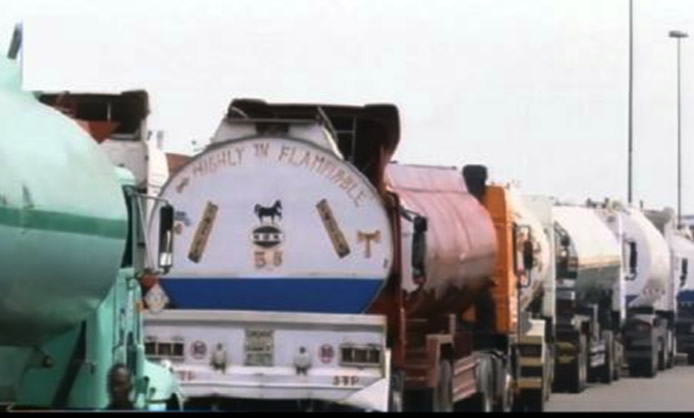
The Plight of Petroleum Tanker Drivers in Nigeria: A Call for Road Repairs and CNG Inclusion
The Petroleum Tanker Drivers (PTD) branch of the Nigeria Union of Petroleum and Natural Gas Workers (NUPENG), a crucial component of Nigeria’s oil and gas sector, has voiced its concerns regarding the deplorable state of federal highways and their exclusion from the Compressed Natural Gas (CNG) initiative. These issues, if left unaddressed, pose significant threats to the efficient distribution of petroleum products across the nation and the overall well-being of the drivers who navigate these treacherous roads. Their plea, articulated in a communiqué issued following a National Executive Committee meeting, calls upon the Federal Government to take swift and decisive action to rectify these pressing concerns.
The communiqué, signed by the National Chairman, Augustine Egbon, and National Secretary, Oluchi Chinagorom, acknowledges the government’s stated commitment to road repairs but expresses deep dissatisfaction with the slow pace of progress. Despite significant budgetary allocations for road projects, including N42.4 billion approved in June for road variations and a staggering N740 billion approved in October for the Berger stretch of the Abuja-Kano route, tangible improvements remain elusive. Further emphasizing the government’s financial commitment to infrastructure development, they also referenced the N621.2 billion approved in 2021 under the Road Infrastructure Tax Credit Scheme. The PTD-NUPENG emphasizes that these substantial allocations demonstrate the government’s awareness of the problem, making the lack of progress even more concerning. They caution that further delays, especially with the impending rainy season, risk exacerbating the already challenging conditions and jeopardizing the timely delivery of essential petroleum products nationwide.
The union highlights several critical federal roads urgently requiring attention. These include the Shagamu-Benin road, a vital artery connecting the southwestern and southern parts of the country; the Makurdi-Katsina-Ala road, crucial for agricultural transport in the north-central region; the Kachako-Dambazua road in Kano, serving a major commercial hub; the Yola-Hong-Mubi road in Adamawa, connecting important towns in the northeast; the Okene-Auchi-Benin road, another key link in the south; the Lanai-Agai-Bida road, important for local connectivity; and the East-West road spanning Benin-Warri to Port Harcourt, a major route for oil and gas operations in the Niger Delta. The deterioration of these roads poses significant safety risks to tanker drivers, increases transportation costs due to wear and tear on vehicles, and contributes to delays in fuel delivery, potentially leading to shortages and price hikes.
Beyond the urgent need for road repairs, the PTD-NUPENG expresses strong disappointment over its exclusion from the CNG initiative, a program designed to provide more affordable fuel alternatives. The union argues that tanker drivers, as essential players in the downstream oil and gas sector, should be included in this scheme. They emphasize that CNG is not just for smaller vehicles; heavy-duty vehicles like tankers can also benefit significantly from this cheaper fuel option. Access to CNG would not only reduce operational costs for tanker drivers but also contribute to a cleaner environment by reducing reliance on traditional fuels.
The exclusion of tanker drivers from the CNG initiative raises concerns about equity and the government’s commitment to supporting all stakeholders in the oil and gas sector. While the program aims to provide relief to motorists, neglecting the needs of those responsible for transporting fuel across the country undermines the initiative’s overall effectiveness. Integrating tanker drivers into the CNG scheme would demonstrate the government’s recognition of their crucial role and contribute to a more sustainable and economically viable transportation system.
In conclusion, the PTD-NUPENG’s communiqué serves as a potent reminder of the challenges faced by essential workers in Nigeria’s oil and gas sector. Their call for immediate road repairs and inclusion in the CNG program highlights the urgent need for government action to address these critical issues. The union’s emphasis on the economic and safety implications of these concerns underscores the importance of a swift and comprehensive response to ensure the smooth and efficient distribution of petroleum products across the country. By heeding the PTD-NUPENG’s plea, the Federal Government can demonstrate its commitment to supporting the vital workforce that keeps the nation’s economy running and ensure the safety and well-being of those who navigate Nigeria’s roads daily.
The union’s appeal transcends mere requests for infrastructure improvements and fuel subsidies; it represents a broader call for recognition and support for the essential role tanker drivers play in the nation’s economy. Their daily efforts ensure the steady flow of petroleum products, powering industries, homes, and transportation networks across the country. Addressing their concerns is not simply a matter of fulfilling promises but a strategic imperative for maintaining a stable and prosperous Nigeria. The government’s response to the PTD-NUPENG’s communiqué will be a critical test of its commitment to addressing the needs of its workforce and ensuring the efficient functioning of a vital sector of the Nigerian economy. Failure to act decisively risks not only the livelihoods of tanker drivers but also the stability of the nation’s fuel supply chain and the economy as a whole.








