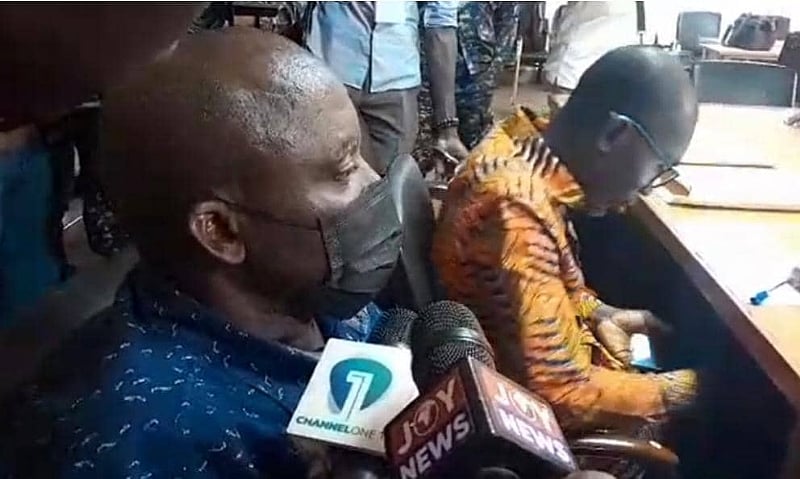
The re-collation of parliamentary election results in Ghana’s Tema Central constituency has been suspended due to safety concerns raised by Returning Officer Brobbey. Mr. Brobbey refused to continue the process without the presence of representatives from all political parties, citing threats to his family and personal safety. He stressed the need for all parties to be present to ensure a fair and transparent process and achieve a mutually agreeable outcome. This standstill underscores the deep-seated tensions and mistrust surrounding the electoral process in the constituency, which has been plagued by accusations of irregularities and manipulation. The suspension is the latest development in a series of disputes and represents a significant setback in the effort to finalize the election results and determine the legitimate winner of the parliamentary seat.
The current impasse stems from a demand by the National Democratic Congress (NDC) parliamentary candidate, Ebi Bright, supported by legal counsel Rockson-Nelson Dafeamekpor, for a full re-collation of votes in accordance with a court directive. The NDC alleges that the initial collation process was flawed and potentially manipulated to favor the New Patriotic Party (NPP) candidate, Charles Forson. Prior to the suspension, NDC representatives had walked out of the collation center in protest against what they perceived as the Electoral Commission’s (EC) unwillingness to restart the entire process. The NDC’s accusations of bias and manipulation, coupled with the EC’s insistence on its procedural correctness, have created a climate of distrust, hindering the smooth completion of the re-collation exercise.
The increased security presence at the EC’s Greater Accra Regional office following the NDC’s walkout further highlights the escalated tensions surrounding the electoral process. The heavy security deployment underscores the potential for unrest and violence, reflecting the deep political divisions and the high stakes involved in the outcome of the election. The situation in Tema Central mirrors broader concerns about the integrity and transparency of Ghana’s electoral system, with the dispute over the re-collation serving as a microcosm of larger challenges facing the country’s democratic institutions.
The controversy surrounding the Tema Central re-collation is not an isolated incident; it forms part of a broader pattern of disputes affecting nine constituencies. The NDC has consistently accused the EC of bias and manipulation, alleging that the commission is attempting to influence the election results in favor of the ruling NPP. These accusations have fueled mistrust and raised doubts about the impartiality of the electoral body. The EC, however, maintains that it is committed to upholding the integrity of the electoral process and ensuring the accuracy and transparency of the results. The contrasting narratives of the NDC and the EC have created a stalemate, making it difficult to achieve a consensus on the re-collation process and move towards a resolution.
The confrontation at the EC’s Regional Office at Ridge further illustrates the deep divisions and mistrust plaguing the re-collation process. During the re-collation proceedings for the nine outstanding constituencies, NDC representative Rockson Dafeamekpor challenged EC officials, alleging irregularities in the initial collation and demanding a complete restart of the process. He argued that the court directive mandated a fresh start and not a continuation from where the previous, allegedly flawed, process left off. His vehement objections and warnings to EC officials highlight the NDC’s determination to ensure a thorough and transparent re-collation, reflecting their deep-seated concerns about the integrity of the initial results.
The ongoing impasse in Tema Central and other constituencies underscores the urgent need for a resolution that addresses the concerns of all parties and restores trust in the electoral process. A failure to address these issues could further undermine the credibility of Ghana’s democratic institutions and potentially lead to wider unrest and instability. The situation calls for dialogue, compromise, and a commitment from all stakeholders to uphold the principles of fairness, transparency, and accountability in the electoral process. A resolution is essential not only to determine the legitimate winners of the disputed seats but also to safeguard the health of Ghana’s democracy.