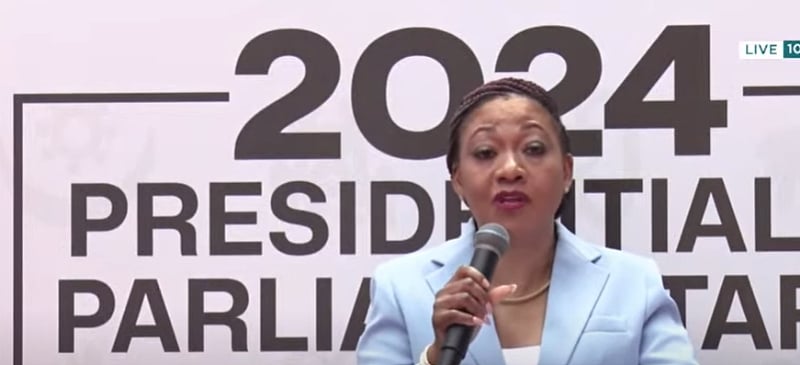
The Chairperson of Ghana’s Electoral Commission (EC), Jean Mensa, has unequivocally stated that the Commission plays no role in the deployment of military personnel or any other security arrangements for elections. This clarification comes in the wake of an announcement by the Ghana Armed Forces (GAF) detailing their plans to deploy troops to specific locations to maintain security during the electoral process. The GAF’s announcement emphasized that soldiers would not be present at polling stations, a point that aligns with the EC’s assertion of their non-involvement in security matters. Madam Mensa’s statement, delivered to journalists during a briefing on December 7th, reinforces the separation of responsibilities between the EC and security agencies. This delineation is crucial for maintaining public trust and transparency in the electoral process.
The EC’s primary responsibility lies in administering elections, ensuring a free, fair, and transparent process for all eligible voters. This includes voter registration, candidate nomination, ballot printing, logistics of polling station setup, vote counting, and the declaration of results. Security arrangements, however, fall squarely under the purview of the national security apparatus, including the Ghana Armed Forces, the Ghana Police Service, and other relevant agencies. These institutions are tasked with maintaining law and order, preventing violence, and ensuring a safe environment for voters to exercise their democratic rights. The EC’s explicit disavowal of any involvement in security deployments serves to underscore this division of labor and reassure the public that the electoral process is independent of security considerations.
The GAF’s announcement of troop deployments, while aimed at ensuring a peaceful election, has understandably raised questions and concerns among some segments of the population. The history of military involvement in politics in various African countries often creates a perception of potential influence or intimidation. Therefore, the EC’s clarification is particularly important in allaying these fears and reinforcing the principle of civilian control over the electoral process. The GAF’s assurance that soldiers will not be stationed at polling stations is a further step in mitigating these concerns. The presence of armed personnel at polling stations could be interpreted as an attempt to influence voters or suppress dissent, potentially undermining the integrity of the election.
Madam Mensa’s statement aims to clearly define the boundaries of the EC’s authority and responsibility. By stating that the EC has “no hand” in security arrangements, she emphasizes the Commission’s focus on its core mandate of conducting free and fair elections. This separation of powers is essential for maintaining public confidence in the impartiality of the electoral process. It assures citizens that the EC is solely dedicated to administering the elections and is not influenced by, or involved in, security considerations. This clarification also helps to prevent any potential blurring of lines between civilian electoral administration and military security operations, which could create confusion and erode trust in the democratic process.
The timing of both the GAF’s announcement and Madam Mensa’s clarification is significant. As elections approach, the issue of security becomes paramount. Ensuring a peaceful and secure environment for voters is crucial for the legitimacy of the election outcome. However, it’s equally vital to maintain the perception and reality of an independent electoral body. The EC’s proactive clarification helps to preemptively address any potential misconceptions or anxieties surrounding the role of security forces in the election. By openly communicating its non-involvement in security deployments, the EC reinforces its commitment to transparency and accountability, further strengthening public trust in the electoral process.
In conclusion, the EC’s clear statement of non-involvement in security arrangements is a crucial step in maintaining the integrity and transparency of the electoral process. It reassures the public that the EC is focused solely on administering free and fair elections, while security matters are handled by the appropriate agencies. This separation of powers is essential for building public trust and ensuring that the electoral process is perceived as independent and impartial. By proactively addressing potential concerns about military deployments, the EC reinforces its commitment to a democratic and transparent election. This clear communication is vital for fostering public confidence and ensuring a peaceful and credible electoral process.