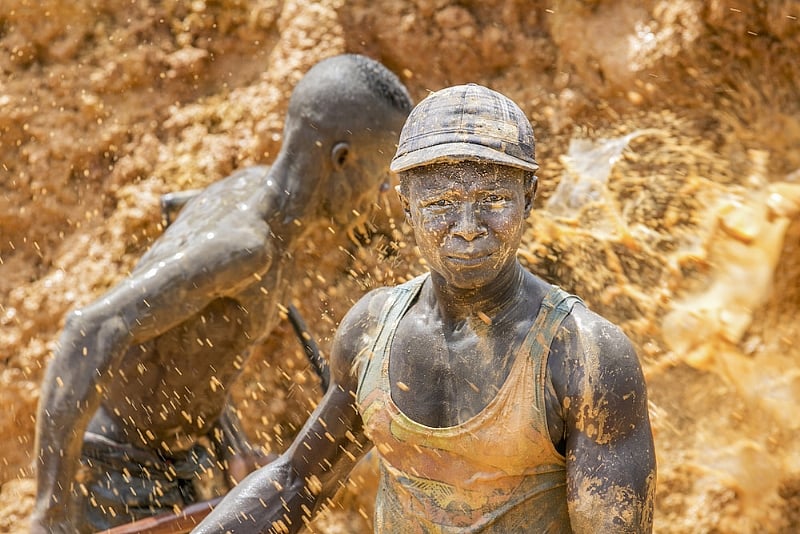
Galamsey: A Crossroads for Ghana’s Future
In grappling with the nuances of galamsey—the illegal mining operations that have arisen across Ghana—a young entrepreneur seeks to illuminate what the issue represents at its core. This is not merely a political topic but a complex intersection of survival, sustainability, morality, and culture. While both major political parties condemn galamsey, the broader conversation must transcend political disarray and focus on the human aspects lurking beneath this pressing issue. Galamsey highlights a dilemma faced by many communities: striving for immediate economic relief against the backdrop of long-term environmental degradation and cultural losses. Acknowledging the complexities of this narrative reveals that it is not about vilifying the miners but understanding why these choices exist amid a lack of viable alternatives.
Galamsey encapsulates dual realities. On one side lies the stark immediacy of economic survival for countless Ghanaians entrenched in poverty, who rely on these mining activities to support their families. On the other hand, there exist dire, lasting consequences—extensive environmental degradation, water pollution, and the obliteration of fertile land. The real tragedy is not just the destruction wrought by illegal mining activities but the perpetual cycle of poverty and desperation cycling communities into galamsey. Communities often resort to illegal mining as it appears to be their only option for survival, overlooking the unsustainable “loan” ingested from the earth’s natural resources. The pressing question revolves around how society can work towards a future where vital resources are preserved without sacrificing immediate livelihood.
As the conversation deepens, it becomes apparent that the current economic landscape is defined by an “economics of desperation” rather than one of hope. For many involved in galamsey, it is not greed that motivates them but an inherent necessity driven by the absence of jobs, educational opportunities, and systemic support. The stark reality is that while engages in illegal mining may achieve brief economic relief, it ultimately deepens community poverty and exacerbates environmental degradation, further pushing the population towards galamsey as farming and fishing become increasingly impossible. By envisioning an economy rooted in sustainable practices and job creation, communities may shed the cycle of despair and start to foster hope.
The discourse around galamsey also extends to its global ramifications, where an insatiable demand for gold fuels local illegal mining activities. Understanding that galamsey is not purely a regional problem but intricately linked to a broader global supply chain allows for deeper analysis and potential solutions. The possibility exists for a certification system for ethically sourced gold, reminiscent of fair-trade practices in other industries that mandate transparency throughout the supply chain. Local stakeholders—jewelers and banks—also hold roles in creating better accountability measures. Beyond enforcement, raising awareness among consumers can help establish an ecosystem where demand for responsibly sourced minerals prevails over illicitly extracted goods.
Women, too, play a critical role within the galamsey narrative, embodying both vulnerability and resilience as they navigate the difficulties that arise from illegal mining. They find themselves disproportionately affected yet also acting as crucial cogs in local economies tied to these operations. Recognizing women’s integral role provides an opportunity for new forms of empowerment through education, resources, and economic initiatives. When women are educated and uplifted, entire communities benefit. Placing women at the forefront of restoration efforts cultivates an inclusive approach to fighting galamsey’s destructive forces.
Technological interventions reveal exciting future prospects in combating the challenges posed by galamsey. Innovations such as drones for monitoring illegal activities combined with blockchain technology can facilitate tracing and verifying gold sources. While technology may not replace the essential groundwork required for enforcement, it can revolutionize how stakeholders engage with the issues at hand, encouraging accountability and sustainable practices. Furthermore, community involvement in implementing these technologies becomes vital—by educating and involving local miners and stakeholders, the community is more likely to produce lasting, meaningful change.
Finally, addressing galamsey necessitates a deep-rooted cultural context. Land, to many Ghanaians, symbolizes much more than mere economic resources; it embodies the history, identity, and heritage of communities. Galamsey threatens this cultural fabric by severing connections to ancestral lands and practices, resulting in long-term social dislocation. A viable path forward must reconnect cultural significance with ecological integrity, framing the fight against illegal mining as one deeply embedded in community identity. This perspective, combined with comprehensive engagement across all societal sectors—policy, faith-based organizations, and local communities—illuminates a roadmap capable of balancing immediate needs against a sustainable future.
The saga of galamsey serves as a potent reminder of choices that reverberate throughout history. As Ghana approaches this critical crossroads, collective tensions between environmental integrity, cultural preservation, and economic survival will dictate the nation’s path forward. Building a future devoid of galamsey’s destructive implications requires collaboration and vision, fostering hope and creating systemic alternatives for vulnerable communities. In harnessing the resilient spirit of Ghanaians, there exists tremendous potential to transition from desperation to prosperity. The resolutions to be made now will write the legacy of future generations—what will Ghana choose: to act or to look away? The answer lies in actions taken today.