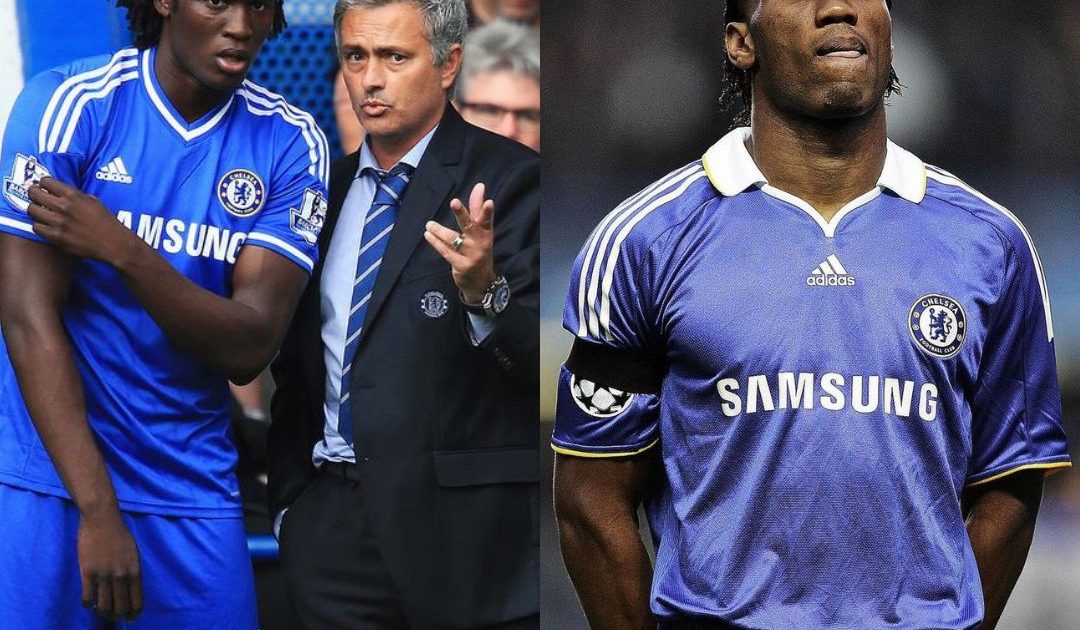
Striker Romelu Lukaku has recently opened up about the persistent comparisons to Chelsea legend Didier Drogba that have followed him throughout his career, particularly during his time in English football. These comparisons often stem from his impressive physical stature and strong playing style, which some believe mirror those of the Ivorian superstar. During an interview with Friends of Sports, which was released on YouTube, Lukaku expressed his frustration with being placed in a box based solely on his physical attributes. He explained that in England, people have a tendency to label players based on their appearances and body types, leading to the oversimplified analogy of him being the “new Drogba.”
The Belgian forward’s career has taken him through several top clubs in the Premier League, including Chelsea, Manchester United, and Everton. Throughout this journey, Lukaku has continually emphasized that although he shares some physical characteristics with Drogba, their styles of play are fundamentally different. While Drogba was renowned for his ability to win duels and hold up the ball even in the most challenging situations, Lukaku clarified that he does not play in the same way. He stated, “I’m not like that. Didier was more back to goal; he could hold up the ball no matter where you play it in from. That wasn’t my style,” highlighting the distinctiveness of his approach to the game.
This continuous comparison has posed challenges for Lukaku, as it has set expectations for him that align more closely with Drogba’s legendary trajectory than with his own individual style. The default assumption that Lukaku, with his physical attributes, should emulate Drogba has not only impacted how fans and pundits view him but has also imposed a template under which he feels pressured to perform. The unrelenting nature of these comparisons has made it difficult for Lukaku to carve out his own identity within the sport, as he often finds himself measured against Drogba’s immense legacy.
Furthermore, Lukaku’s remarks shed light on a larger issue within sports, particularly in football, where athletes are frequently pigeonholed based on their appearances. Instead of recognizing the unique qualities that define each player, there seems to be an ongoing tendency to draw parallels that may be unjust and reductive. Lukaku argues that such comparisons disregard the various dimensions of his gameplay and the evolution he has undergone as a player. He wishes to be appreciated for his unique contributions rather than being constantly juxtaposed with established legends who have left an indelible mark on the game.
The striker’s reflections encourage a more nuanced understanding of player identities and emphasize the importance of celebrating individuality in sports. He wants fans and critics alike to understand that, while certain physical traits can be similar, the skills, techniques, and tactics that define a player’s style can vary significantly. Lukaku’s talent and contributions to his teams are not merely a reflection of his physical prowess but also a culmination of his personal experiences, training, and developed artistry on the field.
Ultimately, Lukaku’s insights not only illuminate the challenges he faces as a player but also spark a dialogue about the broader implications of how athletes are perceived based on surface characteristics. As he navigates his career, Lukaku aspires to transcend merely being seen as an archetype of another player and instead hopes to establish his own legacy, defined by his individual achievements and unique playing style. It is a reminder that every player has their own story and should be recognized for their contributions without the shadow of comparisons to others.