





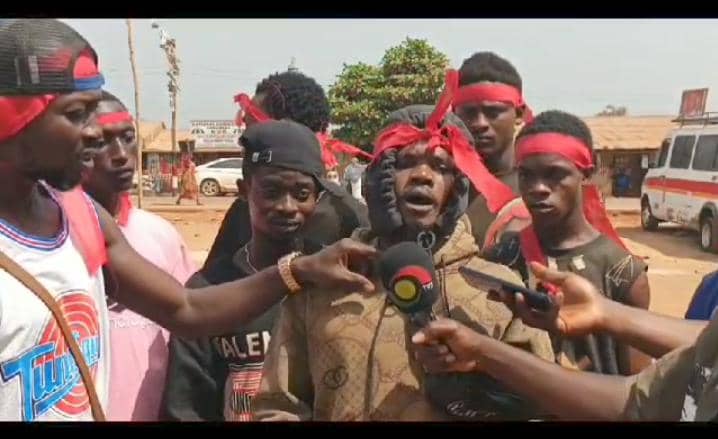
The tranquility of Kenyasi, Ntotroso, and Acherensua in Ghana’s Ahafo region was shattered by a fatal confrontation between local youth and police at the Newmont Ahafo South Mine site. Three young men were shot dead and four others injured, sparking outrage and escalating tensions between the community and the authorities. The youth allege that they were at the mine’s tailings dam seeking leftover gold, a claim disputed by the police who assert the youth were attempting to steal gold and that officers acted in response to a security breach. This incident ignited a firestorm of controversy, with accusations of police brutality and misinformation swirling amidst demands for justice and accountability.
The police statement, issued by ACP Grace Ansah-Akrofi, confirmed the incident but maintained that calm had been restored. They framed the event as an attempted theft by the youth, a narrative fiercely contested by eyewitnesses and the community. A special investigation team was dispatched from Accra to probe the incident and reinforcements were deployed to maintain order. However, the official narrative failed to quell the rising tide of anger and grief within the affected communities. The youth accused the police of excessive force, painting a picture of unarmed young men being gunned down while trying to eke out a living.
Richard Adjei-Poku, an environmental and human rights activist, condemned the killings as “barbaric and inhumane.” He called for Newmont to take preventative measures to avoid similar tragedies in the future. His condemnation resonates with the sentiment of the affected communities, who view the incident as a symptom of a larger problem: the exploitation of their resources without adequate benefits or respect for their livelihoods. The lack of economic opportunities and the perception of corporate greed further fueled the community’s anger, creating a volatile atmosphere.
Adding further fuel to the fire, the United Acherensua Youth, a local pressure group, denounced the police account as “expensive lies.” They challenged the narrative of attempted theft, arguing that the location of the incident, a bushy area, did not resemble a gold storage facility. They questioned why Newmont, with its sophisticated security systems, had not released any footage to support the police claim. The group also pointed to inconsistencies in the police statement, such as the misidentification of the victims’ hometowns and religious affiliations.
The United Acherensua Youth issued a press statement meticulously dissecting the police version of events. They emphasized that the young men were driven by economic hardship, not political motives, and sought leftover materials, not actively mined gold. They highlighted the lack of engagement with community leaders immediately following the incident, casting doubt on the police’s commitment to transparency and accountability. The statement concluded with demands for apologies, accurate reporting, and increased community engagement to address the underlying issues.
The tragic incident underscored the deep-seated tensions between mining companies, local communities, and law enforcement in resource-rich areas. The youth’s plea for responsible community mining programs highlights their desire for economic inclusion and control over their resources. The United Acherensua Youth’s insistence on transparency and accurate reporting reflects their determination to hold authorities accountable and to prevent similar tragedies from occurring in the future. The incident serves as a stark reminder of the human cost of resource extraction and the urgent need for dialogue and equitable solutions to address the complex challenges faced by mining communities. The unresolved questions surrounding the incident and the conflicting narratives highlight the need for a thorough and impartial investigation to determine the true course of events and to bring those responsible to justice.








