





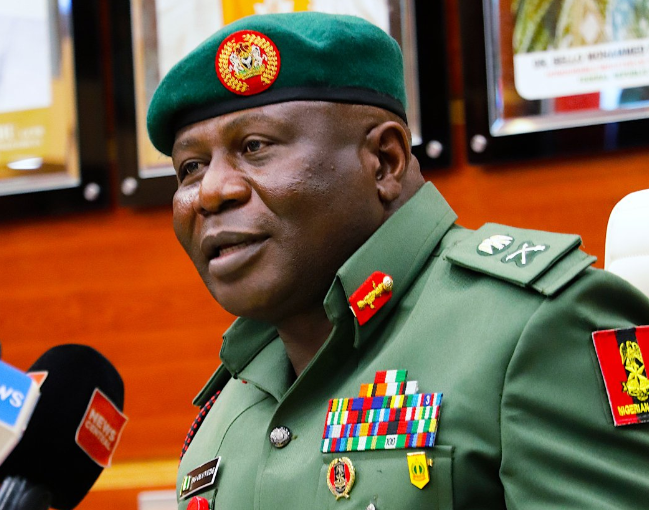
President Bola Tinubu recently submitted a formal request to the Senate for the confirmation of Lieutenant General Olufemi Oluyede as the substantive Chief of Army Staff. This action aligns with the constitutional provisions outlined in Section 218(2) of the 1999 Constitution (as amended) and Section 18(1) of the Armed Forces Act. The announcement was made by Bayo Onanuga, Tinubu’s Special Adviser on Information and Strategy. As the request came through on a Friday, the focus is now on the Senate’s impending deliberation and decision regarding Oluyede’s appointment, which reflects the government’s intent to ensure continuity and stability within the leadership of the Nigerian Army during a time of critical national security considerations.
Following the illness of the former Chief of Army Staff, Lieutenant General Taoreed Lagbaja, who was appointed in 2021, President Tinubu appointed Oluyede as the Acting Chief of Army Staff on October 30. Tragically, General Lagbaja passed away on November 5, prompting Tinubu to seek a permanent replacement swiftly. The strategic importance of this role amidst ongoing security challenges in Nigeria underscores the urgency of filling the position with a highly qualified individual who can maintain morale and operational effectiveness within the army. Oluyede’s appointment signals a commitment to addressing these security issues head-on and reinforcing the military’s role in safeguarding the country.
Lieutenant General Olufemi Oluyede boasts an extensive military career that positions him as a formidable candidate for the role. He is a distinguished graduate of the 39th Regular Course and previously served as the 56th Commander of the elite Infantry Corps of the Nigerian Army, highlighting his leadership experience within specialized military units. His commissioning as a second lieutenant dates back to 1992, and he has since risen through the ranks to achieve the rank of Major-General in September 2020. Oluyede’s professional trajectory showcases a blend of operational command and strategic leadership, providing him with a solid foundation to lead the army effectively.
Throughout his military career, General Oluyede has amassed a wealth of experience in various high-stakes positions. His assignments have included serving as a Platoon Commander and an adjutant at the 65 Battalion, commanding at the 177 Guards Battalion, and holding roles as a Staff Officer in the Guards Brigade and Commandant of the Amphibious Training School. His participation in key military operations, such as the Economic Community of West African States Monitoring Group Mission in Liberia and Operation Hadin Kai in Nigeria’s northeast, further reinforces his capabilities and adept understanding of both regional and domestic security challenges.
In recognition of his dedication and service, Oluyede has received numerous accolades that reflect his commitment to operational excellence and leadership within the Nigerian Army. His awards include the Corps Medal of Honour, the Grand Service Star, and other notable commendations such as the Chief of Army Staff Commendation Award. These honors not only celebrate his achievements but also serve as a testament to his ability to inspire and motivate troops while ensuring the success of military initiatives under his command.
General Olufemi Oluyede’s personal life complements his professional achievements; he is a family man, married with three children. His dual commitment to both his family and his military duties provides a well-rounded perception of his character and values. Ultimately, as the Senate reviews President Tinubu’s request for Oluyede’s confirmation, the outcome will have significant implications for Nigeria’s military leadership and its ongoing efforts to navigate the complex security landscape that the nation currently faces.








