









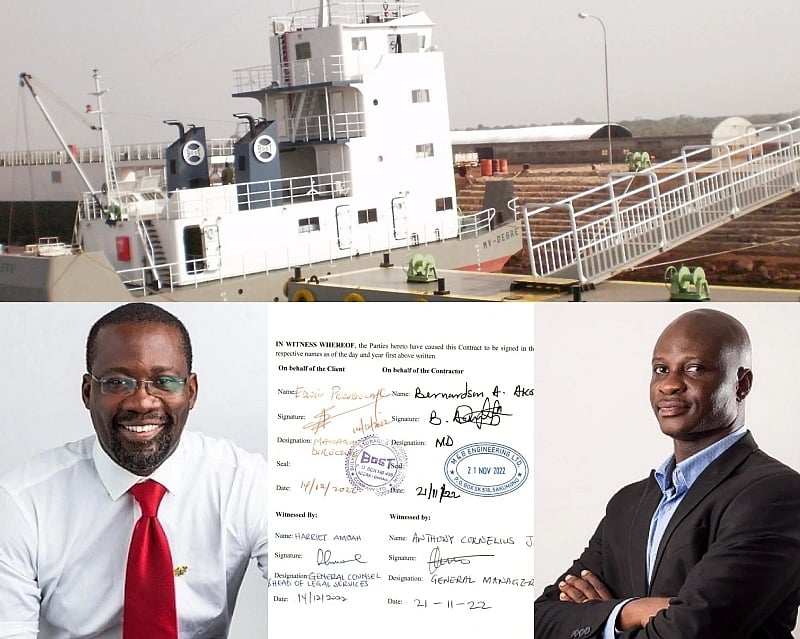
The Bulk Oil Storage and Transportation Company (BOST) is embroiled in a deepening scandal concerning a multi-million cedi tugboat rehabilitation contract at its Akosombo depot. Awarded in October 2022, the project, initially slated for five months, has extended to nearly two years with an expenditure approaching six million cedis, yet yielding no tangible results. The tugboat, despite this substantial investment, remains non-operational, raising serious questions about the contract’s execution and the management of public funds. Concerns have been raised about potential attempts to conceal the project’s failures, with allegations surfacing of pressure to simulate the boat’s readiness for a voyage, potentially to preempt investigations and justify the substantial expenditure. The situation has sparked outrage among stakeholders, who demand accountability and a thorough investigation into the matter.
The contract, awarded to M&B Limited, stipulated a total cost of GHS 5,653,455.62 for the repair of the tugboat, modification of discharge pipelines, and installation of pumps. The agreement required M&B Limited to provide a performance security and sign the contract within four days of receiving the award letter. However, despite these contractual obligations and the significant funds disbursed, the project remains stalled, with the tugboat still unfit for operation. The lack of progress and the escalating costs have fueled suspicions of mismanagement, misappropriation, and potential corruption within BOST. The perceived lack of transparency surrounding the contractor’s identity and the project’s execution has further exacerbated public distrust.
The situation is further complicated by allegations of orchestrated attempts to create a facade of progress. It is alleged that BOST management has offered incentives to VLTC managers to assign crew members to the tugboat, creating the illusion of operational readiness. This alleged maneuver is seen by critics as a desperate attempt to mask the project’s failures and evade accountability. The alleged involvement of a BOST General Manager in supplying equipment and logistics raises additional concerns about potential conflicts of interest and questionable procurement practices. This combination of alleged mismanagement, cover-up attempts, and potential conflicts of interest has painted a picture of a deeply flawed project riddled with irregularities.
Despite the substantial financial investment, eyewitness accounts reveal a starkly different reality. The work performed appears superficial, limited to cosmetic improvements such as painting the vessel, installing non-functional navigational equipment, and conducting oil changes. These superficial interventions stand in stark contrast to the millions of cedis spent, further underscoring the apparent mismanagement of the project. The lack of substantial progress raises fundamental questions about the contractor’s competence and the oversight mechanisms within BOST. The alleged absence of the contractor from the site has also fueled speculation about the validity of the contracting process and the potential involvement of internal actors.
Adding to the intrigue is the elusive nature of the contractor, M&B Limited. Staff at the Akosombo site claim to have never seen or interacted with the contractor, raising suspicions about the company’s legitimacy and prompting allegations that the project might be handled internally under undisclosed circumstances. This lack of transparency and the alleged phantom contractor scenario raise serious questions about the procurement process and potential irregularities in the awarding of the contract. The situation demands a thorough investigation to ascertain the true identity and involvement of the contractor and to determine if proper procurement procedures were followed.
The unfolding scandal has sparked public outcry and demands for accountability. With millions of taxpayer cedis seemingly wasted on a non-operational tugboat, Ghanaians are calling for a comprehensive and independent investigation into BOST’s handling of the project. The allegations of mismanagement, cover-up attempts, and questionable procurement practices necessitate a thorough probe to uncover the truth and hold those responsible accountable. The situation underscores the need for greater transparency and oversight in public procurement processes to prevent such incidents from recurring. The case serves as a stark reminder of the potential for corruption and mismanagement within state-owned enterprises and the importance of robust mechanisms to ensure accountability and protect public funds.









