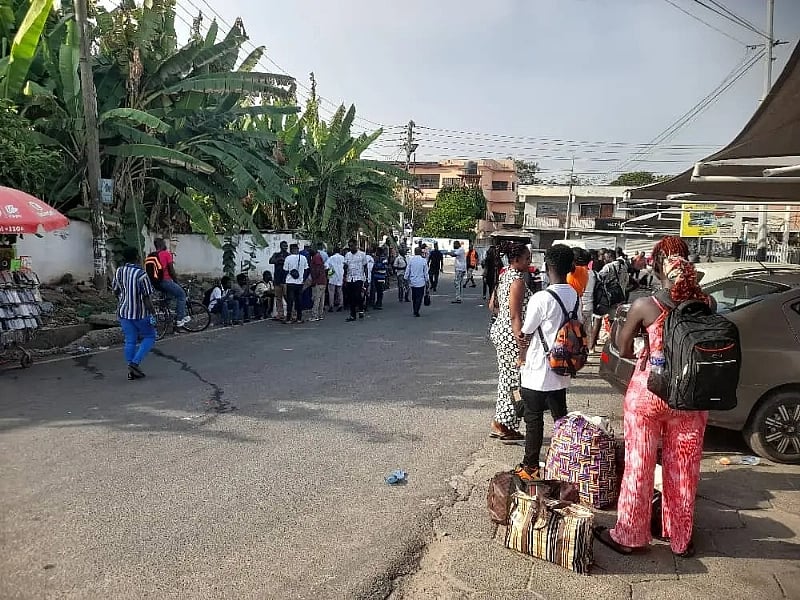
The impending general elections in Ghana have been marred by a significant logistical challenge for the New Patriotic Party (NPP), leaving over 500 of their supporters stranded at the party’s headquarters in Accra. These individuals, mobilized by the NPP with the promise of transportation to their respective constituencies to cast their votes, found themselves facing a frustrating predicament just hours before the polls were set to open. The party’s organizational efforts to ensure a strong voter turnout appear to have faltered due to a shortage of vehicles, leaving hundreds in a state of limbo, their participation in the democratic process hanging precariously in the balance. The incident has raised serious concerns about the party’s preparedness and its potential impact on the overall election results.
The stranded supporters, many of whom had arrived at the headquarters as early as 6:00 a.m., were left waiting for hours with minimal provisions. Their anticipation of a swift and organized departure quickly turned into disillusionment as the promised transportation failed to materialize. Throughout the day, the only sustenance provided was yoghurt and pie, a far cry from the efficient and supportive mobilization they had expected. As the hours ticked by, the growing sense of frustration was palpable, fueled by the uncertainty of whether they would even be able to exercise their right to vote. The lack of communication and concrete solutions from party officials further exacerbated the situation, leaving many feeling abandoned and questioning the party’s commitment to their participation.
The logistical breakdown underscores a critical oversight in the NPP’s election strategy. While mobilizing supporters is a crucial aspect of ensuring a strong voter turnout, the failure to provide adequate transportation arrangements has inadvertently disenfranchized a significant number of potential voters. This logistical nightmare not only reflects poorly on the party’s organizational capabilities but also raises questions about the overall preparedness for the elections. The incident highlights the importance of meticulous planning and execution, especially in time-sensitive events like elections where every vote counts. The stranded supporters represent a significant voting bloc, and their inability to reach their polling stations could have a tangible impact on the election outcome.
The stranded supporters expressed their deep disappointment and growing anxiety as the day wore on. Their initial enthusiasm to participate in the democratic process gradually eroded, replaced by frustration and a sense of betrayal. Many voiced concerns about the lack of proper planning and communication from the party leadership. The promise of readily available transportation had proven to be empty, leaving them stranded and feeling misled. The minimal provisions offered throughout the day added insult to injury, highlighting the apparent disregard for their well-being. The uncertainty surrounding their ability to travel back to their constituencies and cast their votes amplified their anxieties, transforming a day of civic duty into a distressing ordeal.
The situation at the NPP headquarters serves as a stark reminder of the importance of logistical preparedness in ensuring a smooth and inclusive electoral process. The failure to provide adequate transportation not only inconvenienced hundreds of supporters but also potentially disenfranchised them, undermining the very essence of democratic participation. The incident casts a shadow over the NPP’s election campaign and raises questions about their ability to effectively mobilize and manage their support base. The optics of hundreds of stranded supporters, feeling neglected and abandoned by their own party, are damaging and could have long-term repercussions for the NPP’s image and public trust.
While party officials offered assurances that additional vehicles were being arranged, their words did little to assuage the growing skepticism among the stranded supporters. The lack of concrete action and the rapidly dwindling time before the polls closed fueled their doubts about the possibility of reaching their destinations in time to vote. The incident underscores the critical need for proactive planning and contingency measures in electoral mobilization efforts. The NPP’s failure to anticipate and address potential transportation challenges resulted in a logistical breakdown that not only inconvenienced their supporters but also risked disenfranchising them, potentially impacting the election outcome and undermining the democratic process. The stranded supporters’ calls for swift action from the party leadership echo the urgent need for accountability and a commitment to ensuring every citizen’s right to vote is protected and facilitated.