









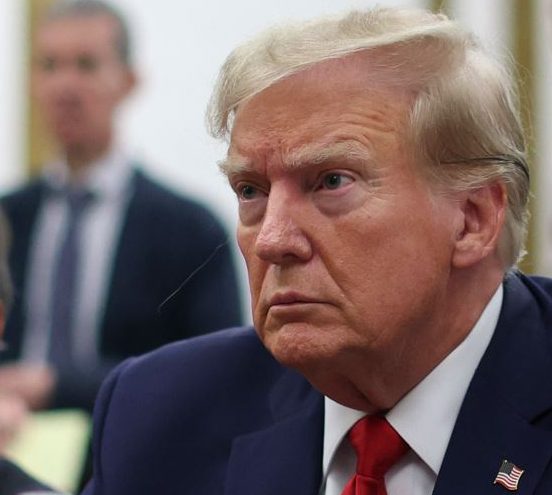
Donald Trump, in a recent address to young conservatives, outlined a series of executive actions he intends to implement upon assuming the presidency, focusing heavily on reversing what he termed “transgender lunacy.” He vowed to ban gender-affirming care for minors, exclude transgender individuals from the military and educational institutions, and enforce a strict two-gender policy. This hardline stance reflects the escalating culture wars surrounding transgender rights in the United States, where differing political ideologies clash over issues like medical treatment, educational policies, and even the definition of gender itself. Trump’s pronouncements signal a potential resurgence of conservative efforts to restrict transgender rights at the federal level.
Trump’s proposed actions align with a growing conservative movement pushing back against the expansion of transgender rights. This movement often frames gender-affirming care for minors as “child mutilation” and expresses concerns about transgender individuals’ participation in sports and other gender-segregated spaces. Trump’s rhetoric echoes these concerns, tapping into a powerful social current that views transgender rights as a threat to traditional values and institutions. This stance sets the stage for potential legal challenges and further polarization of public opinion on transgender issues.
Beyond transgender issues, Trump also addressed a range of foreign policy objectives, promising to end the war in Ukraine, resolve the ongoing conflicts in the Middle East, and prevent World War III. He offered no concrete plans for achieving these ambitious goals, instead relying on broad pronouncements of strength and resolve. His approach harkens back to his previous presidency, characterized by a disdain for traditional diplomacy and a preference for unilateral action. This raises concerns about potential instability and unpredictable foreign policy decisions under his leadership.
Trump’s most controversial foreign policy declaration involved the Panama Canal. He accused Panama of unfair treatment and threatened to reclaim control of the vital waterway, citing alleged violations of the 1970s treaty that transferred control to Panama. This aggressive stance risks escalating tensions with a key regional partner and disrupting international trade. The Panama Canal is a crucial artery for global commerce, and any attempt to seize control could have significant economic and geopolitical ramifications. It remains unclear whether Trump’s threat is a serious policy proposal or merely rhetorical posturing.
Trump’s speech, delivered in the aftermath of his election victory, painted a stark contrast between his vision for America and the preceding four years under the Biden-Harris administration. He characterized his upcoming term as a “golden age” of peace, prosperity, and national greatness, while denouncing the previous administration’s record as one of failure, incompetence, and national decline. This narrative of national redemption is a recurring theme in Trump’s political rhetoric, aimed at mobilizing his base and solidifying his image as a decisive leader capable of restoring America’s former glory.
However, Trump’s promises are often met with skepticism, given his history of unfulfilled pledges and controversial policy decisions. He has yet to articulate specific strategies for achieving his ambitious goals, leaving many to question the feasibility of his vision. His rhetoric often relies on broad generalizations and appeals to emotion rather than detailed policy proposals. This raises concerns about the potential gap between his campaign promises and his actual governing agenda. The coming years will reveal whether Trump can translate his rhetoric into tangible policy achievements or if his presidency will be marked by further division and controversy.









