









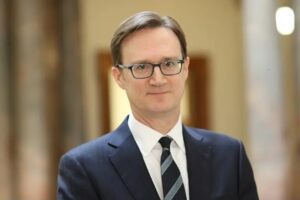
The United Kingdom has solidified its commitment to partnering with Nigeria in the fight against corruption, recognizing the devastating impact of illicit financial flows on societal well-being and economic progress. British High Commissioner Richard Montgomery emphasized this commitment during a policy dialogue, highlighting ongoing collaborations with Nigerian agencies, including the Central Bank of Nigeria and the Nigerian Financial Intelligence Unit, to track and recover corrupt assets, particularly those linked to UK jurisdiction. This collaborative effort leverages the expertise of the UK’s National Crime Agency and Nigerian counterparts like the Economic and Financial Crimes Commission (EFCC) and the NFIU. The shared goal is to dismantle the intricate networks facilitating illicit financial flows and hold perpetrators accountable. Beyond financial tracking, the UK is also supporting Nigeria in establishing beneficial ownership registers, crucial for identifying the true owners of companies and enhancing transparency in financial transactions. This measure is expected to significantly empower law enforcement and regulatory bodies in their fight against financial crimes.
The UK’s support extends to Nigeria’s Extractive Industries Transparency Initiative (NEITI), an effort to foster greater transparency within the oil and gas sector. While acknowledging progress in information disclosure related to licensing, revenue, and expenditure, Montgomery stressed the need for continued improvement to attract investment and ensure complete transparency. He recognized the UK financial sector’s historical involvement in global financial secrecy but underscored the government’s commitment to tackling financial crime both domestically and internationally. Despite the UK’s active role in supporting Nigeria’s anti-corruption efforts, Montgomery emphasized the importance of Nigerian leadership and institutions driving the change from within. He underscored the principle that sustainable solutions to corruption must originate and be sustained by Nigerian actors.
World Bank Country Director for Nigeria, Dr. Ndiamé Diop, represented by Lead Governance Specialist Deborah Isser, highlighted a significant challenge in Nigeria’s anti-corruption efforts: inaccurate data at the federal government level. This data inaccuracy hinders the timely and automatic generation of fiscal data, impeding effective monitoring and analysis of financial transactions and potentially masking corrupt practices. Accurate and reliable data is fundamental for effective resource management, budget transparency, and accountability. The World Bank’s observation underscores the critical need for improved data collection and management systems within the Nigerian government to strengthen its anti-corruption framework.
Professor Adele Jinadu, a renowned Political Science scholar, emphasized the need for a holistic approach to combatting corruption in Nigeria. He argued that fragmented efforts, lacking a comprehensive and interconnected strategy, would ultimately prove futile. This holistic approach requires addressing the root causes of corruption, including weak institutions, lack of accountability, and societal tolerance for corrupt practices. It also necessitates engaging multiple stakeholders, including government, civil society, the private sector, and citizens, in a coordinated effort to foster a culture of integrity and transparency.
The EFCC Chairman, Ola Olukoyede, represented by Director of Policy and Research, Mrs. Adejoke Liman, characterized corruption as a pervasive enterprise impacting all levels of government. He expressed deep concern over the widespread theft of public resources and the EFCC’s commitment to leveraging the fight against corruption to stimulate economic growth and support social investment initiatives. This proactive approach aims to recover stolen assets and channel them towards productive investments that benefit the Nigerian people. The EFCC’s commitment to using recovered assets for social good highlights the potential for anti-corruption efforts to contribute directly to national development.
Ojobo Atuluku, Board Chair of Agora Policy, emphasized the importance of maintaining anti-corruption efforts as a consistent priority across administrations. She argued that the fight against corruption should not be subject to political cycles or shifts in government priorities. Atuluku’s call for sustained focus on anti-corruption underscores the need for institutionalized mechanisms and a broad societal consensus on the importance of integrity and accountability in governance. Maintaining this focus across changing political landscapes is crucial for building lasting and effective anti-corruption frameworks.
In essence, the UK’s partnership with Nigeria in the fight against corruption represents a multi-faceted approach that encompasses financial tracking, capacity building, and support for transparency initiatives. The efforts are focused on strengthening Nigerian institutions, enhancing data accuracy, and fostering a culture of accountability. However, the overarching message is that true and sustainable change must be driven by Nigerian leadership and a collective societal commitment to ethical governance. The challenges are significant, including inaccurate data, deeply ingrained practices, and the need for sustained political will. Overcoming these obstacles requires a comprehensive strategy, robust institutions, and the unwavering commitment of all stakeholders to a future where corruption is no longer tolerated. The goal is not just to punish the corrupt but to create a system where corruption is difficult to perpetrate and where the benefits of good governance are enjoyed by all citizens.









