





The Land Dispute and Allegations of Misconduct
The heart of the conflict lies in a parcel of reclaimed land situated at Adzido-Vodza near Emancipation Beach in Keta, Volta Region. This land, originally intended for the construction of a sports complex to benefit the entire Keta municipality, has become the epicenter of a heated dispute between the outgoing Municipal Chief Executive (MCE), Mr. Emmanuel Gemegah, and a segment of the local youth. The youth allege that Mr. Gemegah has not only disregarded the intended purpose of the land but has also engaged in illicit activities related to its allocation.
Central to the accusations is the claim that Mr. Gemegah has unlawfully constructed a private residence on a portion of the disputed land. This action, the youth contend, is a blatant violation of the land’s designated purpose and a betrayal of the public trust. Furthermore, they accuse the MCE of selling off or otherwise distributing other sections of the reclaimed land to individuals connected to his political party and family members, thereby prioritizing private interests over the needs of the community. This alleged favoritism has further fueled the resentment and anger of the youth, who view it as a corrupt practice that deprives the municipality of valuable resources and development opportunities.
Escalation of Tensions and Acts of Demolition
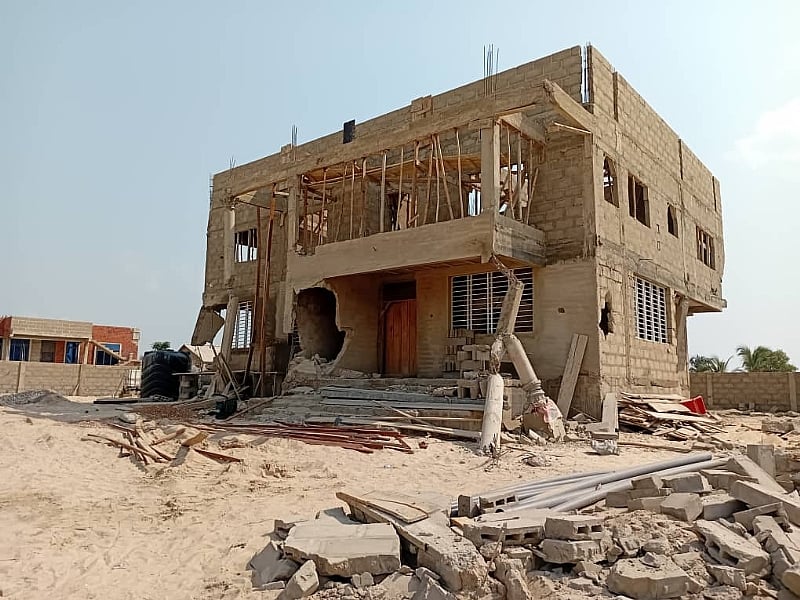
The simmering discontent among the youth reached a boiling point on a Sunday when a group of them, reportedly armed, converged on the construction site of Mr. Gemegah’s alleged private residence. In a dramatic act of defiance, they proceeded to demolish a portion of the storey building structure. This act of vandalism served as a stark demonstration of their frustration and anger towards the MCE and his alleged actions. The demolition was not confined to the MCE’s property; the agitated youth also targeted other structures and fence walls on the reclaimed land, underscoring their broader grievance regarding the land’s allocation and use.
The police, alerted to the unfolding events, intervened at the scene and managed to halt the demolition activities, preventing further destruction. Despite their presence, however, no arrests were made. This lack of immediate legal repercussions may be attributed to the complex nature of the dispute, the potential for further escalating tensions, or the need for a more thorough investigation to determine individual culpability and the appropriate course of action.
Legal Implications and Alleged Contempt of Court
Adding another layer of complexity to the situation is the revelation that the ownership and usage rights of the reclaimed land are currently under legal scrutiny. The youth who spoke to the Ghana News Agency (GNA), albeit anonymously, revealed that a case concerning the land is pending before the Sogakope High Court. They accuse Mr. Gemegah of acting in contempt of court by continuing construction on the land despite the ongoing legal proceedings. This allegation, if substantiated, could have serious legal ramifications for the MCE. By proceeding with construction despite the pending litigation, Mr. Gemegah may be seen as disregarding the authority of the court and obstructing the administration of justice.
The youth’s claim of contempt of court highlights the potential for legal entanglements surrounding the land dispute. It reinforces the perception that Mr. Gemegah has acted unilaterally and without regard for legal processes. The court’s eventual decision on the matter will be crucial in determining the rightful ownership and usage of the reclaimed land and could potentially lead to further legal action against the MCE if he is found to have acted in contravention of the court’s authority.
Past Confrontations and Lack of Response
The recent demolition incident was not the first instance of confrontation between the youth and the MCE regarding the disputed land. Earlier in the year, another group of youth had reportedly confronted Mr. Gemegah, expressing their disapproval of his actions and warning him against further construction on the reclaimed land. This prior incident suggests a protracted period of simmering tensions and failed attempts at dialogue and resolution. The recurrence of such confrontations highlights a breakdown in communication and trust between the MCE and the community he represents.
Despite repeated attempts by the Ghana News Agency (GNA) to obtain his side of the story, Mr. Gemegah remained unavailable for comment. This lack of response from the MCE has only fueled speculation and amplified the concerns raised by the youth. His silence may be interpreted as an unwillingness to engage in dialogue or a tacit acknowledgment of the validity of the accusations against him.
The Way Forward
The conflict over the reclaimed land in Keta highlights a range of complex issues, including land ownership disputes, allegations of corruption and abuse of power, and the breakdown of trust between local authorities and the community they serve. Resolving this conflict requires a multifaceted approach that involves thorough investigation of the allegations, adherence to legal processes, and open communication between all stakeholders. The court’s decision on the land ownership dispute will be a pivotal step in the resolution process. Beyond the legal aspects, fostering dialogue and rebuilding trust between the community and its leadership is essential for achieving a sustainable and equitable outcome. The incident underscores the need for transparency and accountability in local governance and the importance of engaging with community concerns to prevent future conflicts.








