





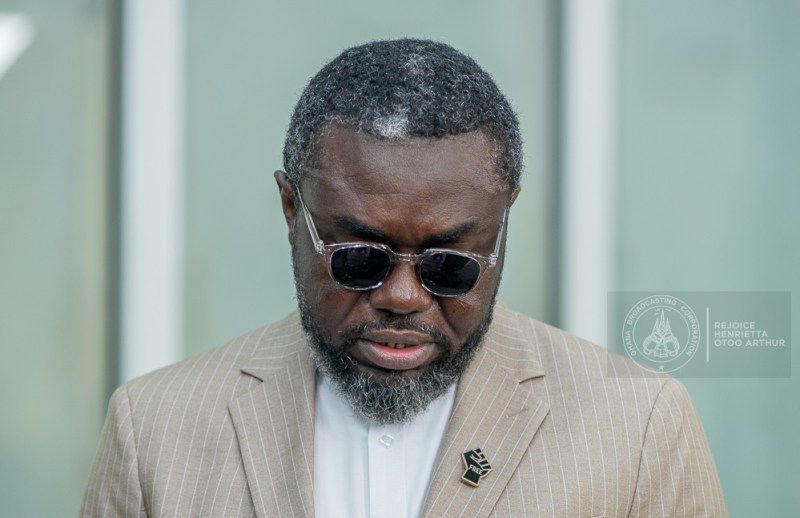
Social media activist Oliver Barker Vormawor appeared before Parliament’s Appointments Committee to address a controversial post that was interpreted as an allegation of bribery against the Committee. Vormawor unequivocally denied intending to accuse Committee members of accepting bribes from ministerial nominees. He clarified that his post was misconstrued and offered an apology for any offense caused. He explained that his decision to leave the post undeleted, despite the ensuing controversy, was to ensure its original context was preserved for scrutiny and verification, should the need arise. This proactive approach, he argued, allowed for a clear comparison between his intended message and the misinterpretations that circulated.
Vormawor’s appearance before the Committee provided a platform for him to directly address the concerns raised by his post and to clarify his intentions. He acknowledged the sensitivity of the issue and the potential damage it could inflict on the reputation of the Committee members. His apology was a gesture of goodwill, aimed at mitigating any negative impact caused by the misinterpretation of his words. By offering a sincere apology, Vormawor sought to demonstrate his respect for the Committee and its members, while also upholding his right to express his opinions.
A key point of contention revolved around the meaning and context of Vormawor’s original post. He argued that his words were twisted and taken out of context, leading to the erroneous conclusion that he was accusing Committee members of corruption. He maintained that his intention was not to disparage the Committee or its members, but rather to express his views on a particular issue. The subsequent misinterpretation, he asserted, fueled the controversy and necessitated his appearance before the Committee to offer a clarification and apology.
The controversy surrounding Vormawor’s post also touched on his political affiliations. Minority Leader Alexander Afenyo-Markin claimed that Vormawor was a known member of the National Democratic Congress (NDC). Vormawor refuted this claim, stating that he has consistently voted for the Convention People’s Party (CPP) and has never been a member of the NDC. He attributed the mischaracterization of his political affiliation to the tendency of individuals to claim association with the winning party, in this case, the NDC. Vormawor emphasized his ideological alignment with the CPP and reiterated his commitment to supporting the party.
Vormawor’s clarification of his political stance served to further disambiguate the situation. By distancing himself from the NDC, he aimed to demonstrate that his criticism was not motivated by partisan politics. His consistent support for the CPP, he argued, underscored his commitment to a specific political ideology, rather than an allegiance to a particular party vying for power. This clarification was crucial in addressing the broader implications of the controversy and preventing it from being reduced to a partisan political squabble.
In essence, Vormawor’s appearance before the Appointments Committee provided an opportunity for him to address the controversy head-on. He apologized for the misinterpretation of his post, clarified his intentions, and refuted claims about his political affiliation. His explanation emphasized the importance of context and the potential for miscommunication in the digital age. The incident serves as a reminder of the need for careful consideration of the impact of social media posts, especially in the politically charged atmosphere of contemporary discourse. It also highlights the complexities of online communication and the challenges of ensuring that messages are accurately conveyed and interpreted.








