









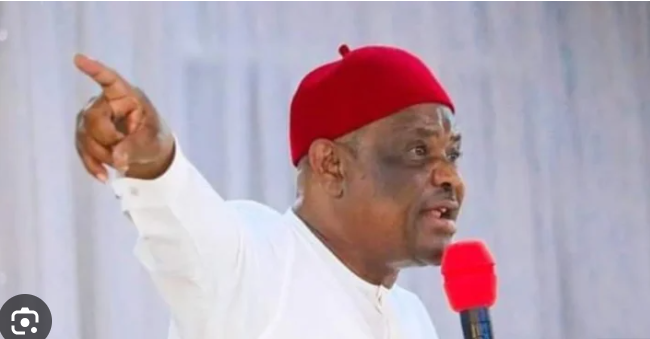
The political landscape of Rivers State, Nigeria, witnessed a dramatic eruption of accusations and counter-accusations as former allies turned adversaries. Nyesom Wike, the Minister of the Federal Capital Territory and immediate past governor of Rivers State, launched a scathing attack on his predecessor, Peter Odili, branding him an “ingrate” and a “rent seeker.” This outburst came in response to Odili’s recent commendation of the incumbent governor, Siminalayi Fubara, for purportedly preventing Wike from turning Rivers State into his “personal estate.” The public exchange revealed deep-seated tensions and power struggles within the state’s political elite.
Wike, speaking at a thanksgiving service, vehemently refuted Odili’s claims, arguing that it was Odili himself who had treated Rivers State as his private domain. He pointed to the numerous positions occupied by Odili’s family members during his own tenure as governor, citing Odili’s wife’s chairmanship of a governing council, his daughter’s position as a commissioner, and another daughter’s appointment as a judge. Wike implied that Odili’s influence extended to an almost puppeteer-like control over the state’s affairs, sarcastically suggesting that Odili might even attempt to arrange the governor’s marriage. This depiction of Odili painted a picture of a man who leveraged his political power for the benefit of his family and inner circle.
Wike further accused Odili of inconsistency and opportunism, recalling instances where Odili had showered him with praise during his governorship, even claiming that Wike’s achievements surpassed those of all previous governors. This apparent volte-face, according to Wike, exposed Odili’s true colors. He insinuated that Odili’s current praise of Fubara was driven by self-interest and a desire to remain relevant in the state’s political scene. Wike argued that Odili had initially opposed Fubara’s candidacy, complaining about his public speaking abilities, only to later organize a Christmas carol service for the same governor. This, Wike contended, demonstrated a lack of principle and a willingness to shift allegiances for personal gain.
The Minister also delved into Odili’s past political aspirations, specifically mentioning his failed presidential bid. Wike claimed that Odili lacked the courage to challenge former President Olusegun Obasanjo’s disapproval of his candidacy, portraying him as weak and easily intimidated. He recounted how he had refrained from inviting Obasanjo to commission projects in Rivers State to avoid humiliating Odili, further emphasizing the power dynamics and perceived subservience of Odili to Obasanjo. This narrative served to diminish Odili’s stature as a political leader and highlighted Wike’s own perceived strength and independence.
Wike’s attack on Odili exposed the complex web of relationships and rivalries within Rivers State politics. His accusations of ingratitude stemmed from his belief that he had revived Odili’s political career after it had waned following Amaechi’s governorship. He pointedly questioned Odili’s motivation for criticizing him after having previously benefited from his support and patronage. By highlighting Odili’s alleged inconsistencies and past political failures, Wike attempted to discredit his criticisms and solidify his own position as a dominant force in the state. The public spat provided a glimpse into the behind-the-scenes maneuvering and power struggles that often characterize Nigerian politics.
This highly charged exchange between Wike and Odili underscored the volatile nature of political alliances and the enduring influence of personal ambition and perceived betrayal. Wike’s forceful response, laden with personal anecdotes and accusations, aimed to dismantle Odili’s credibility and portray him as a self-serving opportunist. The feud revealed a deeper struggle for control and influence within Rivers State, with both Wike and Odili vying for recognition as the true political kingmaker. The fallout from this public confrontation is likely to reverberate through the state’s political landscape, shaping alliances and rivalries for years to come.









